







From Practice Back to Learning: A Preschool Teacher’s Exploration of Digital Education

15 Apr 2026


After gaining several years of frontline teaching experience, Fangjing Chen chose to return to the classroom.
She is currently studying for a Master’s degree in Digital Education at Xi’an Jiaotong-Liverpool University (XJTLU), while working as a preschool teacher at Zhejiang Normal University Kindergarten Education Group. For her, this was not a shift in career direction, but a process of deepening and restructuring her existing experience.
In her view, early childhood education cannot be defined by theory alone—it requires continuous practice and reflection in real contexts. She had planned a clear path for herself: spend several years gaining frontline experience, and then return to postgraduate study with questions drawn from practice.
However, as her teaching experience deepened, she began to feel a sense of “insufficient input”. Her existing knowledge was gradually being consumed, while new understanding struggled to keep pace.
“If I want to go further, I need a systematic re-input,” she said.
It was at this point that she began to look for new learning pathways.
Why Digital Education
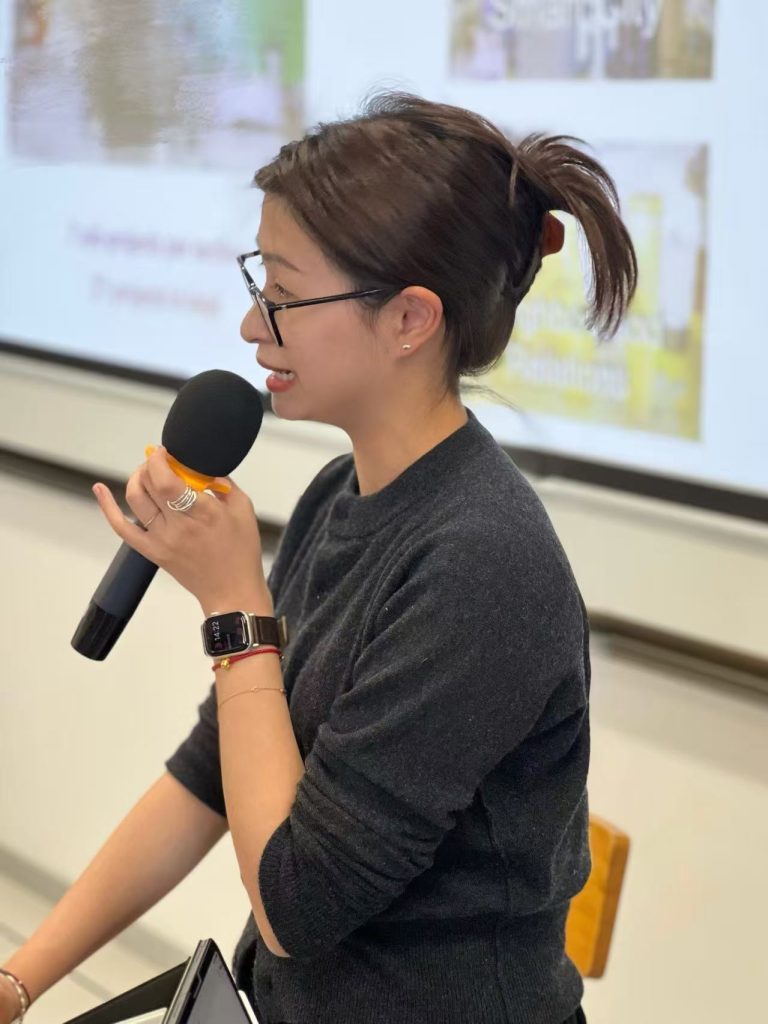
Her decision to study digital education was shaped by both practice and context.
On the one hand, it grew out of her own research interest. During her teaching, she conducted a small study on how computational thinking could support sustained inquiry in preschool STEAM activities.
“That was the first time I realised that many of our intuitive teaching experiences could actually be understood in a more structured and logical way,” she said. “I became interested in using rational tools to interpret educational phenomena.”
On the other hand, rapid technological development also played a role. As artificial intelligence increasingly entered educational settings, she began to see digital education not only as a trend, but as a capability that educators need to understand and respond to.
For her, digital education does not replace early childhood education—it complements it:
- From a data perspective, it helps teachers better understand children’s learning processes
- From a technology perspective, it expands how children express and explore
- From a platform perspective, it supports more effective collaboration among educators
More importantly, learning does not stop in the classroom.
“I can bring what I learn back to my teaching team, share it, and continue testing and refining it in practice,” she said.
Bringing Cultural Artefacts into the Classroom
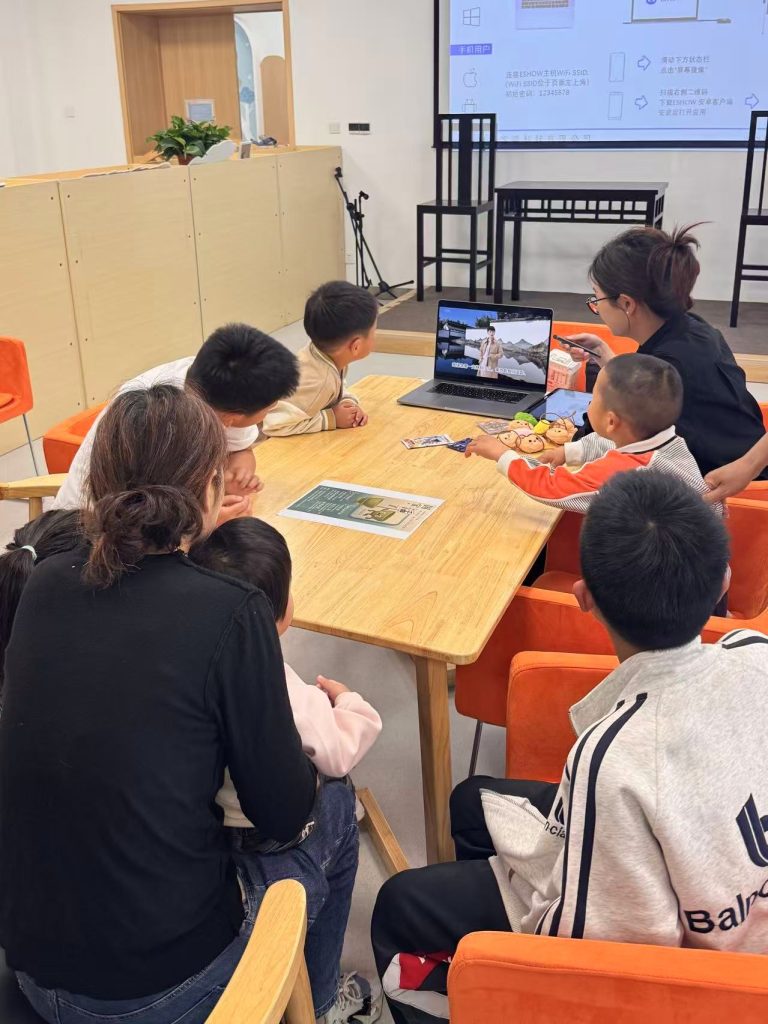
During her master’s studies, Chen participated in developing a course based on artefacts from the Suzhou Museum, combining traditional culture with computational thinking.
The course addressed a practical question: how to transform computational thinking from an abstract concept into meaningful learning experiences.
Using real artefacts as the starting point, the team designed a learning pathway where students develop thinking skills through engaging with cultural content.
Chen was responsible for the overall design, including themes, learning pathways and the integration of key elements of computational thinking such as decomposition, pattern recognition and rule construction.
The course development followed four stages:
- Artefact analysis: examining structure, patterns and cultural logic
- Pedagogical translation: turning these features into child-friendly tasks
- Classroom implementation: observing children’s responses in real settings
- Iterative refinement: adjusting tasks based on feedback
The main challenge lay in “translation”—how to retain cultural meaning while making it accessible to young children.
She chose to start from familiar artistic activities, allowing children to explore structure and patterns through hands-on engagement. In this process, culture became something children could construct and experience, rather than simply receive—and computational thinking emerged naturally.
Using Data to Understand Learning
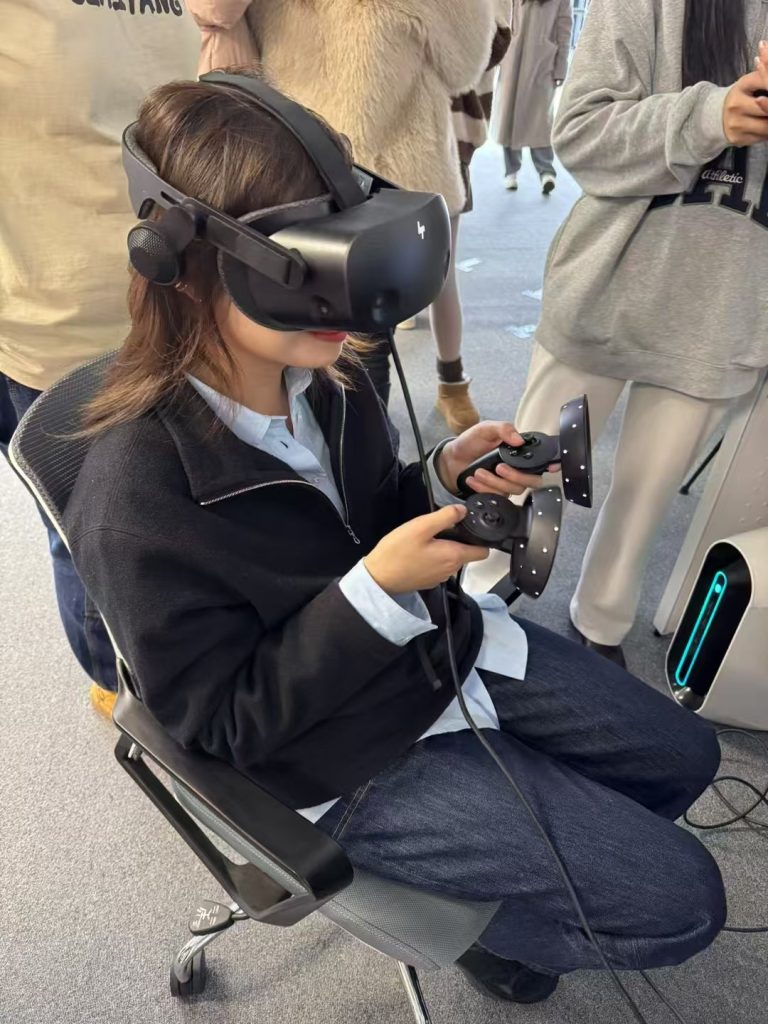
In another course, she participated in a research project using eye-tracking data to improve the learning experience on the Learning Mall platform.
This experience changed her understanding of data.
“Data is not just for analysing results—it helps us see the learning process differently,” she said.
Rather than relying on designers’ assumptions, the team collected data on students’ visual attention, including gaze paths and fixation time, to understand how the platform was actually used.
The findings revealed gaps between design intentions and user behaviour. Some areas were frequently used, while others were largely ignored.
This led her to rethink data-driven educational research—not as outcome evaluation, but as a way of observing learning more closely.
She has since begun to apply this perspective in her own teaching, paying closer attention to children’s focus and interests, and using observation to guide the design of learning environments.
When Learning Becomes Truly Student-Centred
At XJTLU, what impressed her most was not a particular class, but the overall learning experience.
“In a well-designed learning environment, where students are at the centre, intrinsic motivation is naturally activated,” she said. “I find myself more willing to think and participate, rather than just complete tasks.”
This experience led her to reflect on her own teaching and gradually bring these ideas back into her preschool classroom, paying more attention to children’s participation, choice and real experiences.
“Even though my students are aged three to six, I believe the principle of student-centred learning applies universally,” she said.
Rethinking Technology in Teaching
During her master’s studies, her teaching approach has changed significantly.
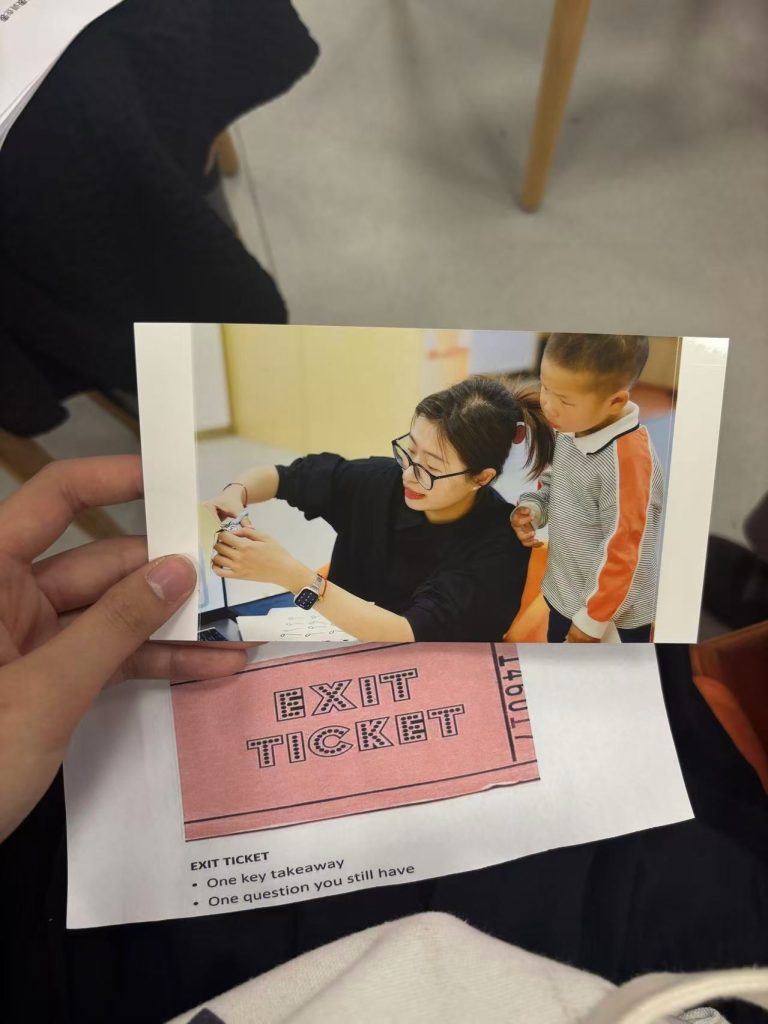
She began integrating AI tools, early programming experiences and digital literacy into project-based activities. At the same time, she used AI to support lesson design and material development.
More importantly, her focus shifted from what technology to use to how to use it.
“In early childhood education, I pay particular attention to whether digital tools are appropriate and ethical,” she said.
For example, she uses generative AI image tools to support children’s artistic expression, allowing their ideas to be visualised quickly and opening new possibilities for communication.
“This is not just about tools,” she explained. “It gives me a new perspective on how technology can truly support children’s learning and development.”
The Future of Digital Education Lies in How It Is Used
In her view, the future of digital education in early childhood lies not in introducing technology itself, but in reshaping learning approaches.
“Technology develops quickly, but children develop at their own pace. Finding a balance between technological possibilities and developmental appropriateness is essential,” she said.
She believes that computational thinking will become increasingly important in early education—not only as preparation for the future, but as a way of helping children understand the world.
However, the key is not whether to introduce it, but how.
“If it is taught as abstract knowledge, it may not suit young children. But if it is embedded in games, daily life and projects, it becomes natural and meaningful,” she said.
“For me, the value of computational thinking is not only about the future, but about supporting children’s understanding of the world now.”
By Xiaoyan Jin
Photo courtesy of Fangjing Chen
15 Apr 2026