





Practice mentor roundtable: understanding recruitment and career development in international schools

01 Apr 2026


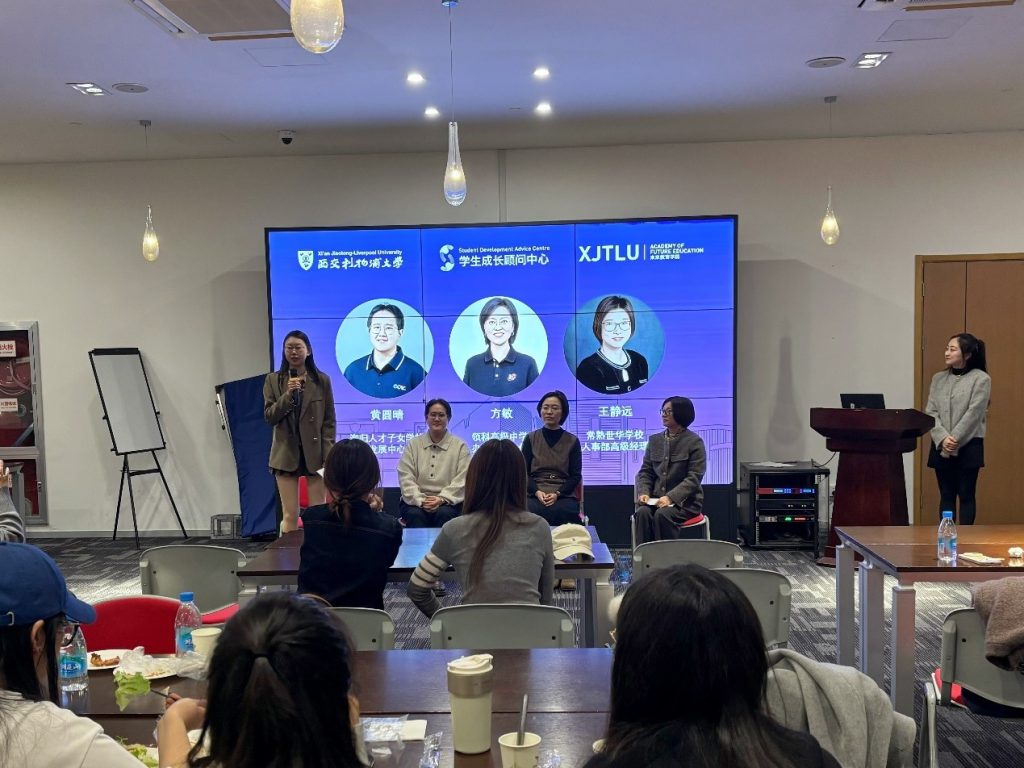
On 24 March, the Academy of Future Education at Xi’an Jiaotong-Liverpool University (XJTLU) hosted a Practice Mentor Roundtable focusing on career pathways in international schools. Three experienced practitioners from the international education sector were invited to share insights from the perspectives of recruitment, teaching and human resource management, offering a detailed overview of hiring practices and career development in the field.
The speakers included Dr Yuanching Huang, Director of the Teacher Development Centre at OCAC Suzhou; Min Fang, Deputy Director of the Office at Suzhou Industrial Park Ulink College; and Jingyuan Wang, Senior HR Manager at Changshu World Foreign Language School.
Beyond qualifications: what schools really value
The speakers agreed that recruitment is a comprehensive and dynamic process, rather than a simple filtering based on qualifications.
Dr Huang noted that schools place greater emphasis on candidates’ practical abilities, such as experience in competitions, interdisciplinary teaching and handling complex classroom situations. Ms Fang added that while CV screening is only the first step, performance in written tests, interviews and teaching demonstrations is critical in assessing teaching potential.
From a recruitment perspective, Ms Wang emphasised that hiring is fundamentally about fit—whether candidates are suited to education and demonstrate the potential for continuous growth. “When evaluating fresh graduates, we focus more on how far they can go in the future, rather than what they have achieved at present,” she noted.
The role of teachers in the age of AI
The panel also discussed the impact of artificial intelligence on education.
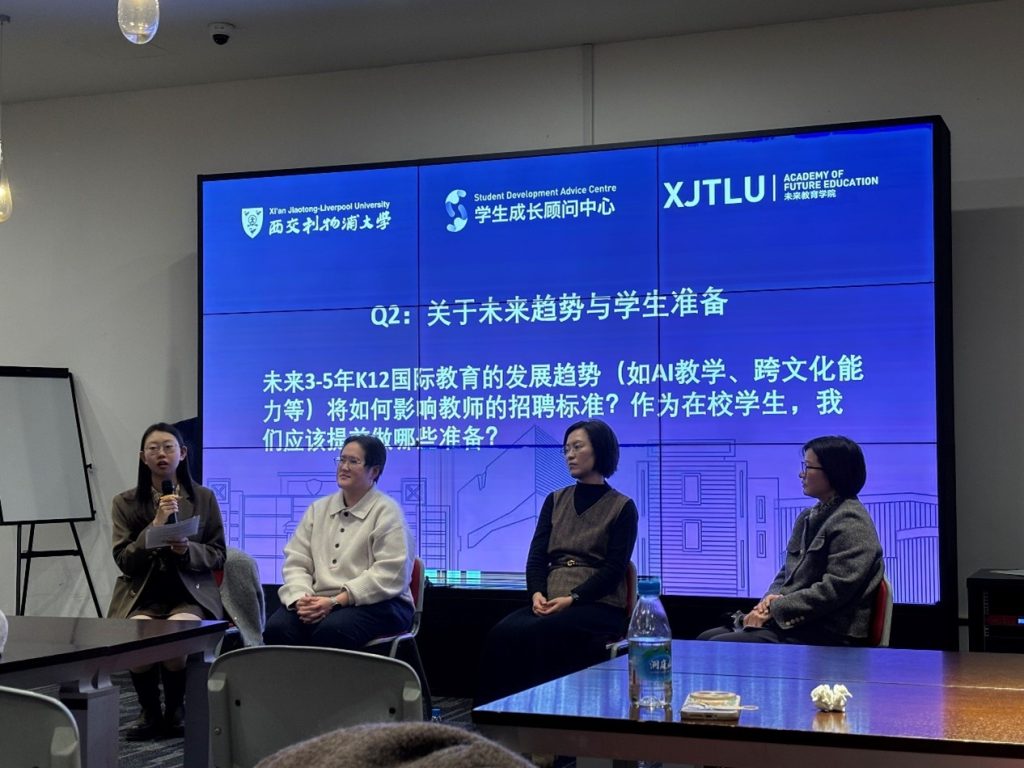
“AI may change how we work, but it will not replace the core value of teachers,” Dr Huang explained. She highlighted the evolving role of teachers as learning designers and resource integrators, capable of translating real-world problems into learning experiences.
Ms Fang emphasised that while AI can improve efficiency, education remains fundamentally relational. Skills such as classroom management, communication with parents and cross-cultural understanding continue to be essential.
Ms Wang added that the integration of AI into teaching processes has raised expectations for teachers. In recruitment, greater attention is now given to professional knowledge, responsibility and commitment to student development.
Opportunities for cross-disciplinary candidates
The speakers highlighted that candidates from non-education backgrounds are not only welcomed but may also hold advantages.
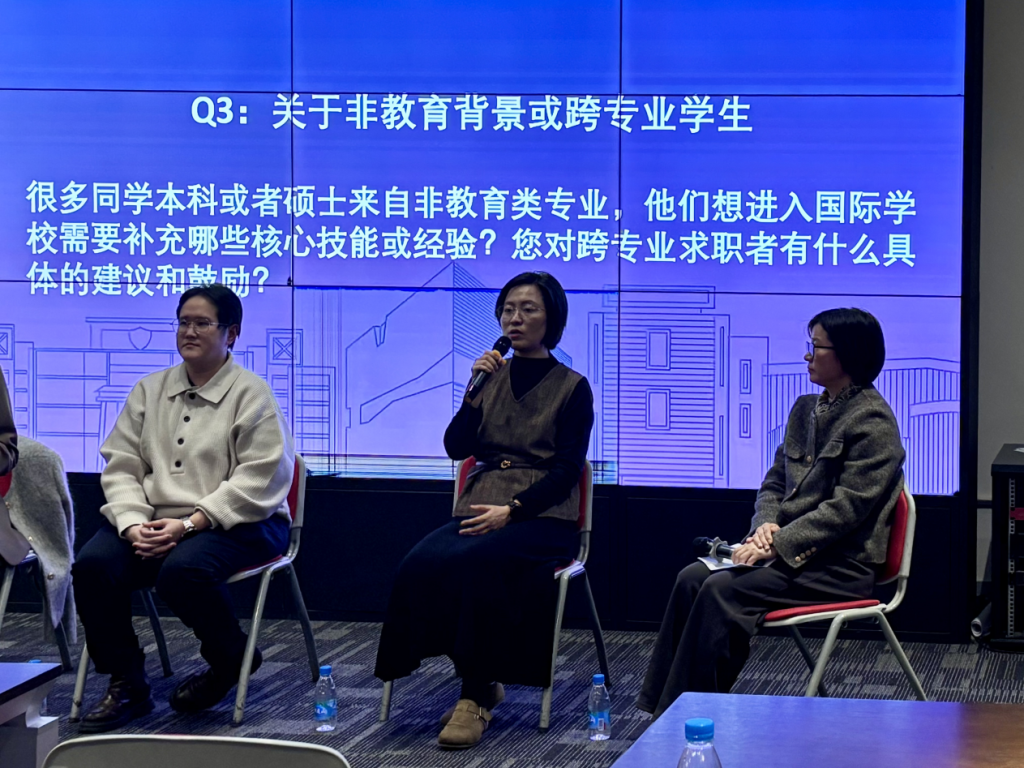
Dr Huang noted that interdisciplinary backgrounds can strengthen subject knowledge, which is particularly valuable in international curricula. Ms Fang shared a case where a candidate without a physics background secured a teaching position by gaining relevant teaching experience and demonstrating strong preparation.
Ms Wang pointed out that international schools offer diverse roles beyond teaching, including positions in HR, marketing and operations. In some subject areas, interdisciplinary candidates are even in high demand. “As long as candidates can demonstrate their subject knowledge and teaching ability, their background is not a limitation,” she said.
From CV to interview: practical advice
The panel provided practical recommendations for job applications:
CV preparation
- Keep the CV within three pages
- Highlight relevant experience and outcomes
- Avoid vague descriptions and errors
Interview performance
- Clearly articulate motivation and career goals
- Maintain consistency in responses
- Demonstrate professional conduct (punctuality, attire, communication)
Certificates
- Teaching qualification: a basic requirement
- Language proficiency: an important advantage
- International curriculum certifications: not essential at an early stage
The speakers also noted that attention to detail can significantly influence outcomes, with professionalism reflected even in small aspects such as online interview presentation.
Supporting early career development
The panel introduced the support systems typically available for new teachers in international schools, including personalised development plans, mentoring systems, onboarding periods of three to six months, and both internal and external training opportunities.
Schools, they emphasised, value growth potential over perfection. “Willingness to learn and try is more important than being perfect from the beginning.”
At the end of the event, Lu Wang, Operations Director of the Academy of Future Education, presented certificates to the guest speakers in recognition of their contributions as practice mentors.
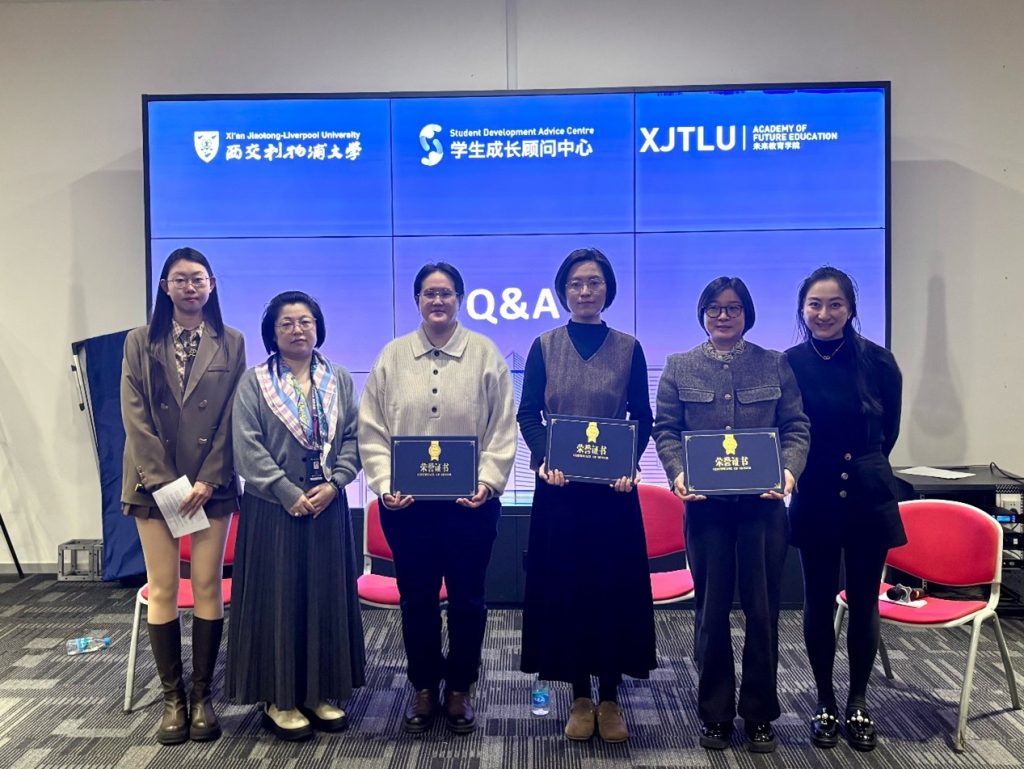
Looking ahead, the Academy will continue to engage industry partners and integrate professional insights into its programmes, supporting students in connecting learning with real-world educational practice.
Provided by the Academy of Future Education
Edited by Xiaoyan Jin
Translated by Xiaoyan Jin
01 Apr 2026