





Keeping students in view as XJTLU grew

26 May 2026


When Professor Qiuling Chao arrived at Xi’an Jiaotong-Liverpool University in March 2018, the University had already moved beyond its earliest years.
Growth seen from the inside
Its student population had reached about 16,000. Schools and programmes were expanding. XJTLU was also entering a new stage in its ambition to become a research-led university. Growth was visible across the campus, but for Professor Chao, then Vice President for Student and Information Affairs, it also raised a practical question: how could the University keep students in view as it moved faster?

The 2019 XJTLU opening ceremony at the Suzhou Olympic Sports Centre Stadium
A university could not simply admit more students. It had to make sure students could live, study, adapt, ask for help, and feel that the University’s ideas were present in their daily experience.
“These things may seem to have many sides, but at their core they are connected,” she says.
For Professor Chao, being “student-centred” was not a slogan. It was a way to test whether growth was working. As XJTLU expanded, the question was not only how many students it could admit, but also whether it could continue to notice, support, and help them find their place.
Beds, canteens, buses and timetables
From the outside, XJTLU’s growth could look smooth: more students, stronger recruitment, a livelier campus, and a clearer international profile.
From Professor Chao’s desk, it looked different. Growth arrived in the form of questions about teachers, dormitories, canteens, student management, mental and physical health, new campus arrangements, transport, timetables, and families waiting for answers.

“When it came to implementation, it was much harder than when the plans were first made,” she says. “We had thought about many problems, but it was impossible to anticipate everything. You can only solve these issues in real situations.”
She often repeats one phrase: “There are always more solutions than problems.”
Much of the work was not visible. It meant listing potential problems, assessing risks, adjusting plans as they progressed, and addressing issues that had not appeared on paper. A quiet campus, in her account, often rested on a large number of details being caught before they became larger problems.
Starting before students choose a programme
Professor Chao’s understanding of student support begins from the moment students enter the University.
In XJTLU’s long-standing, broad-based admissions model, many students arrive from high school without a clear sense of their interests or strengths. If they are fixed into a specific programme too early, they may later discover that it does not suit them.
The first year gives them time.
Students attend talks by companies, industry mentors, experts, and professionals. They hear what is happening in different fields, how industries are changing, and what opportunities and challenges may lie ahead.
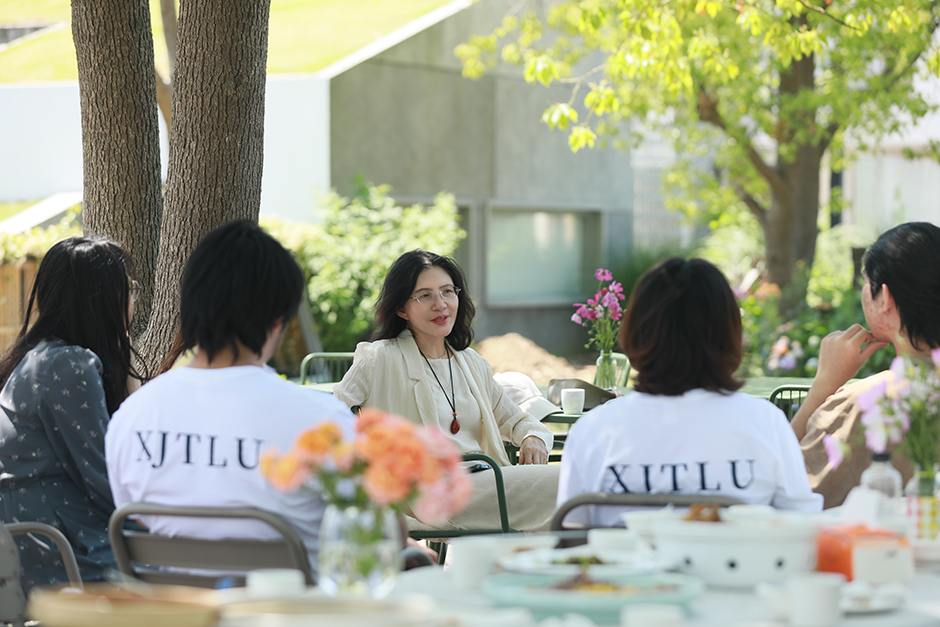
Even after students choose their programme, it is not treated as a closed door. If their interests shift in the second or third year, the University still has mechanisms that allow them to adjust and continue looking for the right direction.
“Being student-centred and interest-driven is not just a sentence or an idea,” Professor Chao says. “From the moment students enter to the moment they graduate, it is a closed-loop process of support and service.”
When a student might disappear from view
Support, in Professor Chao’s account, does not stop at academic choice.
Through general education courses, students encounter the humanities, arts, psychology, innovation and entrepreneurship, digital citizenship, and sustainable development.

Professor Qiuling Chao answering parents' questions at the 2021 university open day
Outside the classroom, student societies, peer sharing, and conversations with senior students also matter. Students come to university not only to learn knowledge, but also to discover interests, build relationships, and begin to understand the world they will enter.
Some support is quieter.
Professor Chao speaks in detail about mental health. XJTLU is an international university, and students must adapt to English-medium teaching, new learning methods, different textbooks, a very different classroom culture, and, for international students, being alone in a whole new country. That transition can bring confusion and pressure.
The University offers psychology-related courses and positive psychology content, alongside face-to-face support through its counselling centre.
Another example is the University’s “Telescope System”.
The system is strictly confidential and is not used casually. But if it detects that a student has not opened their email, gone to the canteen, visited the library, or attended class for a period of time, it sends an alert. Tutors then contact the student as soon as possible, and if needed, contact the family to check whether the student is ill, facing difficulties, or in need of help.
These arrangements are designed for the moments when a student might otherwise disappear from view.
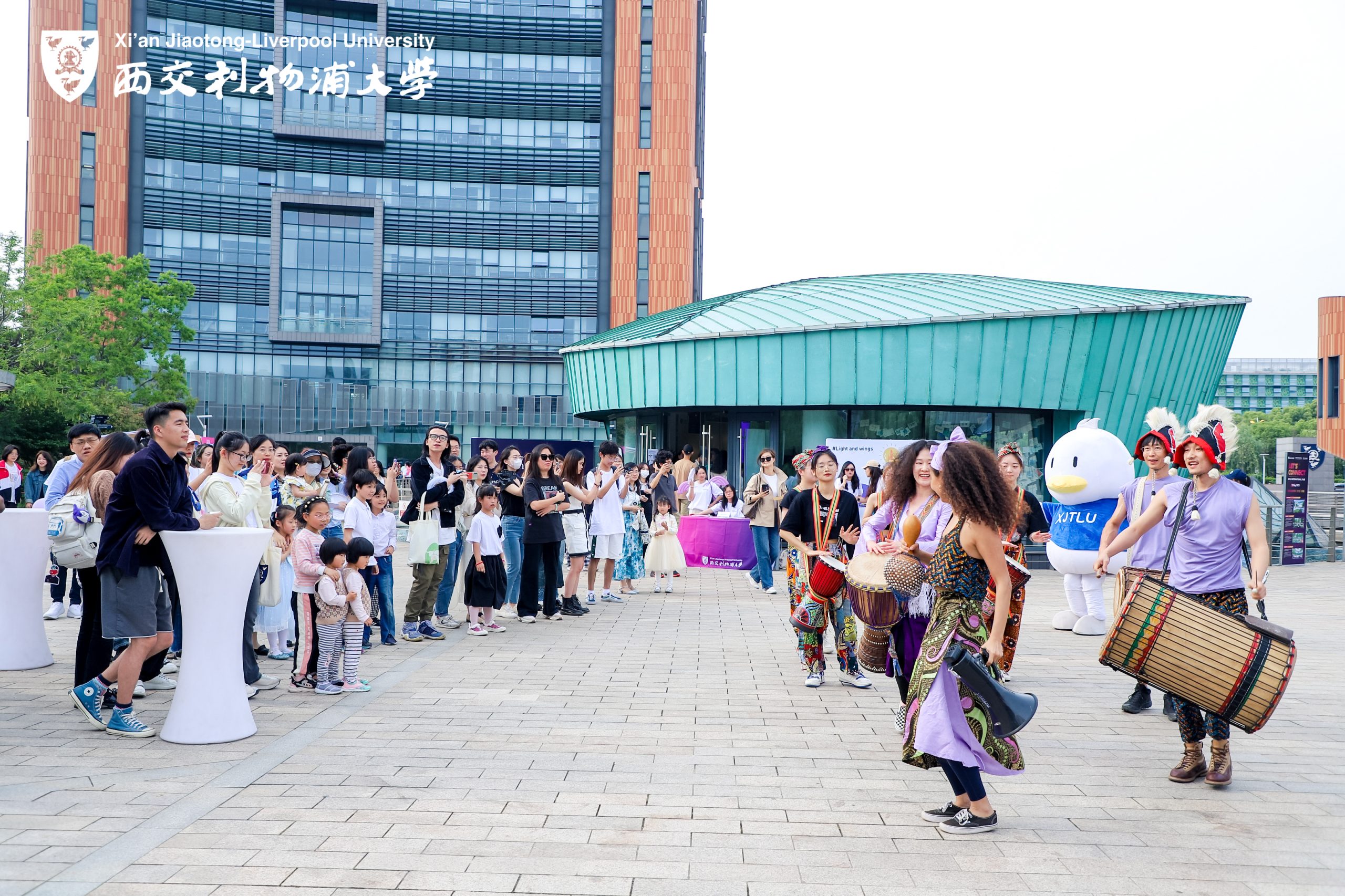
XJTLU 2023 International Day
The work behind recruitment momentum
Professor Chao says people often see XJTLU’s strong recruitment results, but not the long run behind them.
Soon after one cohort arrives, the recruitment team begins preparing for the next year. After the National Day holiday, promotional materials, online and offline events, and academic participation gradually begin. Key cities and schools are visited one by one. Parent information sessions are organised one after another. Student questions are answered one at a time.
This, too, is part of student support. Before students arrive, the University has already begun trying to make itself understandable to them and their families.
Making campus life visible
If student services help students feel supported, campus culture helps them become active.
When Professor Chao first arrived at XJTLU, she felt students could be more energetic and more visible.

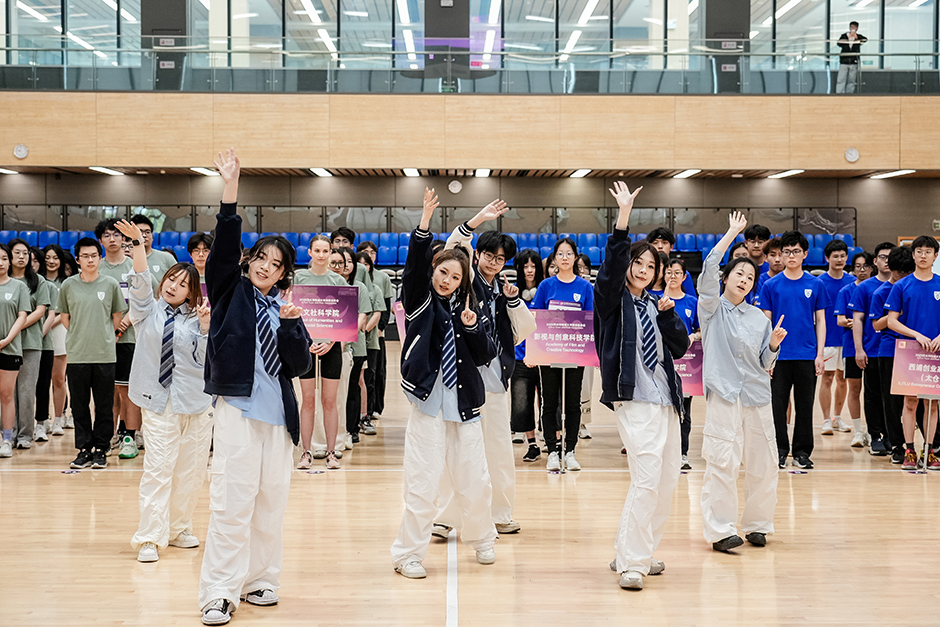
She encouraged sports meetings, competitions, ball games, and staff participation. She supported student societies, concerts, performances, fashion festivals, International Day, and traditional Chinese festival activities. These activities gave students from different cultural backgrounds more chances to see one another and take part in shared campus life.
Professor Chao often attends events herself. For her, being present is another way of showing support.
Student recruitment surveys have given her an interesting signal. Among the reasons students choose XJTLU, colourful student societies and activities have long ranked near the top, alongside further study and employment.
“Campus culture can sometimes be hard to see or touch,” she says. “But through activities that continue to happen, it gradually forms the character of a university.”

Rules, culture and an international campus
At XJTLU, campus culture also has an international dimension.
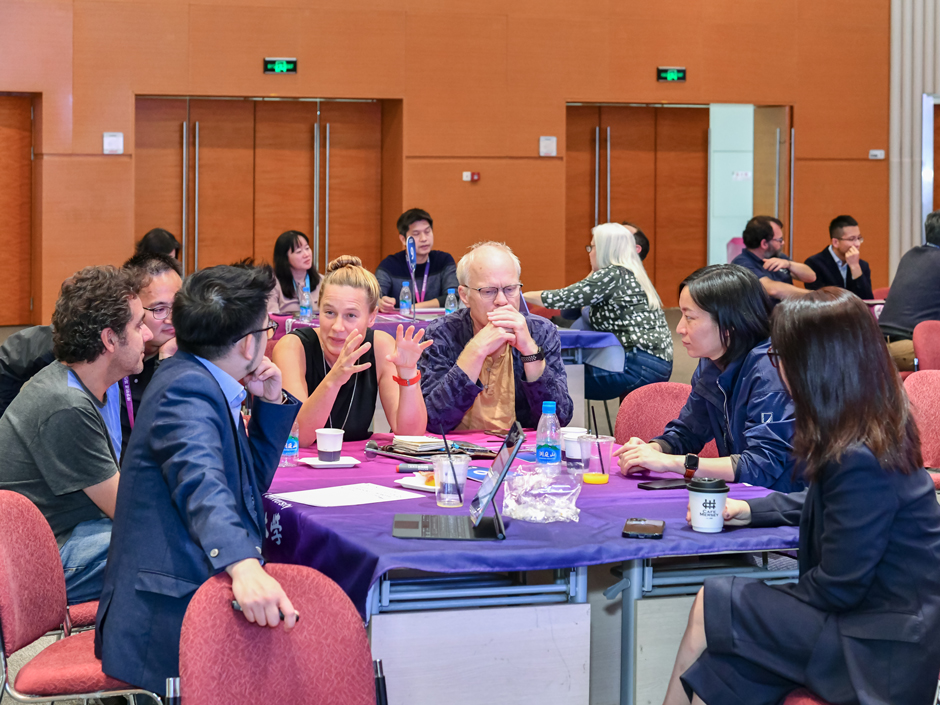
Professor Chao does not define internationalisation by a single measure. It includes international students, international staff, internationalised curricula, international research collaboration, professional accreditation, online international courses, and partnerships.
But in daily life, internationalisation comes down to how people work together.
Changed by the university
In recent years, AI has entered teaching, learning, research, and management.
For her, new technology presents a familiar challenge. A university must keep pace with change, but it must also turn change into practical support.
Professor Chao says her relationship with XJTLU has been a two-way process. She has contributed to the University’s development, but the University has also changed how she thinks and works.
When she first arrived, she felt that XJTLU was different from traditional Chinese public universities in its culture, ideas, and management style. She had to adapt gradually. She also had to keep asking herself what she had not yet fully understood, where gaps remained, and where she needed to listen more closely to young people.
If she could do things again, would she change anything?
“Every single thing,” she says. “Innovation is always on the road. There is no best, only better.”
By Bo Kou
Edited by Patricia Pieterse
26 May 2026