




The builder behind the systems: Dr Xin Bi's 20 years at XJTLU

01 Jun 2026


Walking through XJTLU’s campus today, Dr Xin Bi sometimes thinks of the trees planted along Ren’ai Road more than 20 years ago. Back then, they were barely taller than a person, standing in rows by the roadside. The building now known as the Foundation Building was only a freshly dug pit.
“Those trees feel like old friends to me. I have known them for 20 years,” he says. From XJTLU’s preparation to formal establishment and then to the present day, the trees, like him, have watched the University grow, little by little.
A library in 20 days
Xin Bi officially joined XJTLU on 5 August 2007, but before that, he had already crossed paths with this newly founded university.
As a master’s graduate from the Department of Computer Science at the University of Liverpool, Dr Bi came to Suzhou in early 2004 after being interviewed by Professor Daqing (Michael) Fang of the University of Liverpool.
He took part in teaching for education programmes related to the University of Liverpool and later worked in Beijing for two years. But he continued to follow the XJTLU’s preparations and remained in contact with Professor Fang, who was then serving as Executive Vice President.
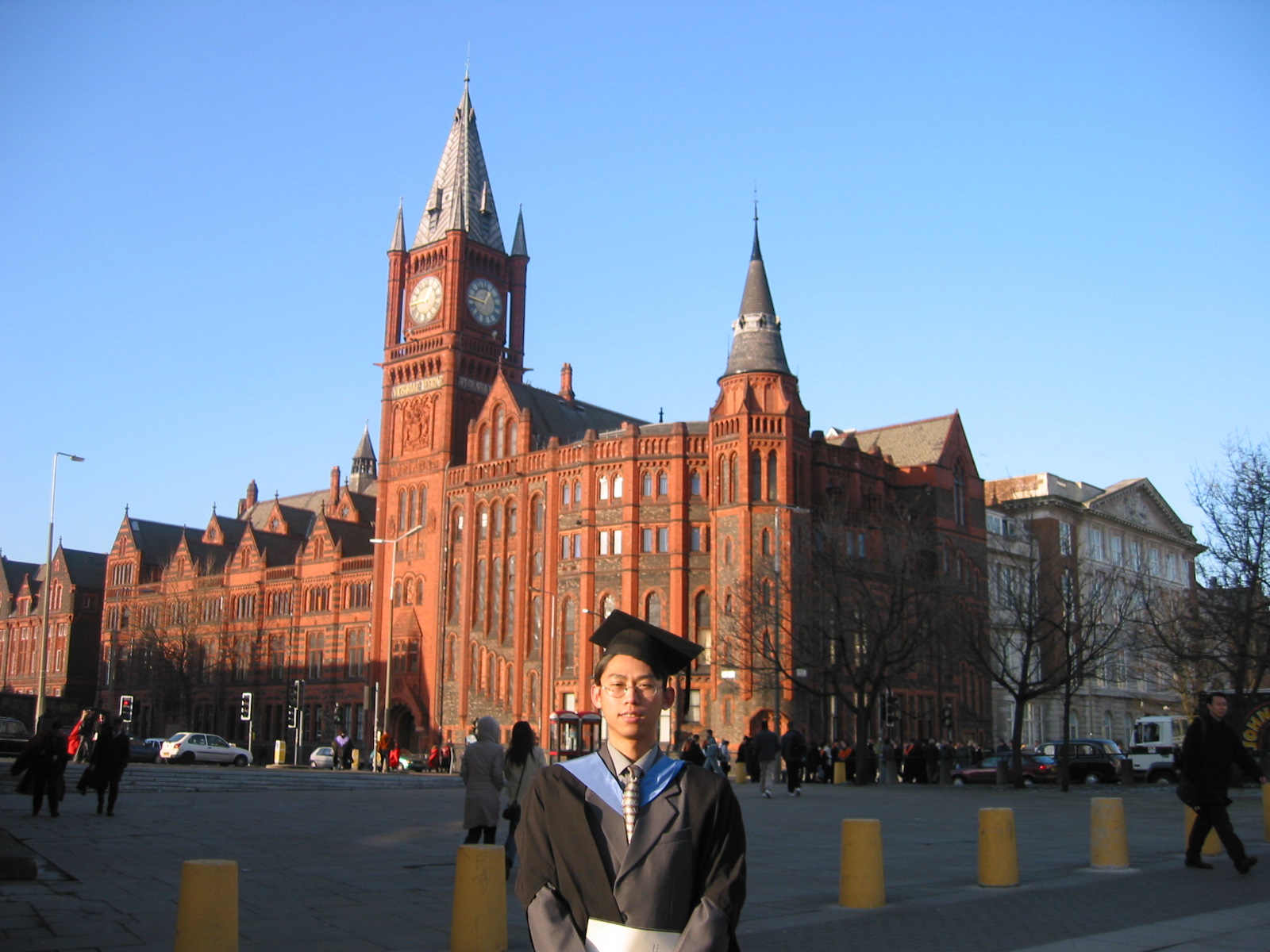
Dr Xin Bi graduated with a master’s degree from the University of Liverpool in December 2002.
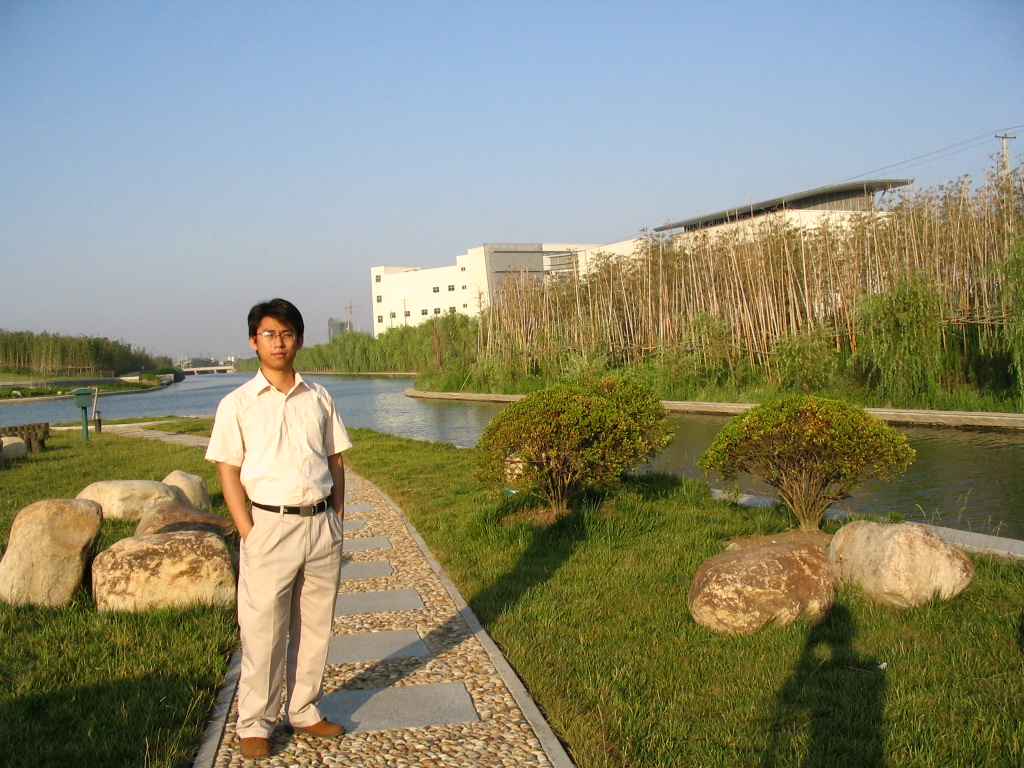
Dr Bi in 2004. Behind him was the higher education town at the time; on the right is the University of Science and Technology of China campus on Ren’ai Road.
When he decided to return in 2007, it was a major life decision made after careful thought. Staying in Beijing might well have offered other promising opportunities, but if there was truly an opportunity to take part in building a university from the ground up, then that was exactly what he wanted to do. He recalls: “I was very sure in my heart. This was what I wanted to do.”
In 2007, XJTLU’s future was still highly uncertain. The first cohort had only 164 students. Many floors in the Foundation Building were still empty, and academic staff were concentrated in only a handful of programmes. Many things had no ready-made path to follow.
When he officially reported for duty, there were just over 20 days left before the start of the new semester, and the library had to be operational by then. At the time, he was serving as a teaching assistant for three courses and, at the same time, had to turn what was still only a few bookshelves, a batch of books, and an empty library space into something that could genuinely function.
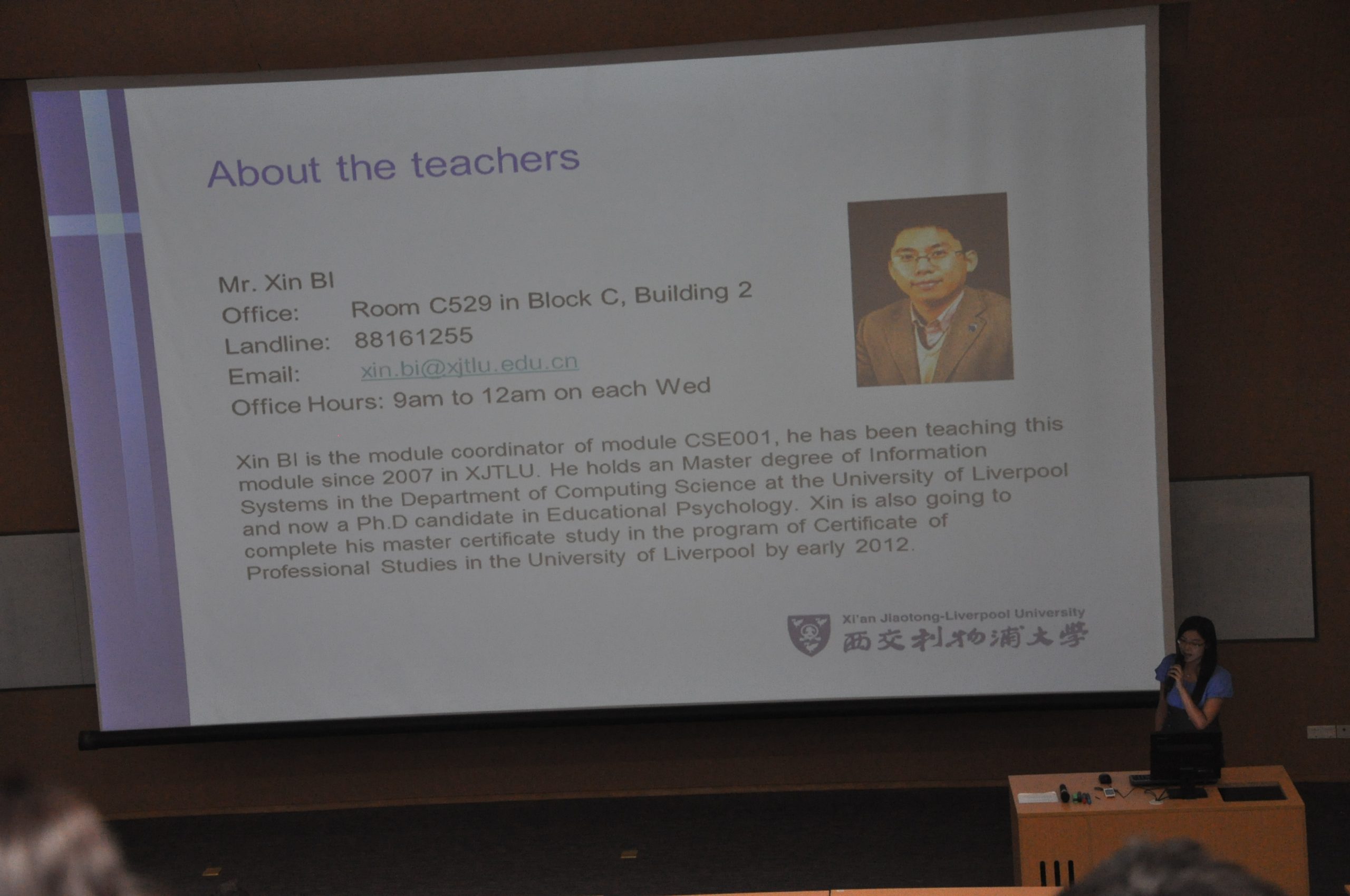
From 2007 to 2012, Dr Bi taught in the Department of Computer Science.
He had never managed a library before, so much of the work had to be learnt on the job.
The process of importing textbooks was complicated, so he reorganised it using his engineering and programmer’s mindset. Books for each course were assigned codes, and suppliers were required to label the boxes clearly. This evolved into a system in which students could swipe their cards, generate collection slips, and pick up textbooks from designated areas. As the University grew, this system continued to expand. But the original aim remained: to turn something chaotic into a system that worked.
A hurdle that had to be cleared
Around 2010, that system faced its first real test. XJTLU was about to see its first cohort of graduates, and the assessment for bachelor’s degree-awarding authority was imminent. The library was one of the core indicators.
The problem was clear: If one core indicator failed, the entire assessment would fail.
Under traditional standards, the required number of books per student was unrealistically high for such a young university. Dr Bi did not focus narrowly on the number of books itself. Instead, he returned to the logic behind the indicator: what the assessment really needed to determine was whether students had sufficient learning resources.
He brought together the University’s own library holdings, imported textbook provision, support from Dushu Lake Library, and electronic resources to form a complete argument.
The expert panel later approved the authority. For XJTLU’s early development, this was a very concrete turning point. Before that, everyone had felt as if they were holding their breath. Once the hurdle had been cleared, the University was ready for the graduation of its first cohort.
Changing tasks as the University moved forward
It was also during this period that Dr Bi’s role began to change.
In 2010, he was formally appointed University Librarian. By the summer of 2012, as construction of the new library progressed, he had moved fully into an administrative management role and no longer undertook teaching duties.
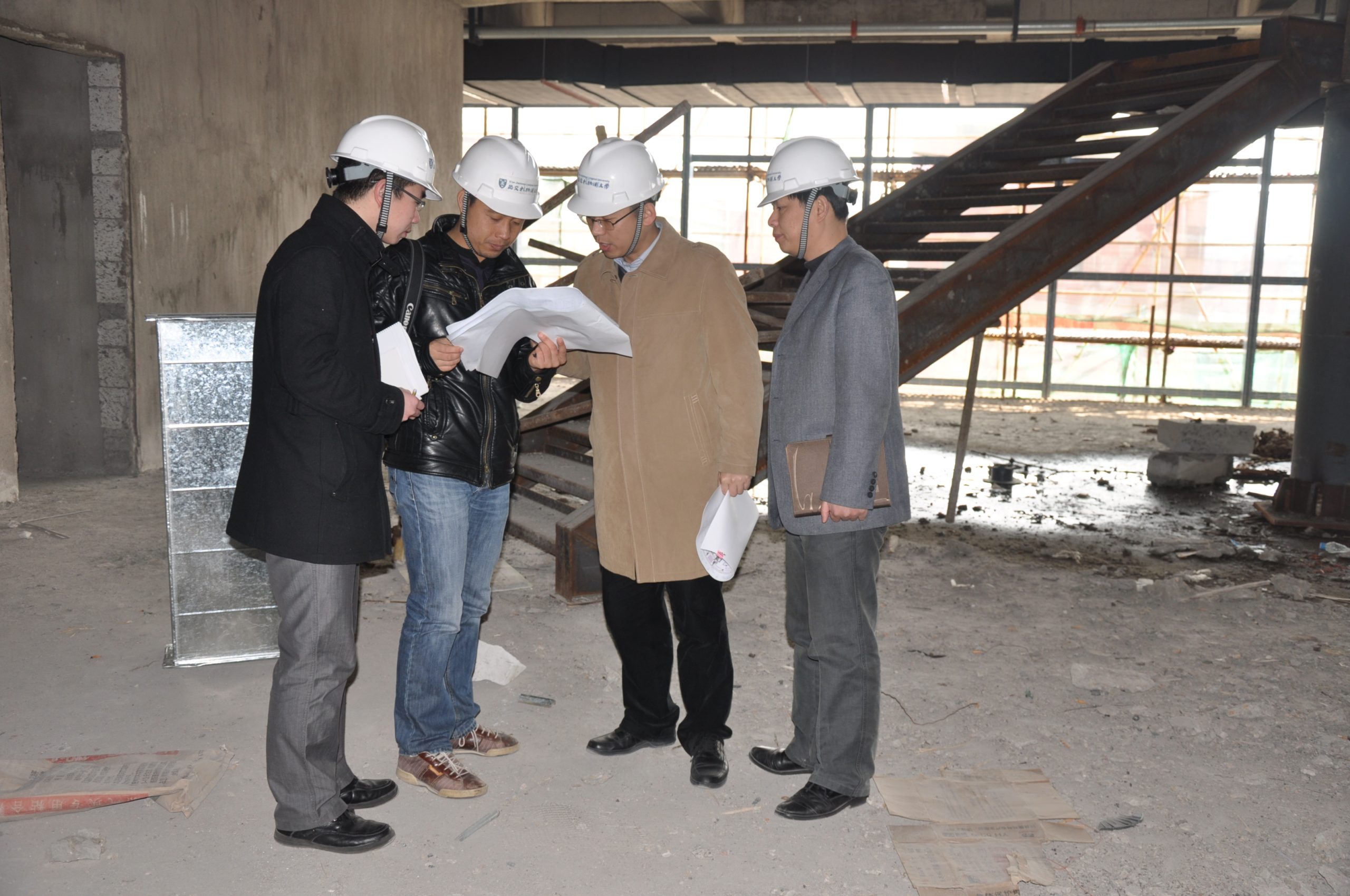
Construction site on the third floor of the Central Building library in 2012
By then, the University had entered a new stage. The number of schools had increased, academic programmes had expanded, and the need for external communication and brand building had grown. That year, the head of the Brand Management Office left. Professor Youmin Xi asked Dr Bi whether he would be willing to take on the challenge and lead the department.
He did not have a professional background in journalism, communications, or brand operations. Before taking over, he spent several days conducting research and consulting colleagues and media professionals. To him, the University had reached a new stage, and once again, he found himself on the front line of a new task.
Finding another way through
In 2013, the University’s Central Building came into use, and the new library opened with it.
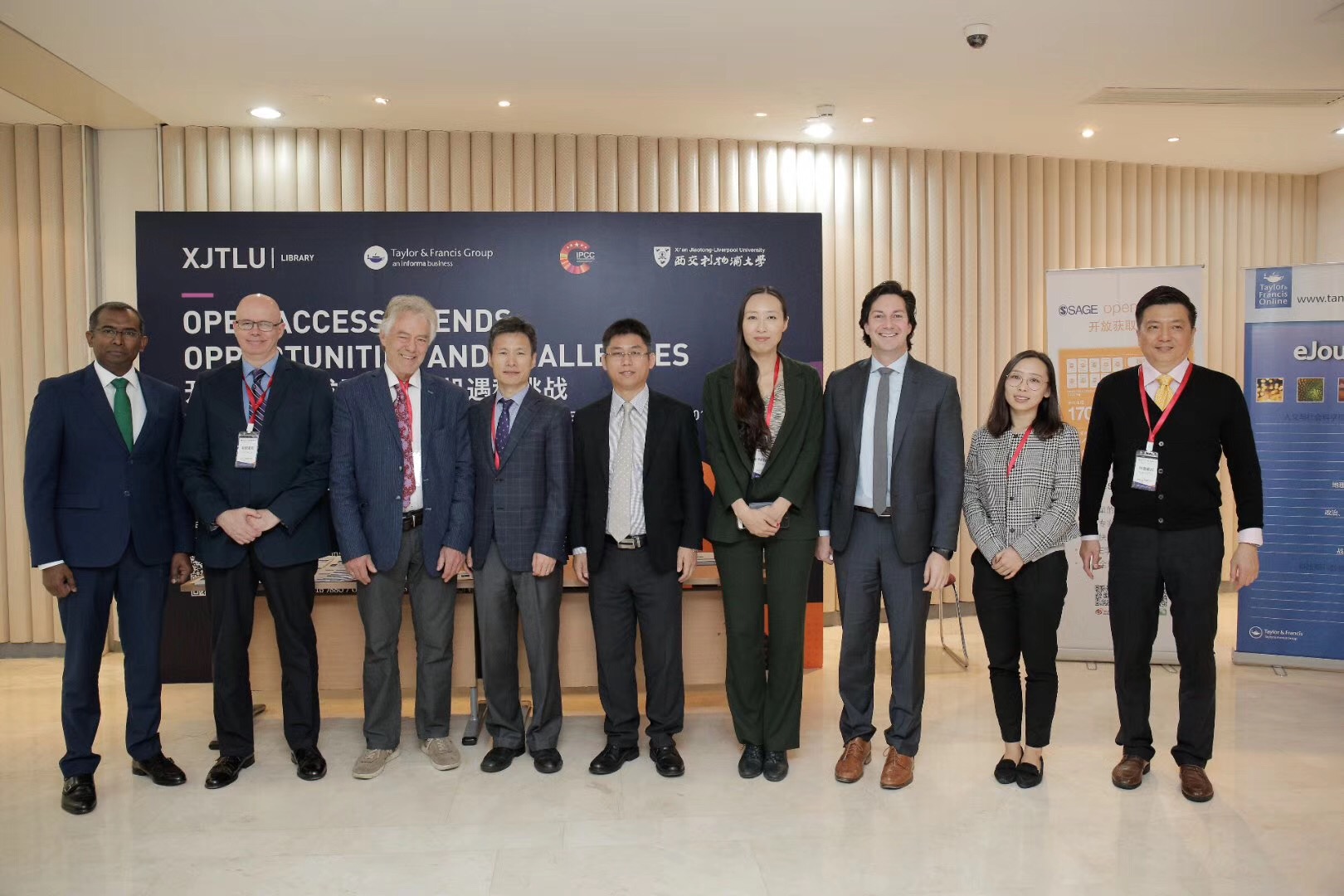
An international conference on open access to journals held at XJTLU Library in October 2017
The reserved museum space in the Central Building was also put on the agenda at this stage. The space was there, but the project was not easy. The budget was limited, the demands were many, and the proposals from conventional design companies repeatedly failed to pass review.
Later, instead of finding yet another proposal or adding more resources, he changed direction. Since XJTLU emphasised being “student-centred”, why not bring students into the process?
He invited teachers from the Department of Architecture to form a review panel, launched an open call for student proposals across the University, and then drew out the most workable elements from the submissions. The initial sketch was passed to designers and eventually gained approval from the University’s senior management.
This is how the museum came into being. When the conventional route did not work, he would reorganise the resources already available to him and find another way.
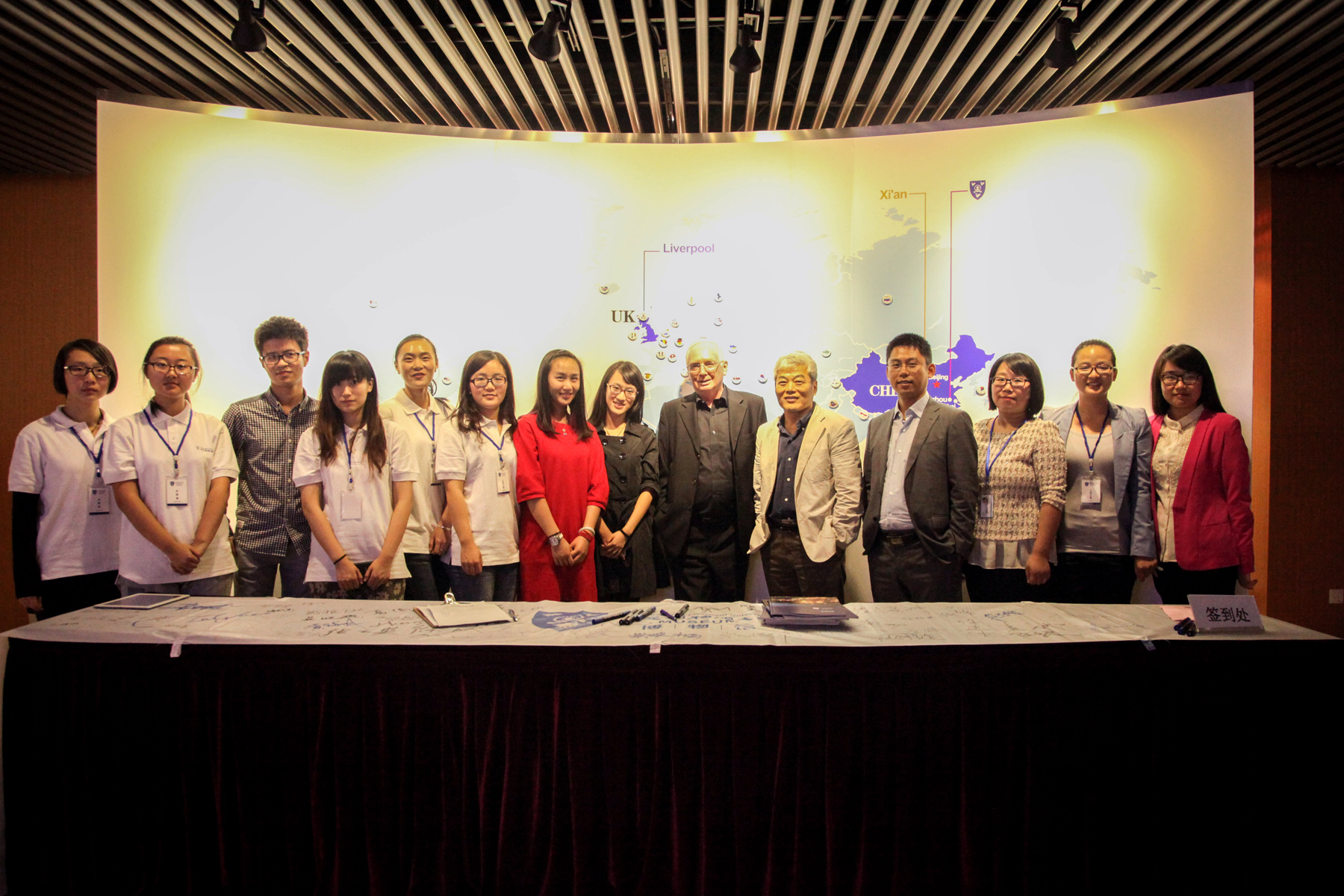 The museum's opening ceremony in 2014
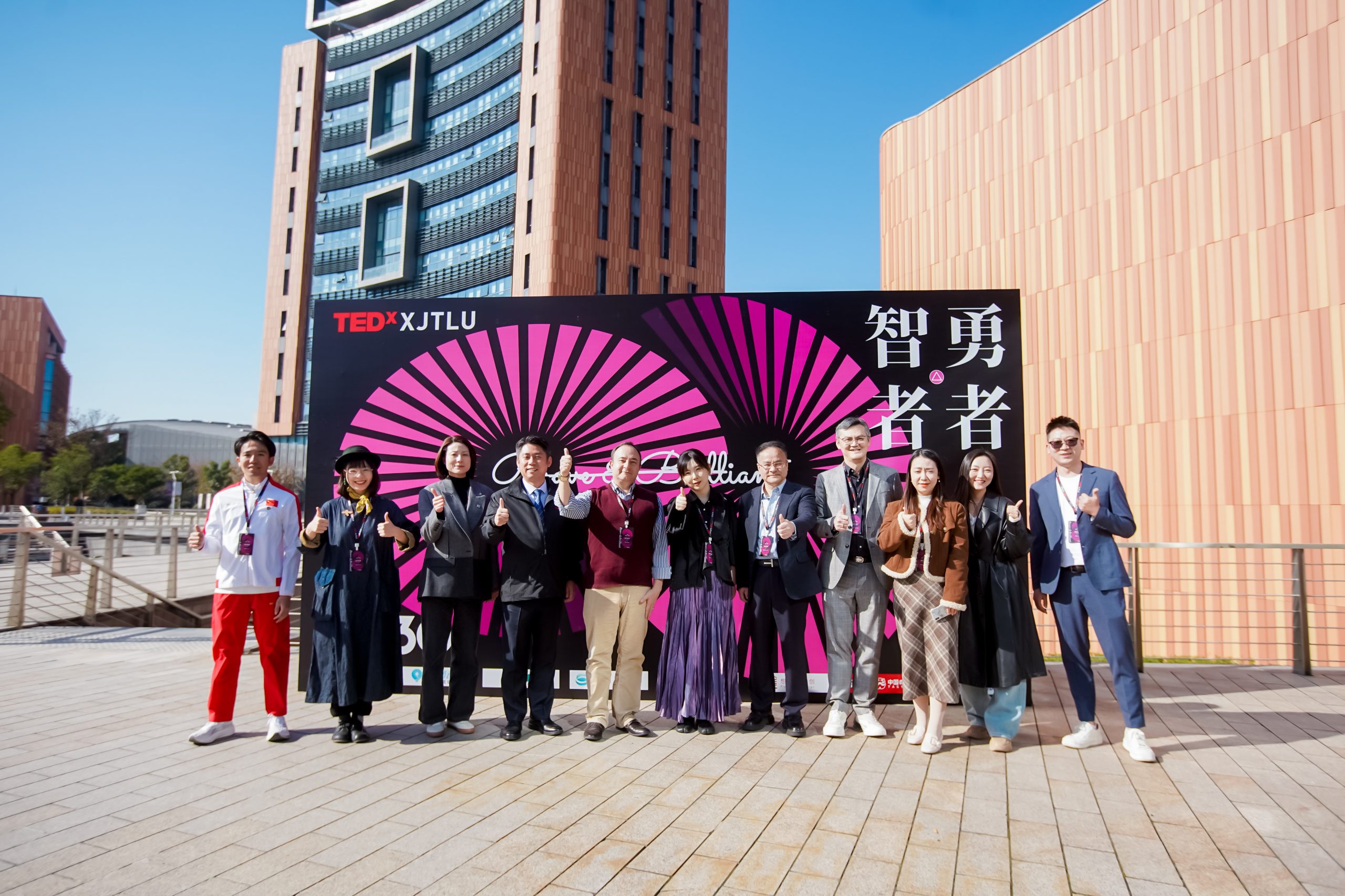
Dr Bi and the museum team founded TEDxXJTLU and have continued to organise the event.
Returning to brand and marketing
In 2017, several new joint-venture universities had been established, making competition in student recruitment and branding more complex.
Dr Bi focused on building a professional team, developing team managers, and clarifying working relationships and processes.
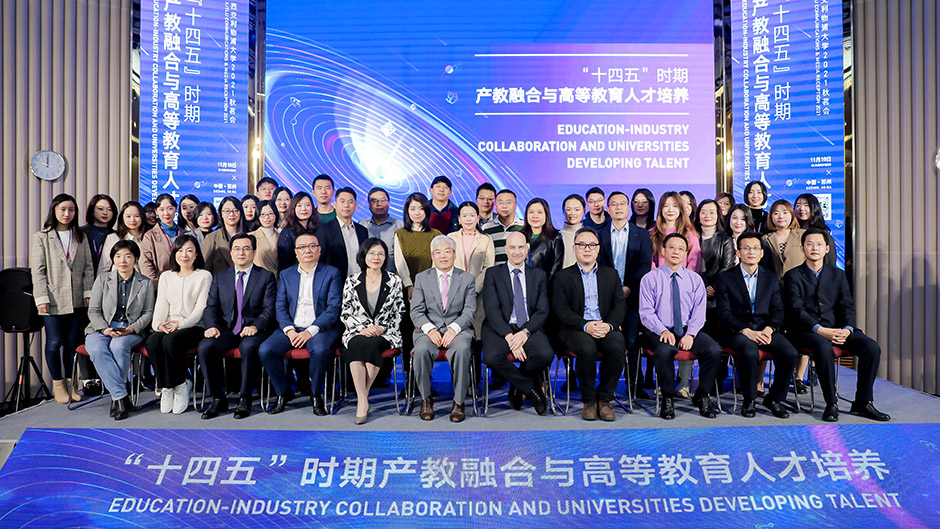
XJTLU Communications & Media Reception 2020 held by UMC
More complex systems and greater integration
By around 2020, the meaning of “builder” to him had shifted again.
After the outbreak of the pandemic, he received a call from the University’s senior management on the second day of the Chinese New Year, asking him to prepare the University for a transition to online teaching. In practical terms, there was only a three-week window. Fortunately, XJTLU was not starting from zero – since its founding, the University had used digital learning platforms, and many aspects were already supported by online systems. So when teaching suddenly had to move from offline to online, the challenge was how to bring the University’s existing foundations to full operational capacity.
Within three weeks, all 465 courses at the University were launched online. At the same time, the courses were deeply integrated with the University’s software systems and learning management platform.
In 2019, he accepted a task from Professor Xi and, as the founding Director, began building XJTLU Learning Mall. After completing the early-stage work, he handed the project over to his successor, but by early 2021, the then Director decided to leave. The project still had to be launched on schedule that May, and the responsibility once again fell to Dr Bi. In February 2021, he formally took up the role.
Three months later, after working day and night, XJTLU Learning Mall went live as planned, and its processes were successfully put into operation. On the evening after the global launch ceremony, he and the Learning Mall team finally raised a few glasses in a long-overdue celebration.
In his memory, that evening was not simply about celebrating a milestone. It was a release after the team had carried the project through under extreme pressure.
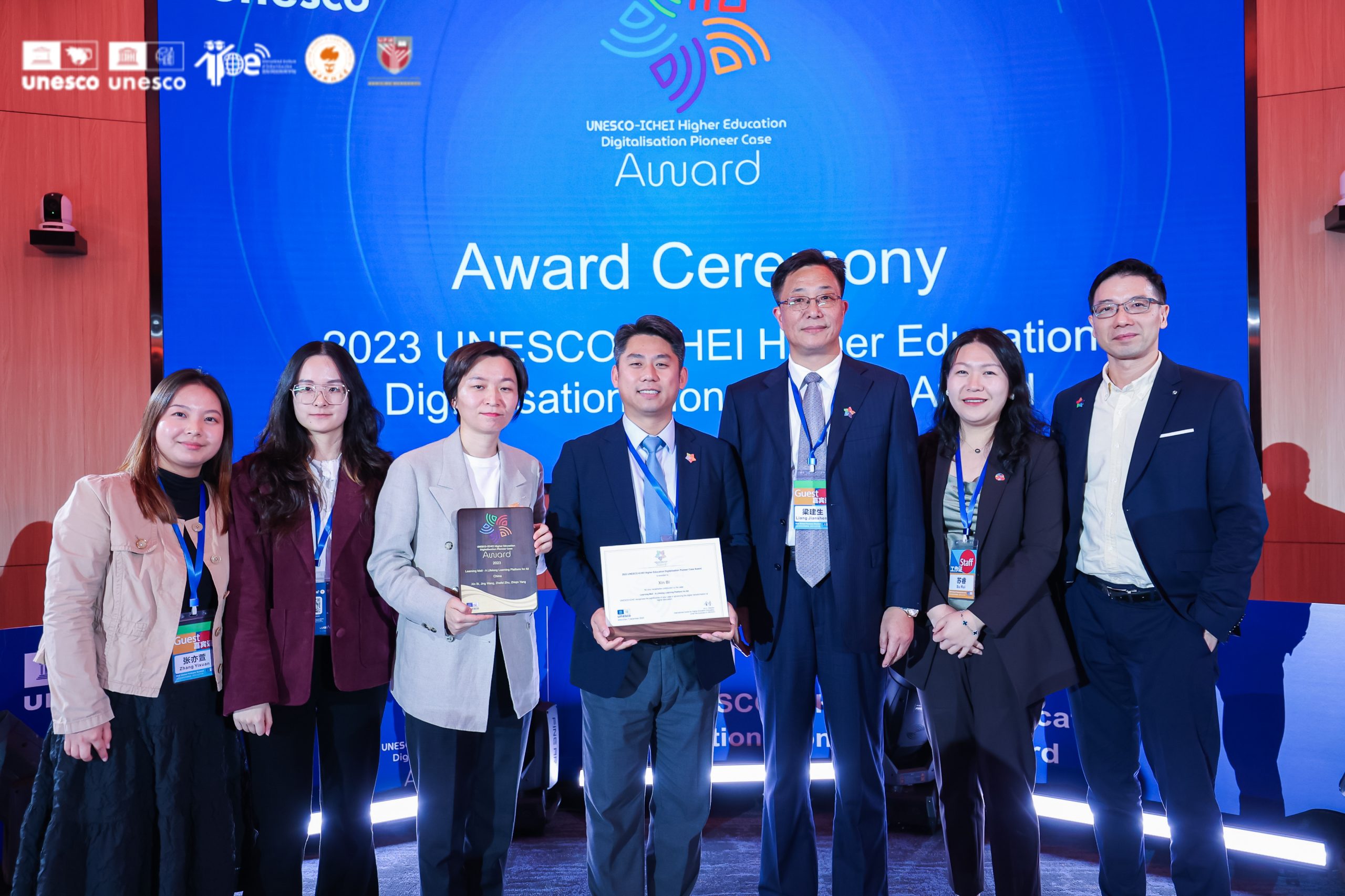
In 2023, XJTLU Learning Mall received the inaugural UNESCO-ICHEI Higher Education Digitalisation Pioneer Case Award.
Once again on the frontline
From the library to XJTLU Learning Mall, from being known in his early years as “China’s youngest university librarian” to later serving as the University’s Chief Officer of Data, Dr Bi has repeatedly found himself at the centre of XJTLU’s next stage of development. Every time the University needed new systems, mechanisms, and platforms, he was there.
When faced with a new task, Dr Bi rarely pauses to ask whether he should take it on.
“From the very beginning, I would be thinking about how to get it done.” This almost sums up his mindset at many of XJTLU’s key moments.
By Bo Kou
Edited by Patricia Pieterse
Translated by Xiangyin Han
Photo courtesy of Dr Xin Bi
01 Jun 2026