




02 Jul 2026


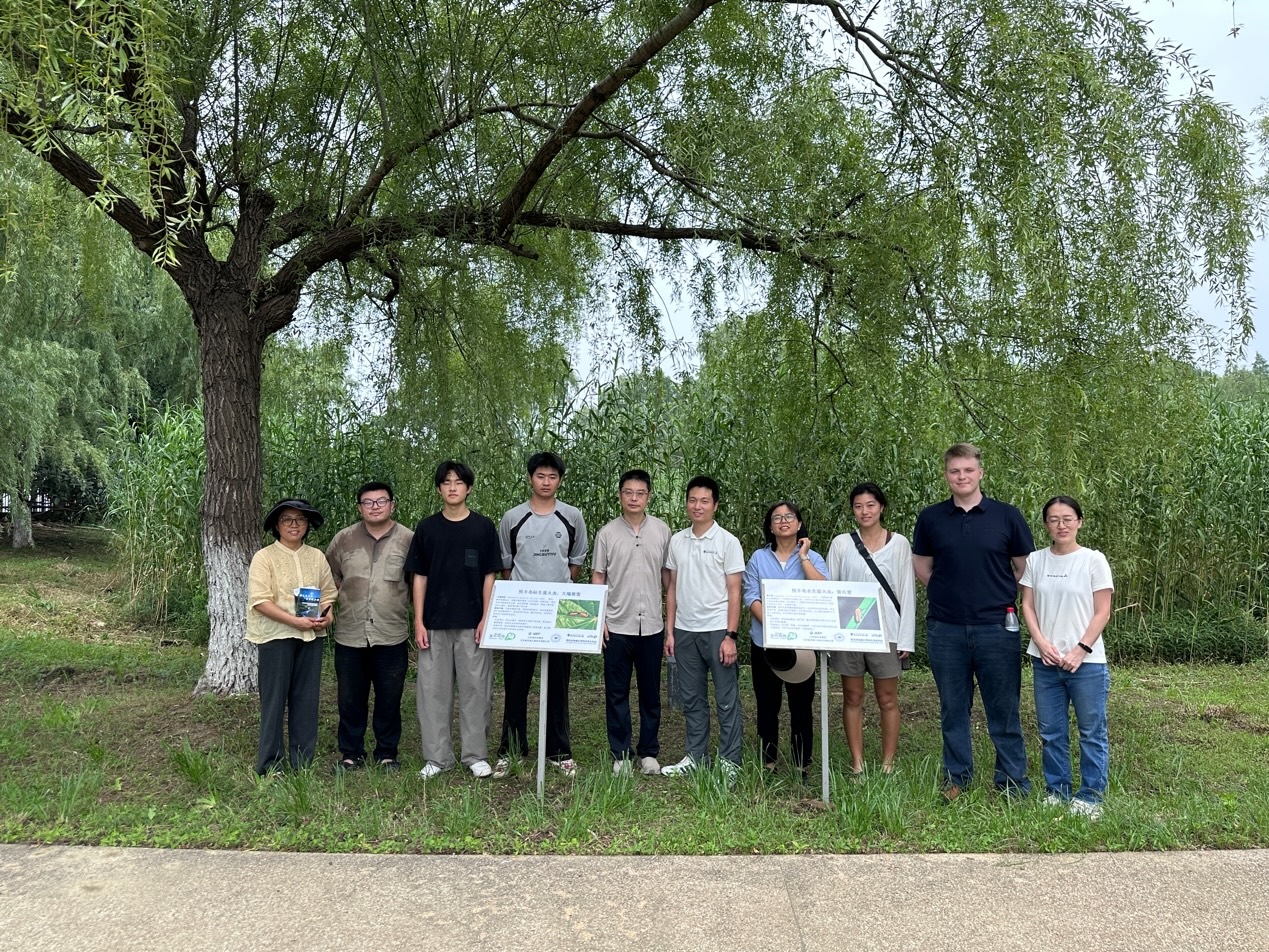 Group photo of participants involved in the firefly introduction at Yuefengdao
As night falls, the soft glow of fireflies is often seen as one of the most poetic sights of a summer evening. From an ecological perspective, however, fireflies are far more than simply beautiful.
They are sensitive to water quality, vegetation, humidity, food-chain integrity, and artificial light disturbance. Whether fireflies can survive, remain active, and gradually reproduce in a given area can therefore, to some extent, reflect the quality of the local ecological environment.
Recently, the School of Science at Xi’an Jiaotong-Liverpool University, together with Jiangsu Environmental Engineering Technology Co., Ltd. and a team from Jinhua University of Vocational Technology, carried out a firefly introduction initiative at Yuefengdao Organic Farm. The activity forms part of the fengdao biodiversity survey and enhancement project, and represents a practical exploration of urban ecological restoration, nature education, and public science communication.
Creating a suitable habitat for fireflies
The firefly introduction took place on the morning of 18 June 2026 at Yuefengdao Organic Farm. Participants included staff from Yuefengdao, Dr Yi Zou and Dr Xueqing He from XJTLU’s School of Science, and Professor Gang Yao’s team from Jinhua University of Vocational Technology.
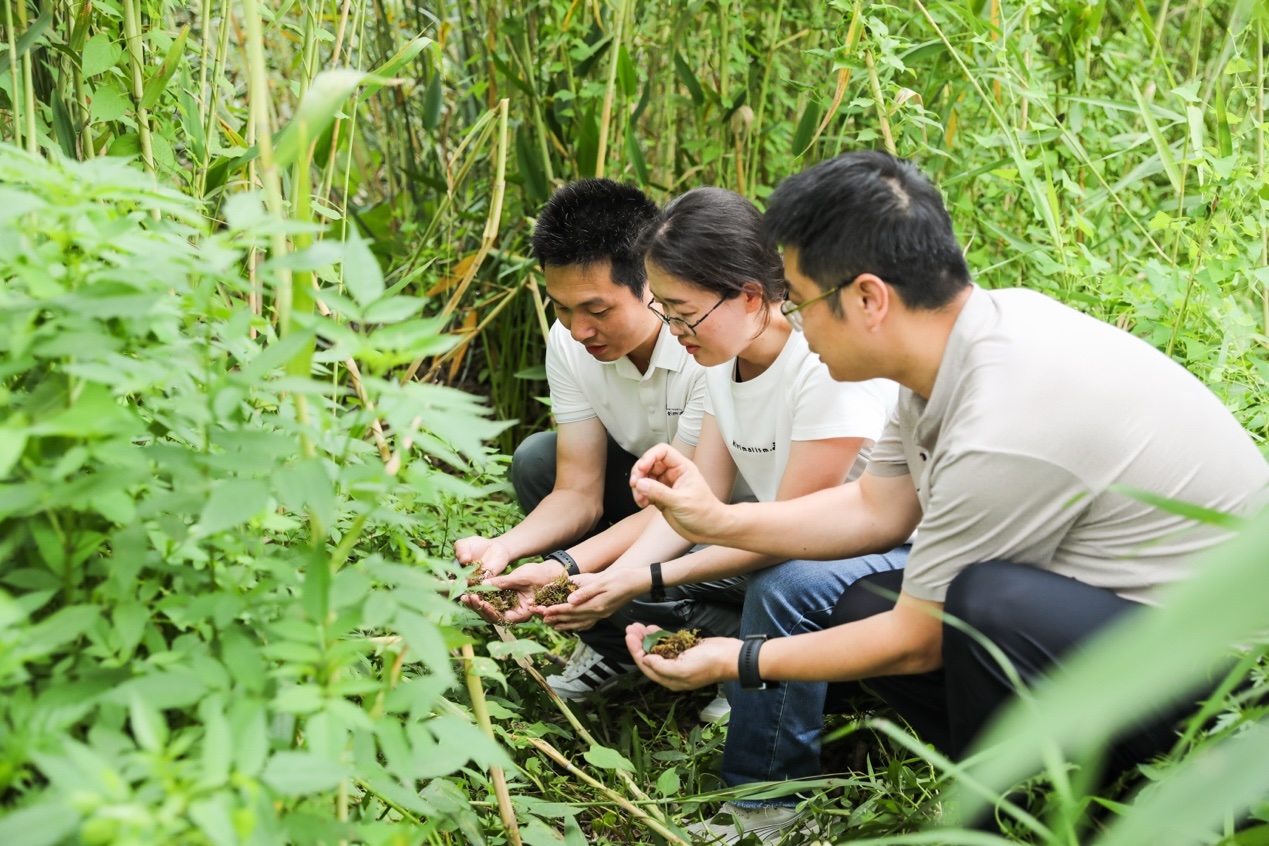 Experts carrying out the firefly introduction at Yuefengdao: Dr Yi Zou, Dr Xueqing He, and Professor Gang Yao
Before introducing the fireflies, the project team had conducted preliminary environmental surveys and habitat preparation at Yuefengdao. By strengthening sheltered areas such as reed beds, the team aimed to provide more suitable habitat conditions for fireflies.
Yuefengdao Organic Farm has a strong ecological foundation. The site includes farmland, water bodies, green spaces, and diverse vegetation. As the farm does not use pesticides in its daily management, it provides a relatively friendly environment for insects, birds, amphibians, and other organisms. Following an expert assessment, several areas of Yuefengdao were found to have humid and sheltered conditions, as well as good vegetation cover, making them suitable habitats for fireflies.
Experts also provided recommendations for follow-up management, including optimising the use of night-time lighting to minimise the impact of artificial light on firefly activity and reproduction.
A window into urban ecology
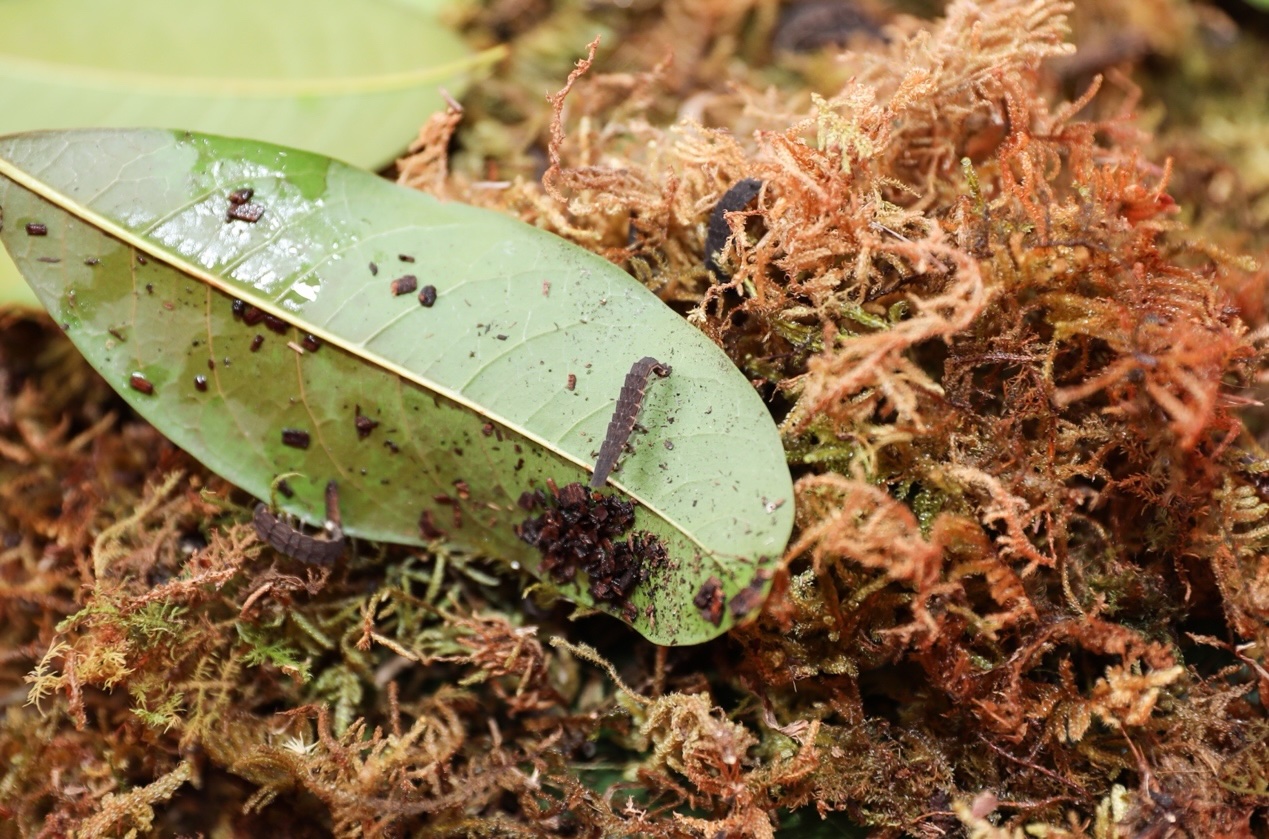 Terrestrial firefly larvae
For many people, fireflies are associated with childhood, summer nights, and memories of nature. For ecological restoration projects, however, they are more like “glowing ecological indicators”.
Dr Zou says: “Fireflies require relatively clean water, suitable vegetation, stable humidity, limited light pollution, and support from a complete food chain. They are an indicator of ecosystem health.”
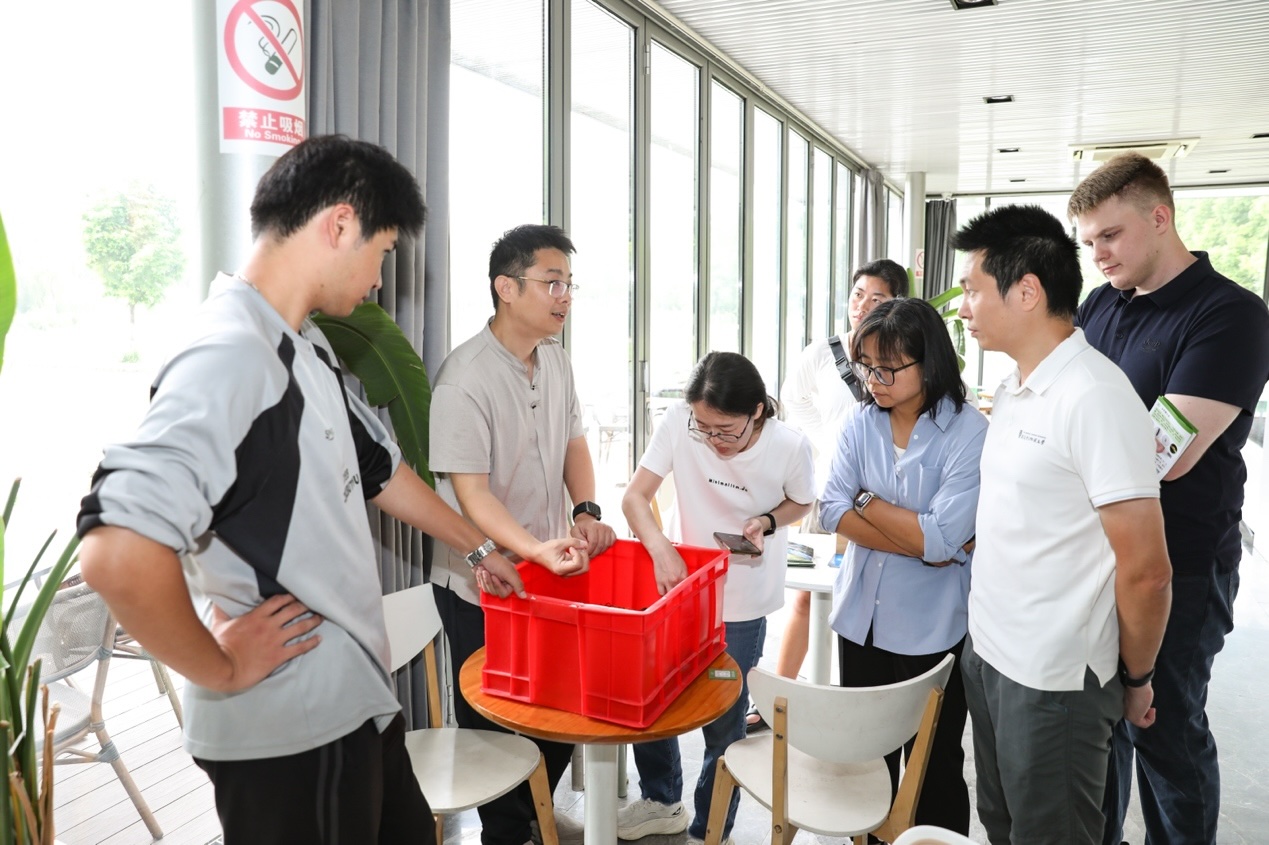 Experts are on Yufeng Island conducting an introduction to fireflies and related follow-up maintenance work.
This means that firefly introduction is not simply a matter of releasing a species into a new environment. It needs to be based on preliminary environmental surveys, habitat improvement, and continued monitoring. Whether fireflies can gradually adapt to the environment and form a relatively stable population depends on a range of factors, including water quality, vegetation structure, humidity, food sources, night-time light disturbance, and the intensity of human activity.
From Yuefengdao to XJTLU: Bringing ecological practice into teaching and research
In addition to Yuefengdao, the project team also carried out a trial firefly introduction on XJTLU’s South Campus.
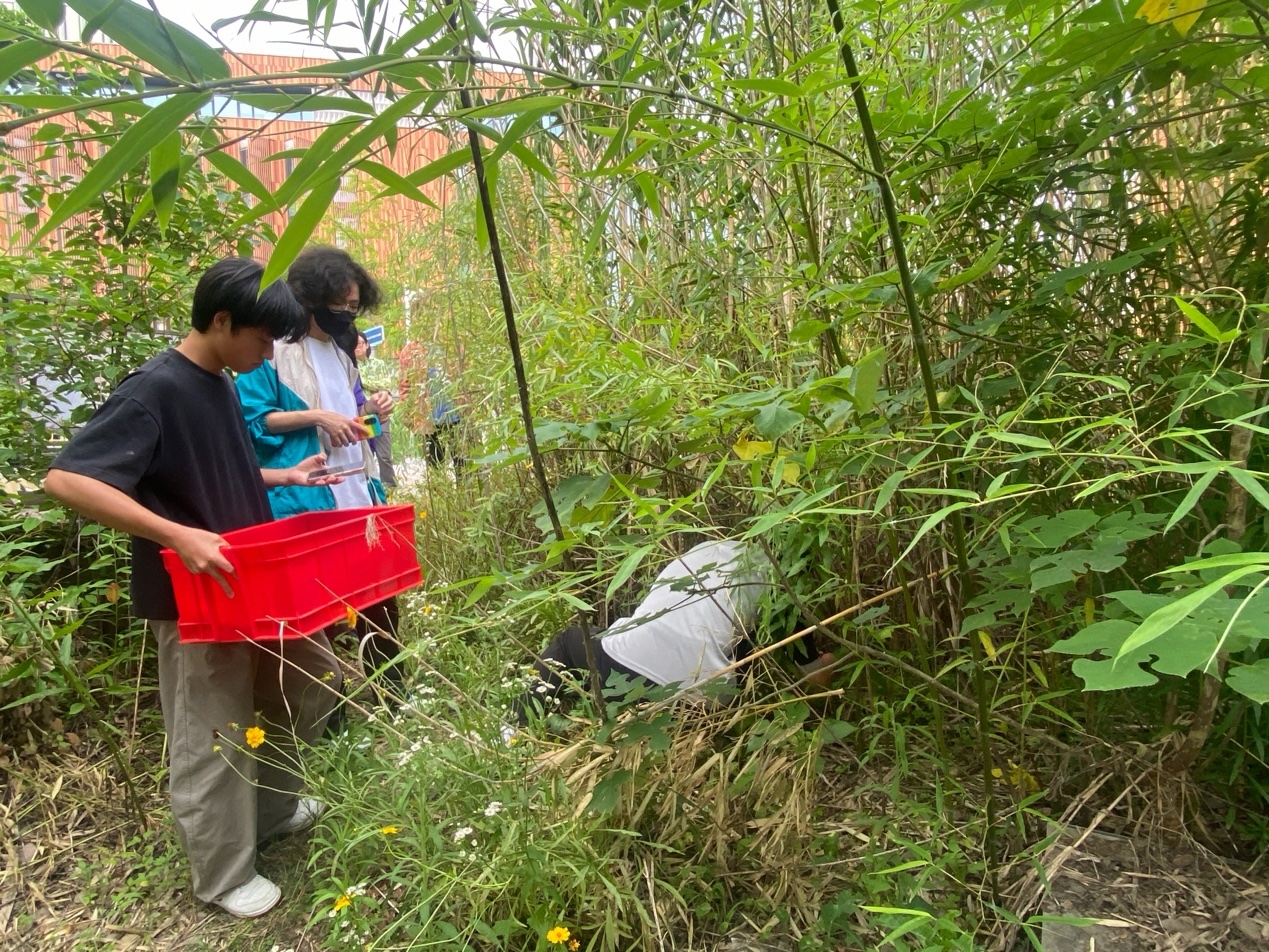 Habitat assessment and firefly introduction trial at ORTS
Experts from Jinhua University of Vocational Technology conducted an on-site assessment of the Outdoor Research and Teaching Space, or ORTS, on XJTLU’s South Campus. They evaluated its ecological conditions and found that parts of ORTS have the potential to support firefly introduction trials, particularly in terms of vegetation cover, moisture conditions, sheltered spaces, and relatively low levels of human disturbance. The project team therefore carried out an initial introduction trial in this area.
Located near the ES Building on XJTLU’s South Campus, ORTS is a practical space designed to support outdoor research and teaching activities. Initiated by academic staff from the Department of Health and Environmental Sciences, the space provides students and staff with a platform for observation, experimentation, course-based practice, and interdisciplinary projects in a real natural environment.
Since its establishment, ORTS has been developed based on the principles of natural restoration and biodiversity enhancement. Through continuous development, the area has formed relatively diverse plant communities and insect diversity, and has also attracted frogs, birds, small mammals, and other animals.
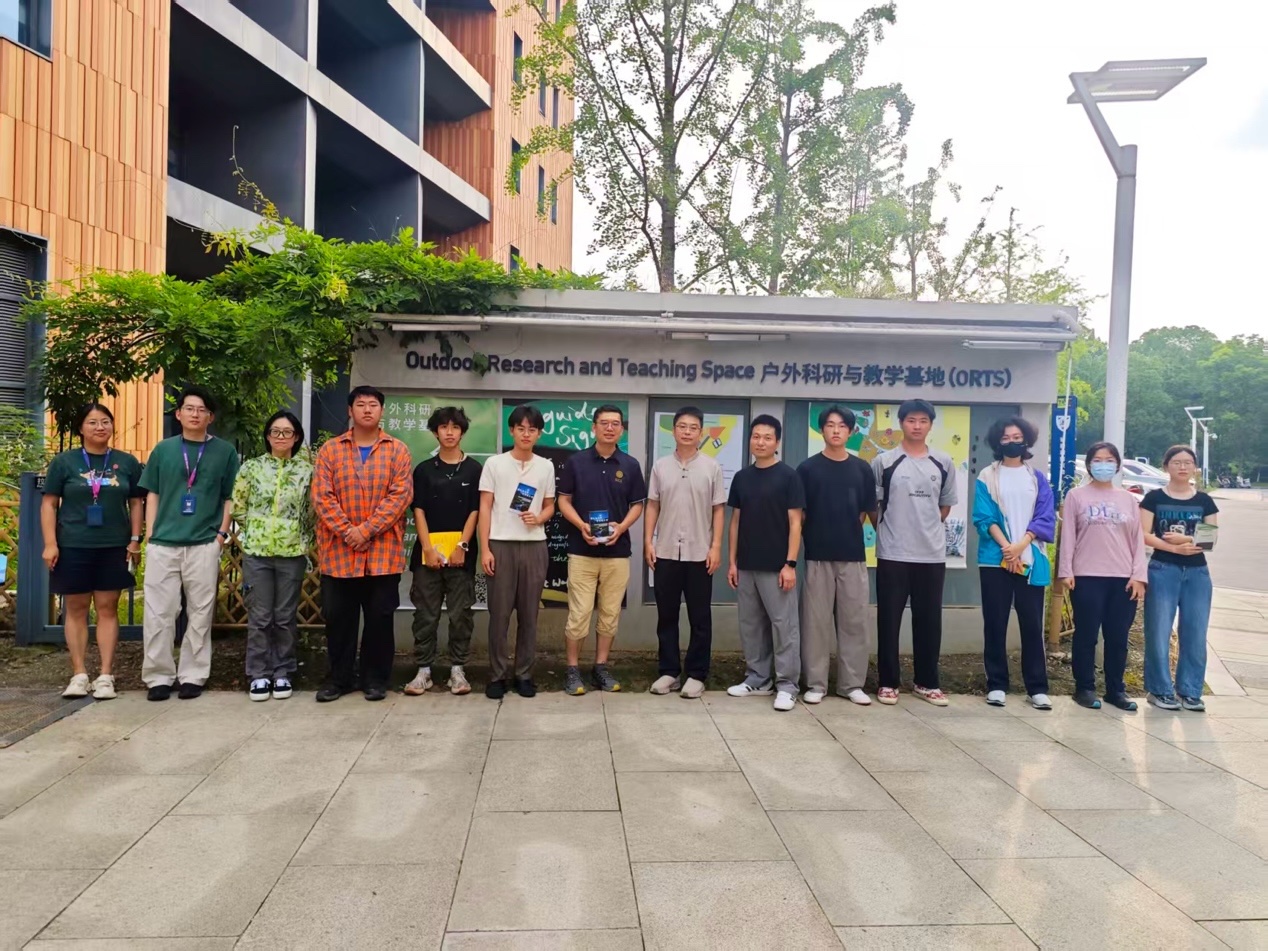 Academic staff, ORTS Society members, student volunteers, and photographers involved in the ORTS firefly introduction
The initial firefly introduction at ORTS will be combined with follow-up species monitoring, ecological teaching, and research observation. The project team plans to continue recording environmental changes in the area and observing how the fireflies adapt. These observations will also be used in course-based practice and public science communication.
Re-understanding nature in the city
According to the project team, the purpose of introducing fireflies is not merely to add one insect species to the environment. Rather, through continuous observation and habitat creation, the initiative aims to deepen understanding of the relationships among water bodies, vegetation, insects, amphibians, and human activities in urban spaces.
“The ecological environment is the foundation of human survival,” says Dr Zou. “We hope that, even in highly urbanised areas, members of the public can remain interested in nature and pay attention to the health of urban ecology and the environment.”
Moving forward, the project team plans to combine course-based practice, ecological surveys, species monitoring, and public science communication activities to continue recording environmental changes at Yuefengdao and ORTS, as well as the adaptation of fireflies in these areas. These observations will provide field-based materials for students and staff to better understand insect diversity, wetland ecological restoration, nocturnal ecological environments, and the impact of human activities.
Content:Luyao
Photos and review:Dr Yi Zou
02 Jul 2026