




Human-AI research aid wins Advance HE Global Impact Grant

16 Aug 2026


A research project to help teachers at Xi’an Jiaotong-Liverpool University (XJTLU) use artificial intelligence (AI) to develop bespoke, structured action research plans has won funding from the British nonprofit organisation Advance HE, signifying international recognition of its higher education innovation.
The InQ2Plan application, led by Dr Erick Purwanto, Senior Teaching Fellow from XJTLU’s School of Advanced Technology, Yu Wang, Director of the Education Development Unit (EDU) and Yexiang Wu, Instructional Designer from the Academy of Future Education, has received a Global Impact Grant under the theme “Education for the Future”.
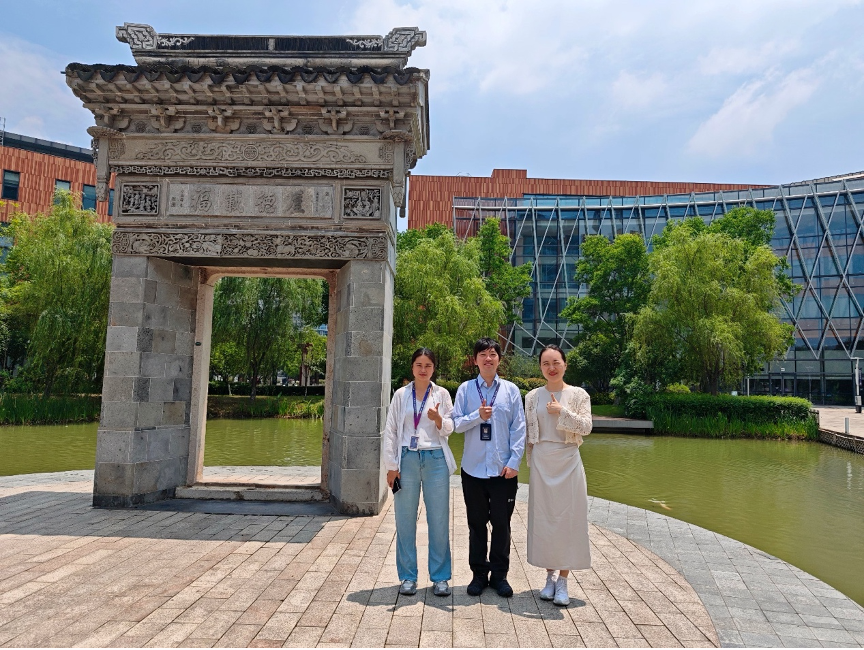
From left to right: Yexiang Wu, Dr Erick Purwanto, Yu Wang
By combining human expertise with AI-guided inquiry, the platform aims to make educational research more accessible, personalised, and scalable for educators across disciplines.
From inquiry to action plan
The initiative grew from a practical challenge faced by XJTLU’s educational development team: while many university teachers have valuable ideas for improving student learning, translating them into rigorous, publishable educational research can be difficult without expert support.
“We wanted to create something that could support colleagues in a more personalised and scalable way,” Wang says. “Many teachers have strong disciplinary expertise but need guidance in turning teaching ideas into well-designed action research.”
Rather than simply responding to prompts, InQ2Plan acts as a collaborative research partner. Through a structured process, it helps clarify teaching challenges, formulate research questions, connect work with relevant educational theories, and develop coherent action research plans.
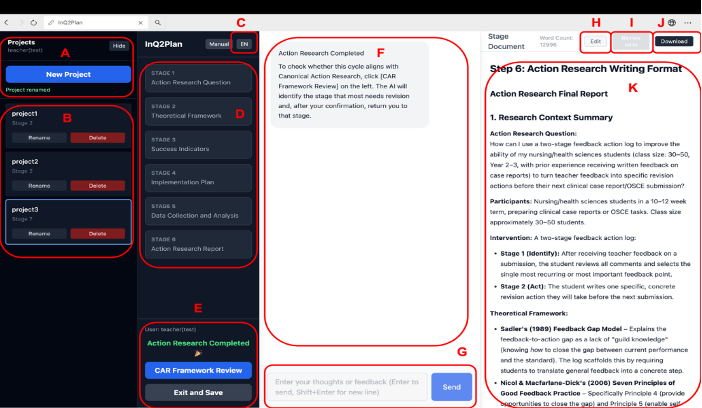
One distinctive feature is its simulation function. Before implementing a teaching intervention, users can generate a simulated evidence table to test the efficacy of their proposed data collection and evaluation methods. This allows teachers to spot potential gaps early and strengthen the methodological rigour of their studies.
In a pilot study involving 12 lecturers, participants reported that InQ2Plan assisted them in moving from broad teaching concerns to structured, evidence-informed research designs tailored to their classrooms. The system also proved effective across multiple disciplines including economics, language learning, engineering, and science.
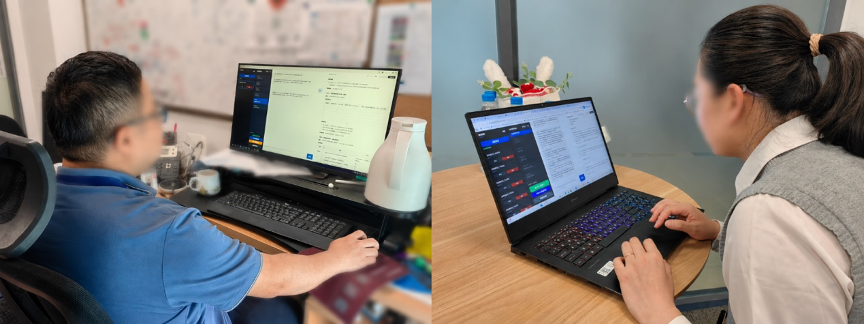
Advancing human-AI collaboration
Wu says the initiative represents a broader shift in how educators will work with AI. “Human-AI co-creation will become essential for educators in the future,” she explains. “Our goal is to strengthen teachers’ research capabilities while fostering reflective, analytical, and responsible ways of working with AI.”
Dr Purwanto also believes the project’s significance extends beyond XJTLU. “Universities worldwide are asking similar questions about how to support teachers at scale and how to use AI responsibly in education,” he adds. “This recognition provides an opportunity to share our experience internationally while continuing to improve the platform.”
With funding from Advance HE and the XJTLU EASE Fund, the research team – which also includes students Youzhong Fan, Jincheng Zhu, and Kai Ye from the School of Advanced Technology – plans to further refine InQ2Plan based on user feedback, strengthen its multilingual capabilities and simulation functions, and expand its application across campus.
Long term, the team hopes the platform will serve not only as a practical tool for educational development but also as a scalable model for human-AI collaboration in higher education.
By Huatian Jin
Edited by staff editor
Photos courtesy of Erick Purwanto
16 Aug 2026