





XJTLU student KO’s the competition at World Humanoid Robot Games

26 Oct 2026


A Digital Media Arts student from Xi’an Jiaotong-Liverpool University (XJTLU) recently won the 58kg free combat event at the second World Humanoid Robot Games as part of an interdisciplinary team formed by Shanghai Theatre Academy and Chinese artificial-intelligence company AGIBOT.
Minyu Yao, a Year Four student in XJTLU’s Academy of Film and Creative Technology, served as a lead operator for STA GOGO from the round of 16 to the final.
The Games, held in Beijing, brought together 666 teams and 2,056 humanoid robots competing across 51 events, including football, dance, table tennis, and free combat.
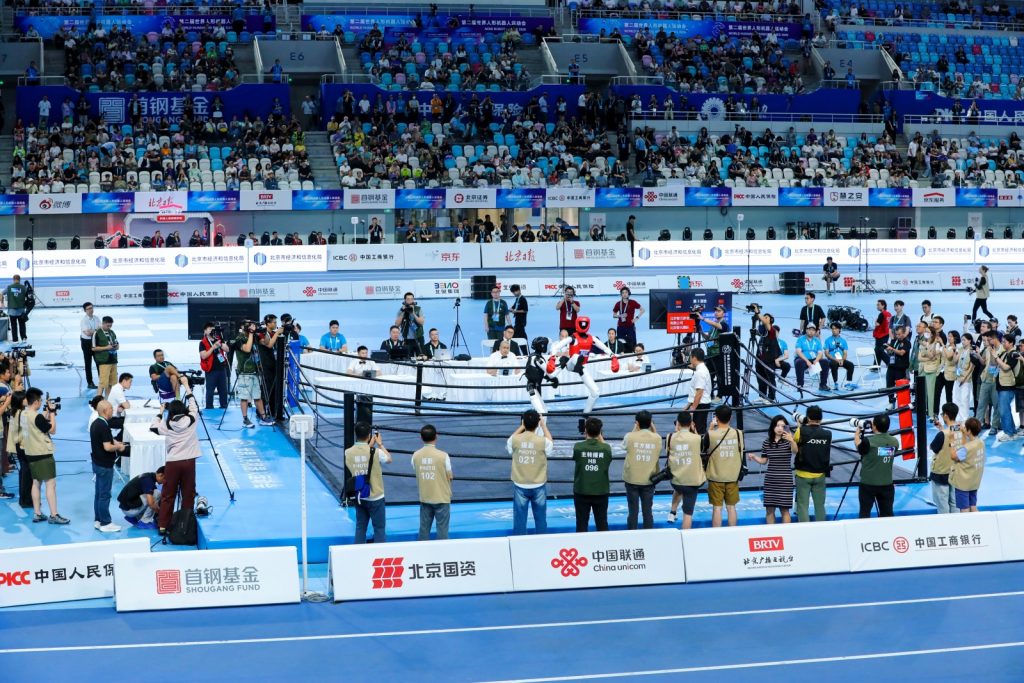
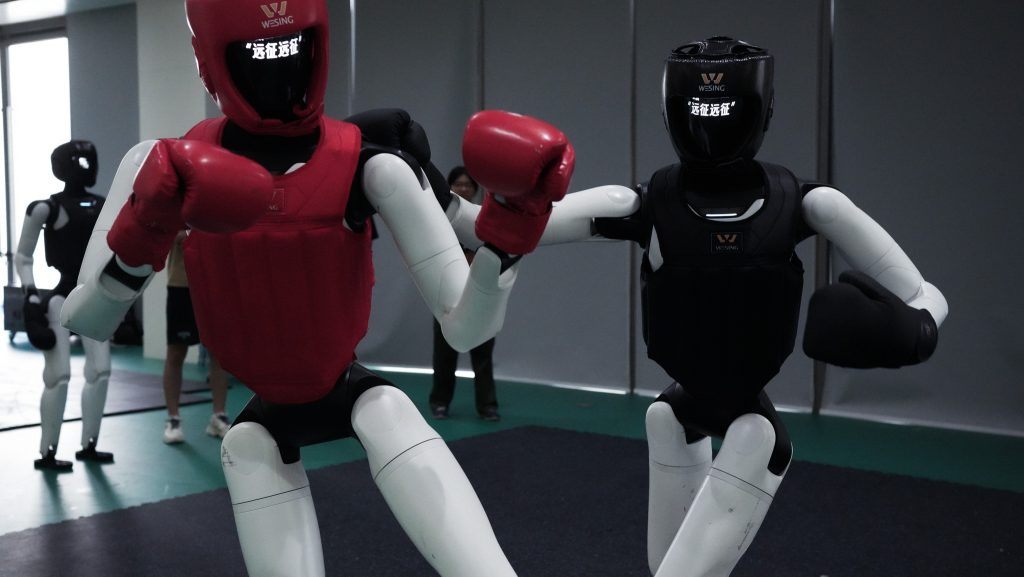
The 58kg free combat competition at the second World Humanoid Robot Games in Beijing
Yao had only two days to learn how to operate the robot, codenamed “660”, memorising around 60 moves and key combinations, and completing tests of fixed-point movement, defence, and sparring. The firmness of the floor, the condition of the robot, and its posture after strikes can all affect balance and alter the outcome of a manoeuvre.
She says the team’s initial strategy was to attack. However, after seeing robots in the competition arena with broken limbs and unable to stand, leading to elimination, the emphasis shifted from “landing blows” to “staying upright until the end”.
“At first, I thought hitting hard was all it took, but later I realised that protecting our robot was more important,” says Yao. “More often than not, it’s not the opponent that takes it down; it ends up hurting itself.”
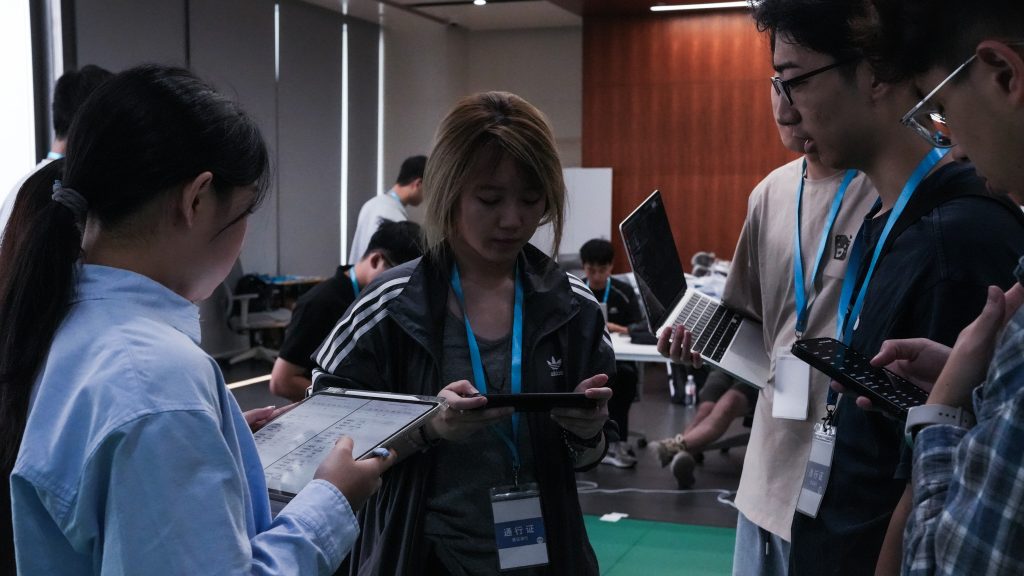
Minyu Yao (centre) conducts robot control tests
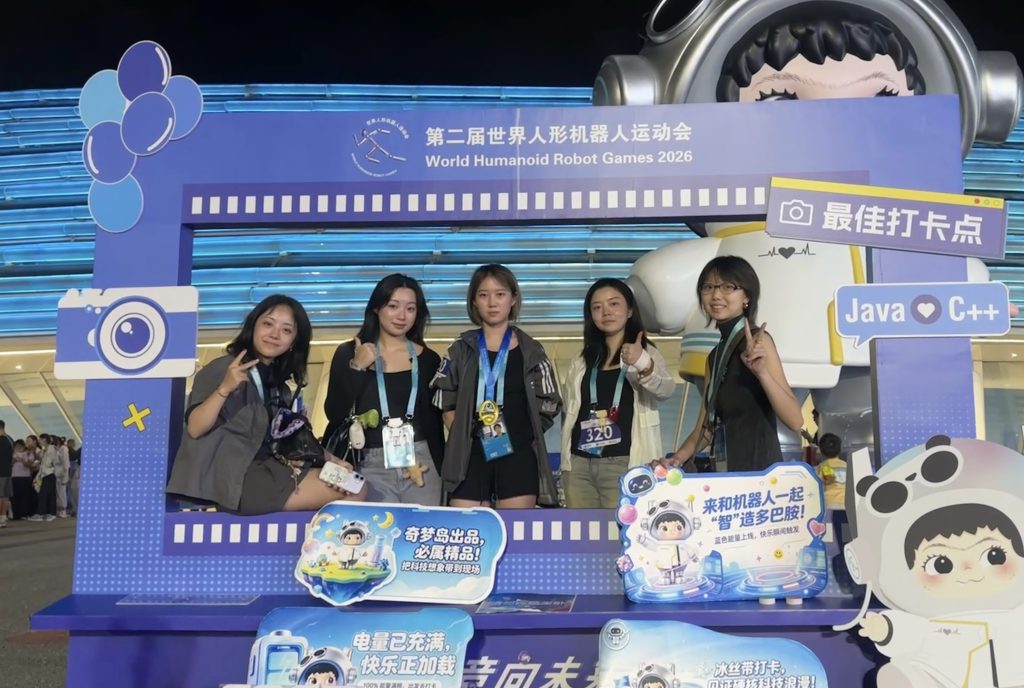
Minyu Yao (centre) with her STA GOGO teammates
Seconds out
Yao’s journey into robotics began this summer when she took part in the 2026 Digital and Intelligent Machinery Workshop, an eight-day programme held at Shanghai Theatre Academy led by international robotic artists Bill Vorn and Louis-Philippe Demers.
She joined theatre creators, professional lighting designers, and scholars of computer research and digital art in exploring how machines understand time, turning concepts into performances, sounds, and visuals to form collective artworks.
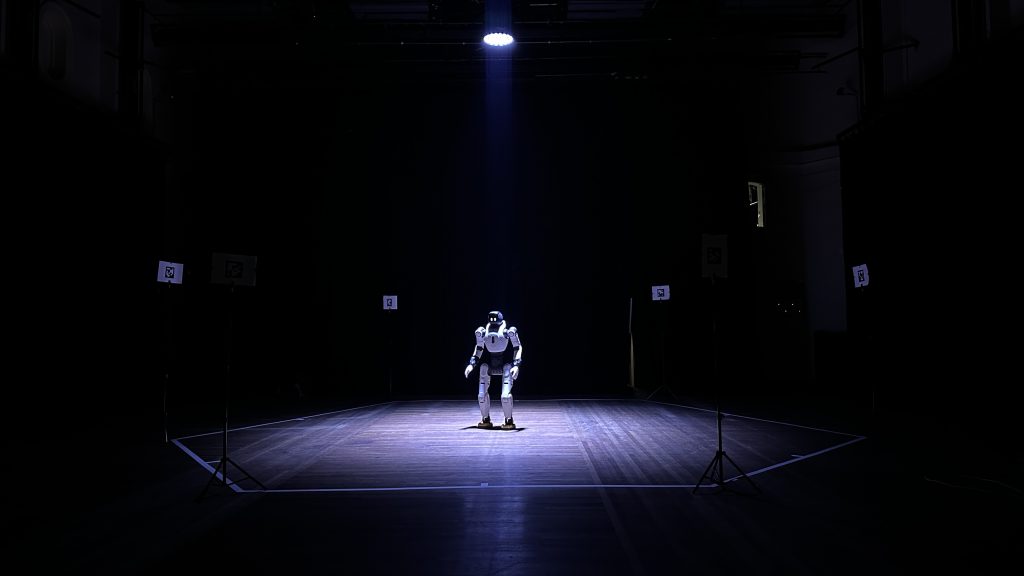
An artwork presentation at the 2026 Digital and Intelligent Machinery Workshop
Yao says at the workshop, she saw how bringing people from diverse backgrounds together can spark unexpected creativity.
During the workshop, Yao operated a humanoid robot for the first time and discovered it was not as precise as she had imagined, requiring constant observation and adjustment. This is when she connected with the teachers and students at the academy who invited her to join STA GOGO.
Yao feels her studies in Digital Media Arts have helped her understand robot movements more quickly. In class, she used motion capture technology to record real human movements and adapt them into digital character animations.
“With animation, you can keep tweaking every part, but you can’t do the same with parts of a robot,” she explains. Robots have physical limitations such as less-flexible joints and the inability to stand on tiptoe, and they risk hitting themselves when their range of motion is too large. Maintaining balance is a primary concern.
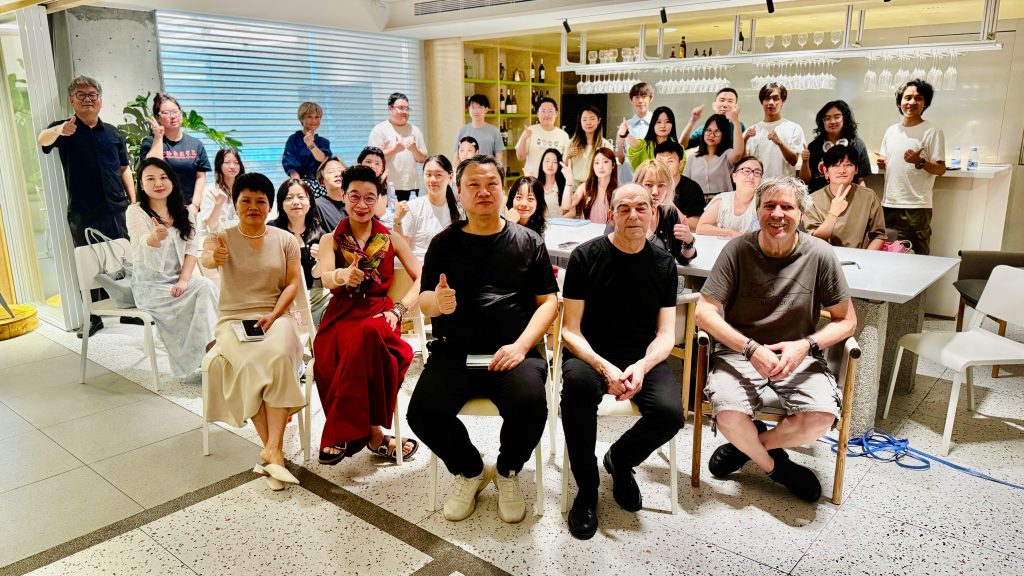
Participants at the 2026 Digital and Intelligent Machinery Workshop
Reality loop
Tian Leng, a lecturer in XJTLU’s Digital Media Arts programme, believes there is a process between digital art and robot art, moving from reality to digital and then back to reality.
Digital art transforms real-world information and sensory experiences into digital content, expressed through imagery and interactive installations, while robot art turns data into movements and interactions in physical space.
He points out that studies in creative coding, motion capture, and human-computer interaction (HCI) design, combined with an innovative cross-media and cross-disciplinary mindset, enable students to transition from digital media into the fields of robot art and HCI.
These experiences have shaped Yao’s creative practice. She plans to integrate virtual reality with robotic arms to add authentic tactile sensations to virtual experiences.
She says the competition revealed the limitations of technology, while the workshop led her to focus more on human experience. She hopes to continue exploring how humans and machines impact each other’s experience.
Robots during a body combat drill
By Wenzhen Li
Edited by staff editor
Translated by Xueqi Wang
Photos courtesy of Minyu Yao
26 Oct 2026