








How augmented-reality games can help autistic children remember more

19 Nov 2026


In 2022, Dr Bo Zhang, Assistant Professor in the Entrepreneurship and Enterprise Hub at XJTLU Entrepreneur College (Taicang), ran a month-long experiment to investigate whether playing augmented-reality (AR) games can improve the spatial working memory of children with autism, a neurodevelopmental condition that can affect how a person communicates, learns, and interacts with others.
The result exceeded her expectations; the children who used AR games showed significant improvement in memory retention.
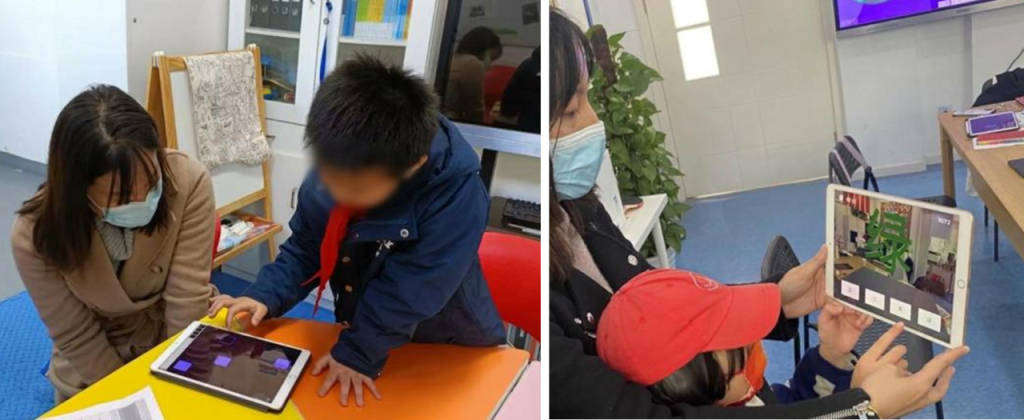
Dr Zhang observes children during the experiment in Wuxi and Shanghai
Testing a theory
Building on her PhD research at University College Dublin, Ireland, where Dr Zhang studied collaborative games in virtual-reality (VR) environments, she saw how technology could serve underserved groups, including women, children and older adults. In 2022, Dr Zhang began working with a rehabilitation centre for autistic children in Wuxi, Jiangsu province, using AR technology to create a cognitive training game.
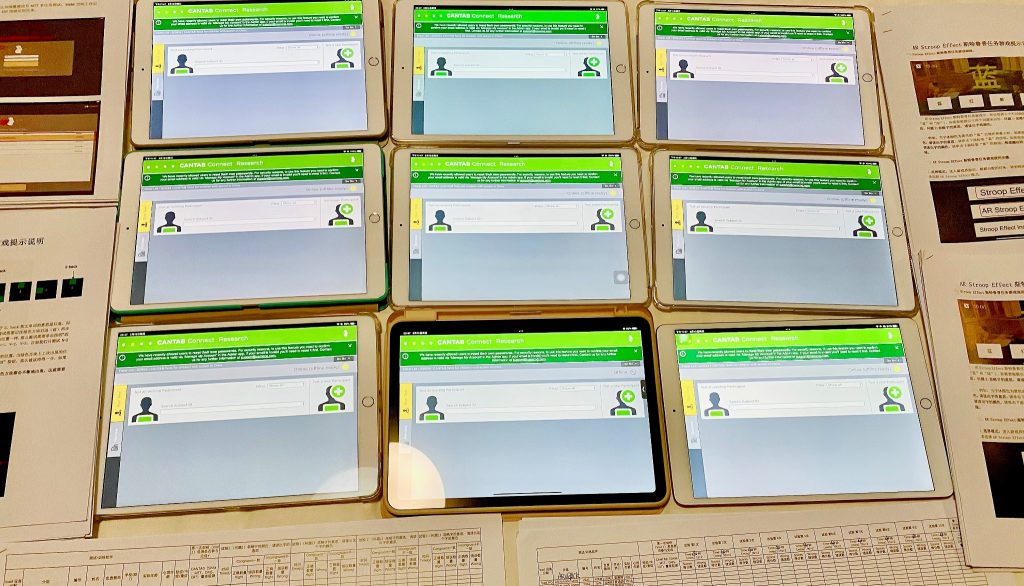
The Cambridge Neuropsychological Test Automated Battery (CANTAB) was used to assess cognitive performance before and after training.
She divided 80 children, ages 4 to 15, into four groups randomly: two groups played AR games, either “remember the location” or “click by colour”; one used a 2D colour-clicking game; and one received no training and took part only in the pre- and post-testing. The trial lasted one month.
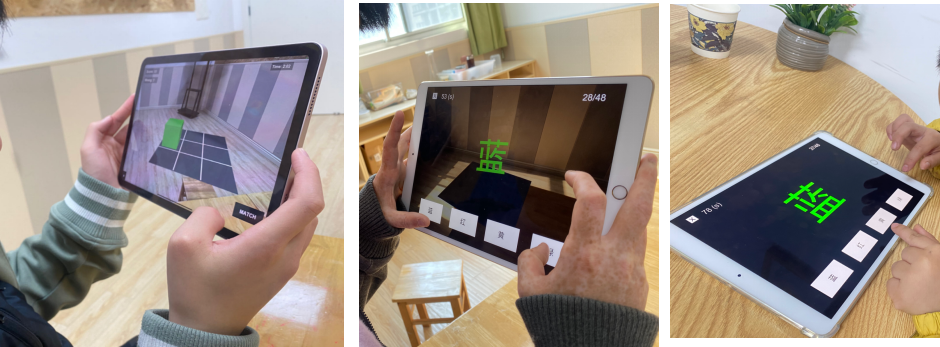
AR cognitive-training games designed for autistic children
The centre works one-on-one, so each child had a dedicated teacher to guide them through the training. If their attention drifted, the assessment software saved their place so they could pick up from the same point next time.
After a month, both the AR training groups showed effect sizes on spatial working memory, respectively 1.000 and 0.962, well above the conventional threshold of 0.8 for a large effect. The group using a regular tablet also saw a marked improvement (0.567), while the control group showed almost no change (0.063).
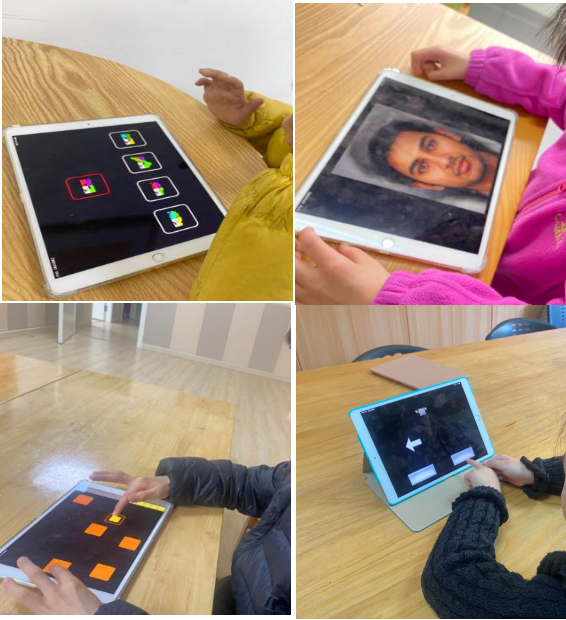
Multidimensional assessments record children’s performance on cognitive tasks
“Spatial working memory, simply put, is knowing where you have already been and where you have not,” explains Dr Zhang.
Imagine a child who cannot keep a map of the places they’ve been in their mind, she says. Somewhere even as organised as a supermarket is bewildering to them, as are everyday classroom instructions like “open the book at page three, find the picture, then turn to page eight”.
She believes that strengthening this skill in autistic children will help them feel more at ease navigating public places and rely less on adult supervision.
More importantly, the gains extended to memory tasks the children had not practised, suggesting the training was building their underlying skill, not simply making them better at the game.
However, on emotion recognition tasks, although all the groups improved, the AR game showed no notable difference. “AR’s ‘cognitive bonus’ seems not to extend to the social-emotional domain, or perhaps the training time was too short,” says Dr Zhang.
Making adoption easier
A positive result arguably raises a harder question: Are teachers ready to use it?
During the children’s experiment, Dr Zhang also trained teachers to use the tablet-based AR game. Some worried about content accuracy or being held responsible if something went wrong; others did not know where to start.
So Dr Zhang made the game simple: tap, then tap again. Training was just as straightforward: open the tablet, log in and guide the child to tap the screen.
“The teachers said it was easy. They learned quickly,” says Dr Zhang.
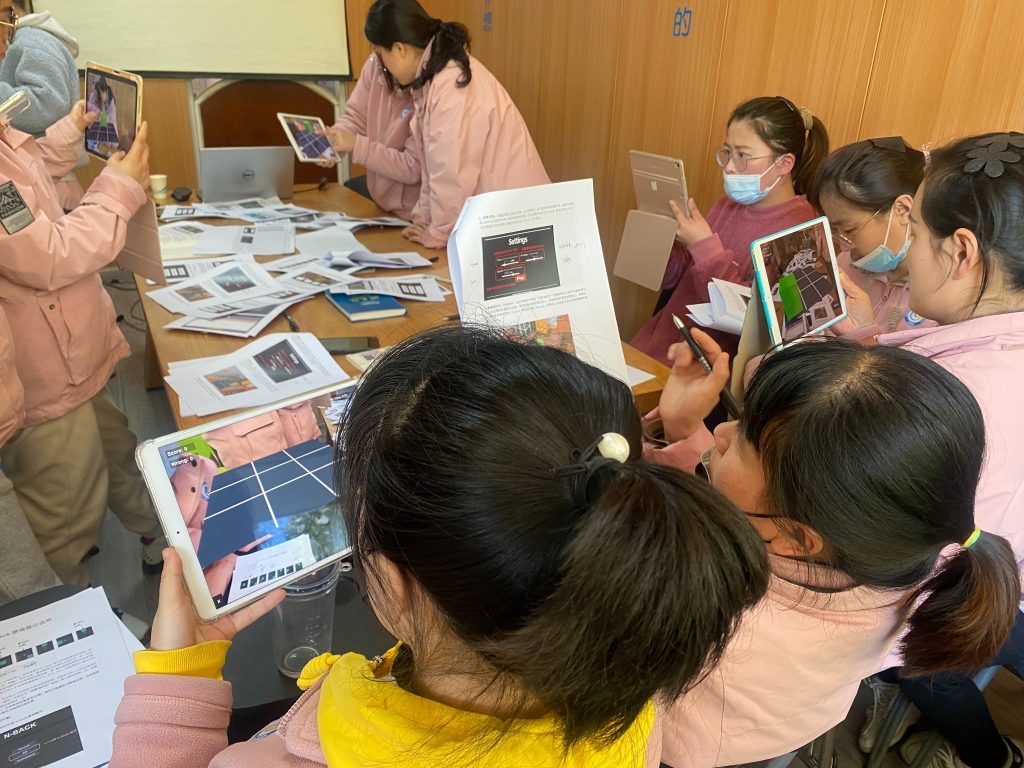
Dr Zhang trains special education teachers to use the tablet-based AR cognitive-training game.
In 2022 and 2023, Dr Zhang surveyed 310 special education teachers in China and found that most recognised the potential of computerised cognitive training for children with neurodevelopmental disorders, but they were unsure about how to operate it, about the accuracy of the content, and about bearing responsibility for any errors. Some said they just would not know where to start.
Based on this feedback, the game and the teacher training were simplified as much as possible. “After that, the teachers found it easy and learned quickly,” says Dr Zhang, who now has two software copyrights, has submitted a monograph, and has completed her research project with a “Good” evaluation.
The findings point to a wider lesson: teacher training matters, but so does clear institutional support.
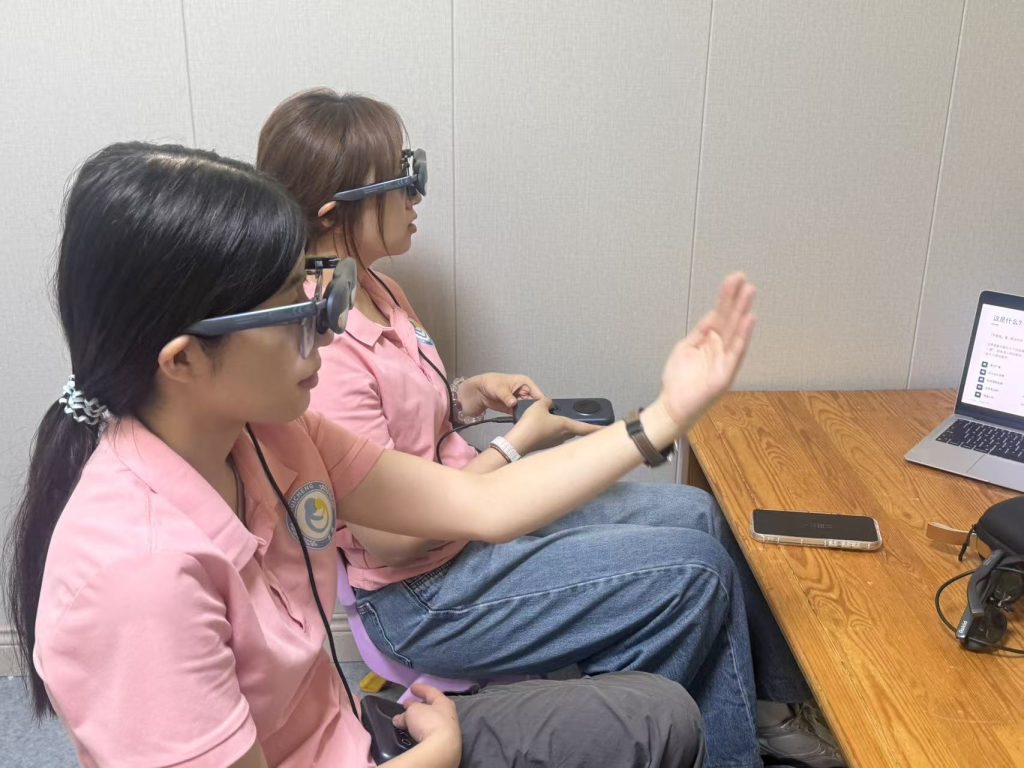
Teachers use smart glasses to test an AR cognitive-training game
From research to practice
Dr Zhang’s work then began reaching classrooms.
She has worked with a special education institution in Shanghai since 2022, advising on digital transformation. In 2025, they began a project to optimise an AI-driven platform for personalised support plans. This year, the partnership expanded to smart classrooms and AI+AR cognitive-training games for smart glasses.
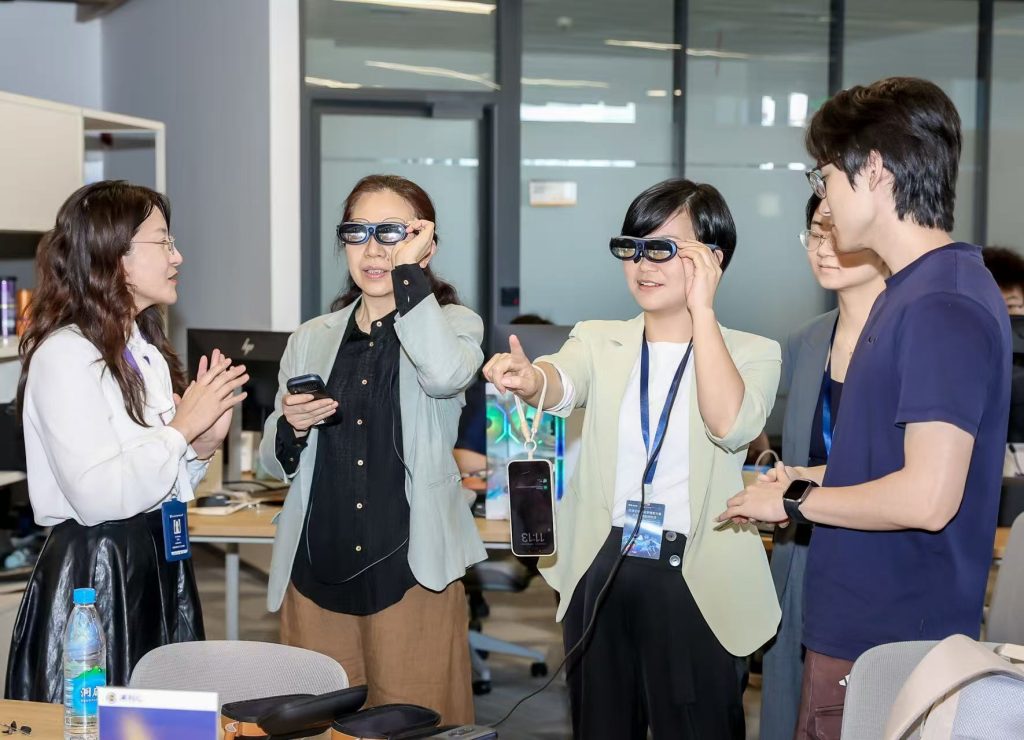
Dr Zhang (far left) demonstrates the AR game to a partner company
On top of her own research, she also supervised an undergraduate team at XJTLU Entrepreneur College (Taicang) in developing Not Lonely Bird, an AR smart-glasses application for autistic children. With support from the XJTLU Centre of Excellence for Syntegrative Education and Chinese tech company Rokid, the project has obtained software copyright registration from China’s National Copyright Administration.

Three student teams supervised by Dr Zhang won one gold and two silver awards at the Spatial Joy 2026 Rokid Global University AR & AI Innovation Challenge.
This year, the project has been used in practice at special education institutions in Wuxi, Shanghai and elsewhere.
“Traditional cognitive training often requires face-to-face sessions and physical teaching tools. Many parents travel from different cities to attend training, just to learn a method to take home to their children. I hope that in the future, with a tablet and a game, they can do cognitive training at home,” says Dr Zhang. “The place for research is not a paper or a journal but the daily lives of families, where a child can remember one more thing or understand one more facial expression.”
She now aims to investigate why AR technology has such a small impact on emotion recognition training. “This research has actually opened up bigger questions,” she adds.
Content by Jiayan Ji
Edited by Vionna Fiducia Theja and Staff Editor
Photo courtesy: Dr Bo Zhang
19 Nov 2026