






2026年05月15日


On the afternoon of 20 April, Xi’an Jiaotong-Liverpool University (XJTLU) held its Internal Workshop on Digital and Intelligent Empowerment for Administrative Applications in Room 689, Central Building, SIP Central Campus. Nearly 100 administrative department leaders and key staff members across the University attended the event. Co-hosted by the XJTLU Centre for Knowledge and Information and the Digital Transformation Research Centre of the College of Industry-Entrepreneurs, the workshop covered research discussion, application scenario sharing and release of best cases to create a platform for cross-departmental communication and co-creation, and to distill best practices in digital and intelligent development.
The workshop started with a keynote address by Youmin Xi, Executive President of XJTLU, who shared the University’s perspective and expectations for empowering future education through digital and intelligent technologies. Leaders of administrative departments were also invited to present their respective strategies and practices in this regard.
Strategic Blueprint for the Next Decade and the Redefinition of Talent in the Digital-AI Era
President Xi reviewed XJTLU’s 20-year journey: from XJTLU 1.0, which focused on developing professional elites with an industry background, to XJTLU 2.0, which explored Syntegrative Education, and XJTLU 3.0, which co-created an industrial innovation ecosystem. He noted that XJTLU is now moving towards XJTLU 4.0—an exploration to a social ecosystem of learning and innovation in the Digital-AI Era.
Looking ahead, President Xi outlined five core qualities required of future talent in the Digital-AI Era. President Xi emphasised that future education should be diverse and enriching, joyful, and oriented towards healthy growth. It must be interest-driven and learning-centred.
Quoting Professor Peter Gray of Boston College , who said "play is the most serious form of learning", President Xi explained that XJTLU aims to move beyond the traditional education model towards a new learning ecosystem that is interest-driven, research-led and faculty-supported. He described six progressive stages of the Future Learning Center, including Process Restructuring, Teaching Reinvention, Real-Virtual Integration, Research-Oriented Learning, Project Co-Creation and Human-Machine Collaboration. In this emerging learning paradigm, students become the leaders of their own learning, teachers serve as facilitators, and XJTLU Learning Mall acts as both the core operating system and ecosystem, supporting personalised, interest-driven and lifelong learning.
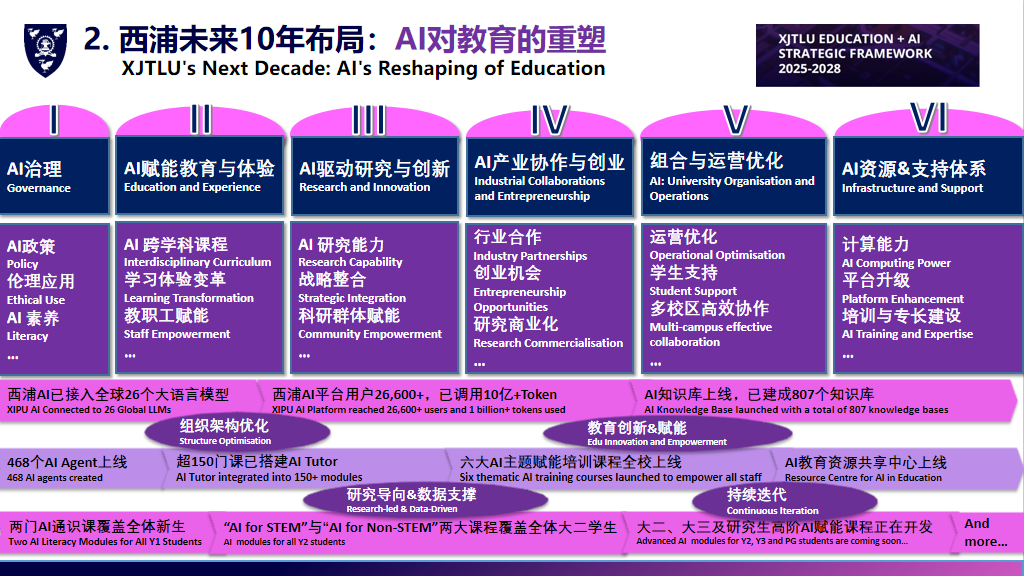
President Xi also introduced XJTLU’s strategic blueprint for the next decade, covering six major areas: AI Governance, Education and Experience, Research and Innovation, Industrial Collaborations and Entrepreneurship, AI for University Organisation and Operations, and Infrastructure and Support.
An AI-Native Smart Campus Takes Shape: XIPU AI from 1.0 to 3.0
Dr Xin Bi, Chief Officer of Data, Director of Centre for Knowledge and Information (CKI), and Director of Digital Transformation Research Centre at the College of Industry-Entrepreneurs, chaired the workshop and reviewed the development of the XIPU AI platform. He summarised its progress as three major stages:
- Initial stage(2023): XIPU AI as one of the first university-level AI platforms in the higher education sector, was launched, solving the "From Zero to One" challenge;
- Growth stage (2024 and 2025): university departments initiated a wide range of micro-innovations in AI-enabled administrative work and teaching , accumulating practical experience;
- Deepening stage (2026):AI began to be embedded more deeply in business processes and became a foundational capability for decision support and cross-department collaboration.
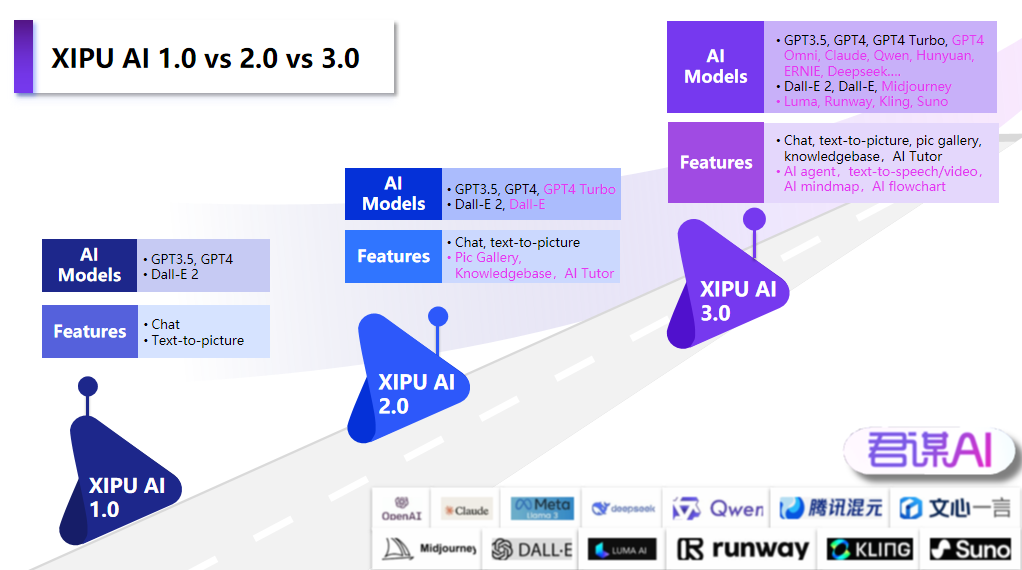
As the leading role for "Infrastructure and Support", the sixth part of the University’s AI strategic framework, Dr Bi and colleagues from the Management Information Technology and System Office (MITS) as well as Learning Mall (LM) have planned and partially developed XJTLU’s AI-native smart campus system. The system is guided by the principles of value creation, user-centred design, efficiency improvement, and cost reduction. It comprises a full-stack cloud platform and an intelligent infrastructure support layer that provides computing resources. Above this sit a global data fusion layer, a smart central capability layer, and an innovative application scenario layer. This layered architecture offers strong support for innovation across all business units. University-level technical teams are building AI application platforms and services for the whole University. Through research, development, implementation, training and services, they empower different departments to integrate AI capabilities into practical workflows. The XIPU AI platform has now integrated multiple large language models and launched numerous knowledge bases and AI agents developed by staff members. In terms of training, the Learning Mall has delivered around 400 digital and AI training sessions, reaching nearly 7,000 teachers and staff.
To summarize and share experience, Dr Bi also organised the compilation of a casebook on digital and intelligent empowerment. Covering data management practices across administrative departments, No-Code/Low-Code platform applications, AI-enabled education and teaching, AI-enabled research, and AI-enabled office work, the casebook will be officially released across the University in both Chinese and English.
Rethinking the Professional in the Age of AI
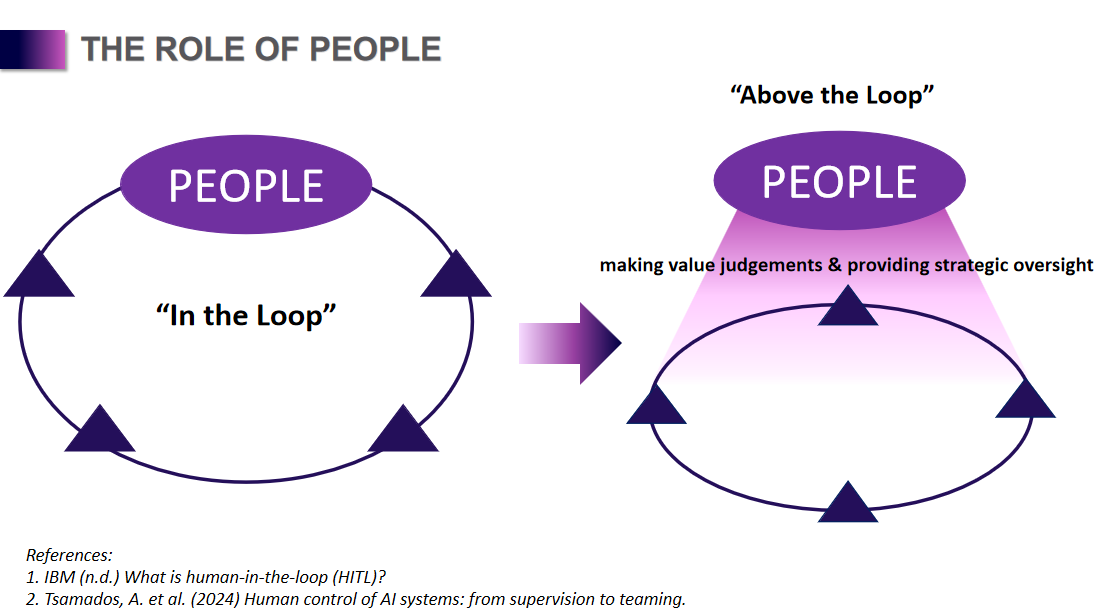
Feifei Zhu, Operation Director of the Centre for Academic Affairs, delivered a presentation titled "Rethinking the Professional in the Age of AI". Against the backdrop of rapid technological iteration, she argued that rethinking the capability profile of professionals is more urgent than simply mastering new technologies. She noted that AI is evolving from "Model" to "System" and then to "Orchestrated Agents", while the human role is shifting from being "In the Loop" to being "Above the Loop"—making value judgements and providing strategic oversight.
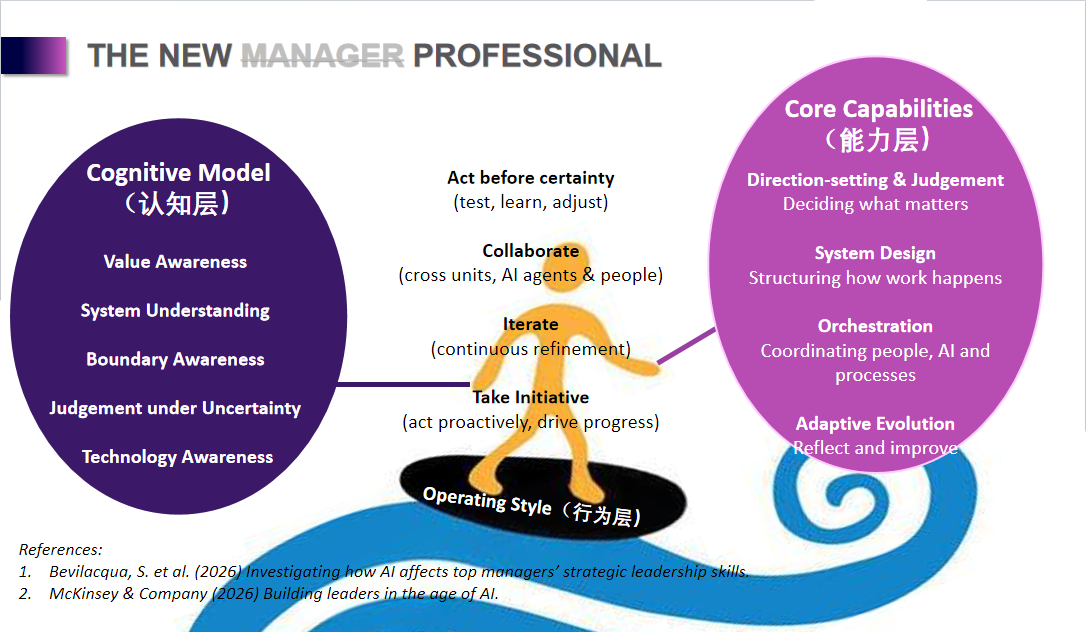
Director Zhu summarised her practical insights into a formula: People + AI Tools leads to efficiency gains; when combined with Rethinking Purpose, it produces better outputs; through System Redesign, it creates new ways of working and reforms people’s roles; and through System Orchestration, it ultimately generates expanded value. Taking meeting minutes as an example, she explained that AI tools may improve efficiency, but the deeper task is to rethink the purpose of meeting minutes—moving from recording decisions to capturing decision logic—and to transform them into a strategic framework that AI agents can learn from. This marks a shift from efficiency improvement to value creation.
Digital and Intelligent Work Report
Ma Dan, Deputy Director of Centre for Administrative Affairs, shared systematic practices in AI-enabled operations. Her core conclusion was: AI + People = System Orchestration = Expanded Value. The Campus Management Office has focused on building three core capabilities: AI-enabled Services, No-Code/Low-Code Platforms, and Hardware Digitalisation.
In intelligent services, the AI customer service system handles between 13,000 and 20,000 campus inquiries each year and has reduced manual workload by 45%. Users have neither complained nor praised the system while using it—meaning that AI has taken over nearly half the workload without being noticed. At XJTLU Taicang Campus, the team independently developed an autonomous drone inspection system that enables 24-hour thermal imaging patrols, abnormal body temperature detection, and night-time monitoring of sudden or unusual behaviour, reducing the time needed to identify safety risks from days to minutes. In process automation, the introduction of robotic process automation (RPA) and natural language processing has shortened the average processing time for high-frequency tasks such as meeting-room management and official seal applications from days to hours.
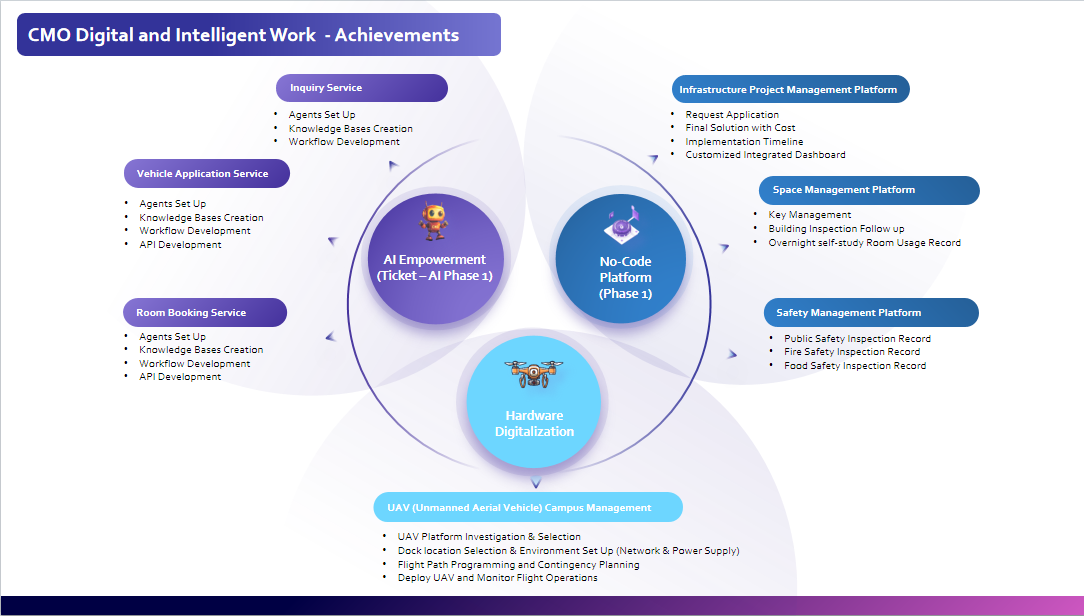
Deputy Director Ma concluded, "Making the frequent use of no-code/low-code platforms a daily working practice is what truly turns business staff into developers. AI-powered work orders make service responses less dependent on human memory, and drones bring the physical world into digital management. Together, these capabilities enable system orchestration and enhance organisational value."
Foundation First, Pilot Second, Promote Third: AI Empowerment Strategy for the CSA
The Centre for Student Affairs (CSA) of Xi’an Jiaotong-Liverpool University has formulated an AI empowerment strategy for student services. Its core objective is to build, along the entire student lifecycle and through intelligent means, a data-driven, personalised, and precision-based student service ecosystem. The strategy encompasses six key transformations (such as shifting from passive response to proactive prediction, and from experience-based decision-making to data-driven decision-making, among others), five core strengths, and four major challenges. Its overall approach is "Foundation First, Pilot Second, Promote Third".
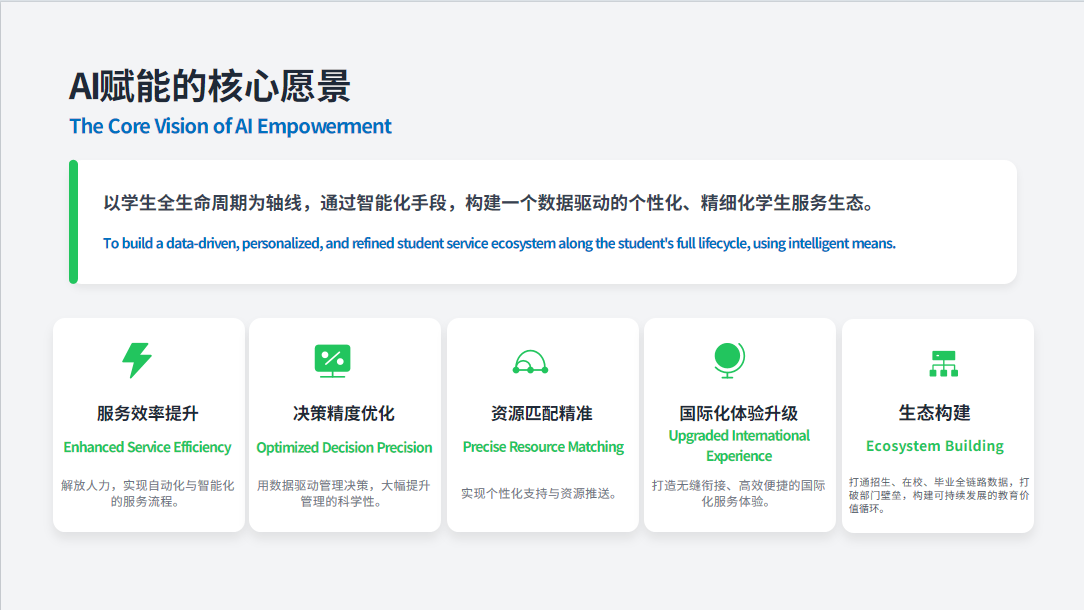
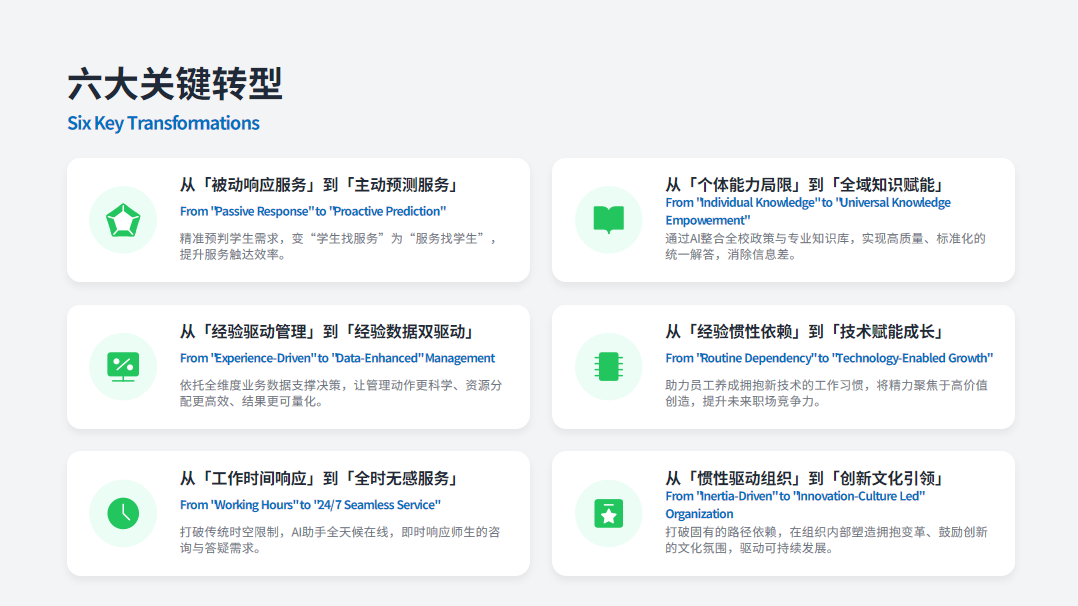
In practice, CSA’s intelligent admissions Q&A system covers weekend and night-time inquiries. In the OpenClaw competitive intelligence project, AI can automatically collect and analyse the admissions strategies of multiple peer institutions. The further study advisory AI agent, trained on vertical data from previous undergraduate cohorts, provides students with personalised advice on university and programme selection. The integrated one-stop AI customer service and automated email reply system can also handle a large volume of work orders during peak periods. In CSA’s working philosophy, "AI is not intended to replace student advisers, but to enable them to support the right students, at the right time, and in the right way."
Digital Empowerment for Library Services and Operations
Liping Yang, University Librarian of the Centre for Knowledge and Information-Library at Xi’an Jiaotong-Liverpool University, focused on Data Curation (also known as Digital Curation). She emphasised that "Data is King for AI Applications". University Librarian Yang noted that a comprehensive Data Management Plan (DMP) should be developed at the very beginning of any project design and implementation. Such a plan should regulate the full lifecycle of data management, clearly specifying strategies for data collection, documentation and metadata, storage, security, sharing and long-term preservation, while ensuring strict compliance with ethical standards, laws, regulations and relevant institutional requirements.
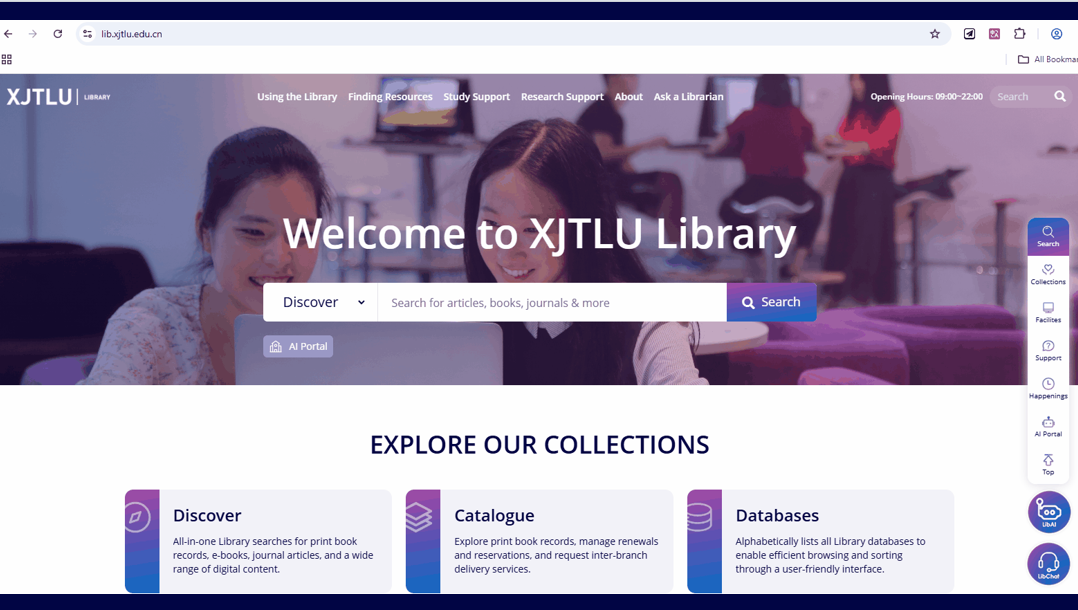
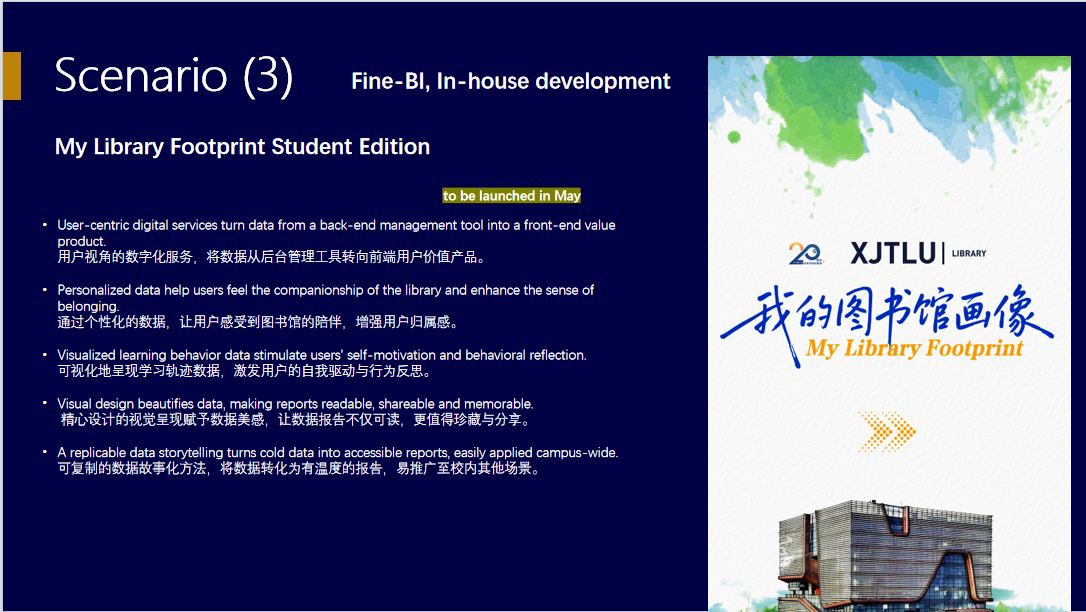
University Librarian Yang also shared a number of library practices for making data actionable. The Library uses data visualisation tools to analyse digital resource usage and costs, supporting evidence-based budget decisions. It has also developed no-code/low-code systems for library operations, including the in-house ContractPro system, which manages large numbers of digital resource subscription agreements and sends automated alerts before contracts expire. Notably, the student edition of My Library Footprint, scheduled to be launched in May, will allow students to view a personalised library message, reader profile, entry and exit records, borrowing records and space usage data. It turns data from a back-end management tool into a front-end value product, strengthening users’ sense of belonging and self-motivation. In addition, LibAI Search (Library + AI) uses large language models to train search strategies, helping students move from the "Google Generation" to the "Prompt Generation". As she concluded, "Data is the foundation. Data itself has no value; it only becomes valuable when used flexibly."
Digital Platforms Empower Business Transformation and Innovation
Xiangang Hu, team leader of the Management Information Technology and System Office (MITS) under the Centre for Knowledge and Information, introduced the profound transformation of the technical department. In the traditional IT development model, business departments submitted requirements, while the IT department acted as an "IT Contractor" responsible for system development and maintenance. As business scale expanded and agility requirements increased, this caretaker-style model increasingly revealed pain points such as long iteration cycles, high development costs and insufficient business-IT integration. Today, by providing No-Code/Low-Code Platforms, a report platform and an AI agent development platform, MITS enables staff without technical backgrounds to independently and flexibly build applications. The boundary between IT and business is being redefined, and digital capabilities are moving into front-line business scenarios. This puts into practice the concept that "everyone is a developer, everyone is a data analyst, and everyone is an AI application engineer", significantly stimulating organisational innovation and achieving cost reduction.
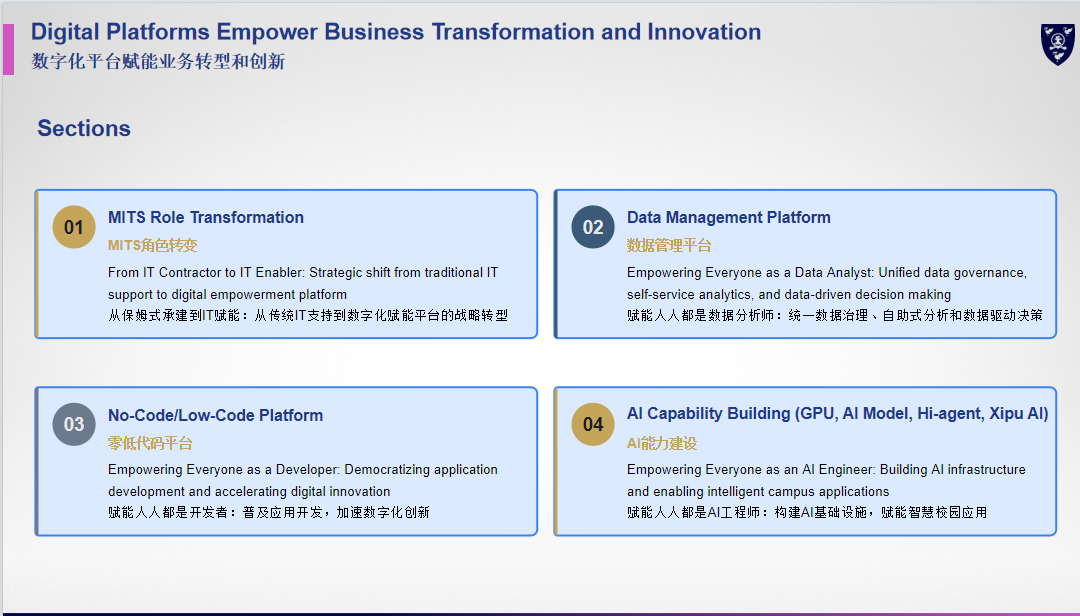
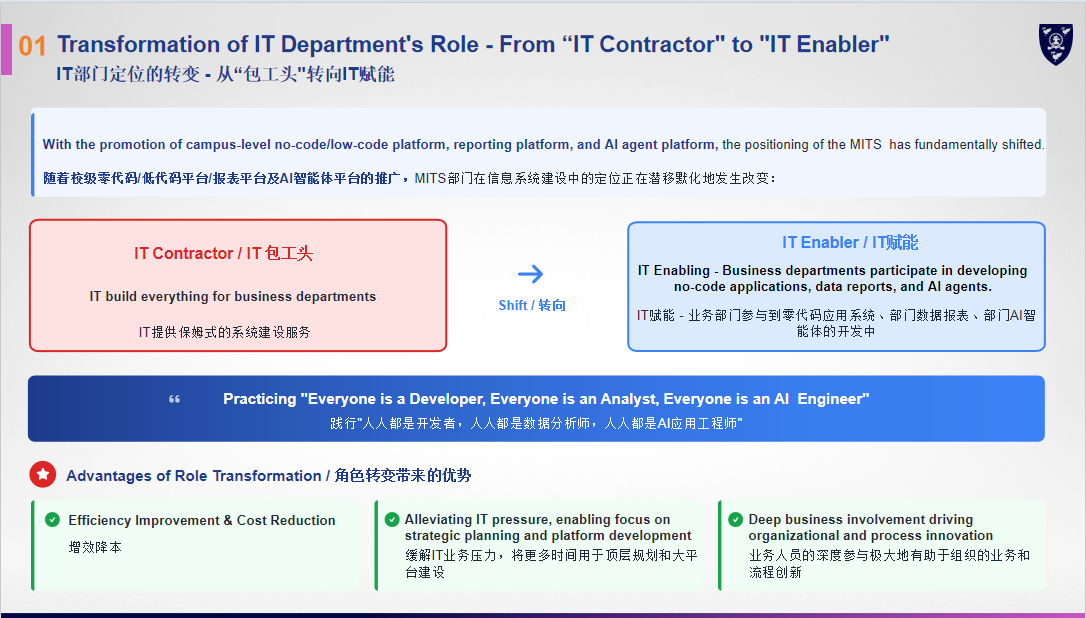
Currently, the X-Report platform built by MITS has supported 21 independent developers from 11 departments in creating 263 self-service data reports. The No-Code/Low-Code Platforms have supported the creation of 159 applications, 81 of which have been deployed, generating considerable cost savings. In AI capability building, the technical team has deployed local large language models, GPU computing clusters and the Hi-Agent platform, supporting administrative departments in developing a range of practical AI agents. Team Leader Hu concluded, "Previously, we were like contractors: others drew the blueprint, and we built the building. Now we are both a toolbox and a coach. We teach business departments how to build on their own, while helping them build faster and better."
Driving Excellence Through Procurement Digitalisation: Architecting a Frictionless, Compliant, and Strategic Digital Ecosystem
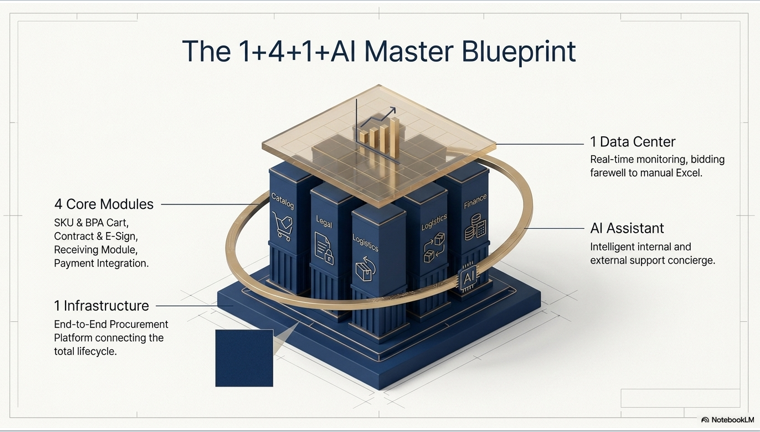
Chuncheng Tong, Director of the Purchasing Office, shared the University’s digital transformation practices in procurement. In the past, the procurement process involved multiple disconnected systems, resulting in information silos, repeated data entry and reversed process flows. Today, the Procurement Office has built a highly integrated, closed-loop and controlled procurement platform based on a "1+4+1+AI" architecture. Through a material database, e-signing, business-finance system integration and procurement dashboards, the platform supports both compliance and efficiency improvement. E-signing has significantly improved contract signing efficiency, while contract drafting efficiency has also increased substantially.
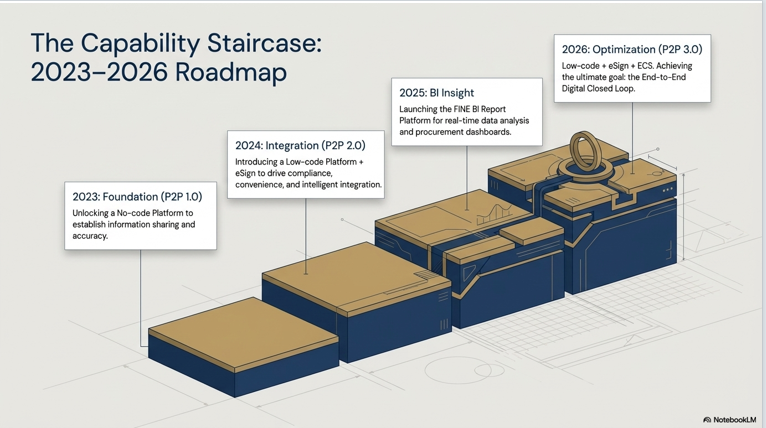
The procurement dashboard provides a panoramic visualisation of spending distribution, offering evidence for strategic adjustment. Going forward, an AI Q&A chatbot will be launched to handle internal training and procurement enquiries through intelligent interaction and to enable smart queries on procurement applications and contract status. Director Tong summarised, "We must communicate deeply with the technical department, clearly define our business requirements, and find champions within the department who are interested in digitalisation."
The workshop lasted three hours and featured lively discussions with strong engagement. Participants expressed appreciation to the department heads for generously sharing their practical experience in digital and intelligent empowerment. The organisers noted that this internal workshop will continue as a series. More administrative departments and academic schools will be invited to share their practices and exchange ideas on an ongoing basis. This aims to promote the vibrant development of a digital and intelligent education ecosystem across the University.
Contributors:
Centre for Knowledge and Information, XJTLU
Digital Transformation Research Centre (CIE), XJTLU
Text: Xinyang Li
Editor: Liwen Sha
Reviewer: Xin Bi
2026年05月15日