





2026-03-26

1:30 PM - 5:10 PM

XJTLU South Campus, IBSS Building-BS574, 111 Ren'ai Road, Dushu Lake Higher Education Town, Suzhou Industrial Park, Suzhou, Jiangsu, China

yu.hu02@xjtlu.edu.cn
 Advanced Semiconductor Research Centre
  Register
 Event Details
- Time:13:30-17:30,26th March(Thursday),2026
- Venue: XJTLU South Campus, IBSS Building-BS574, 111 Ren'ai Road, Dushu Lake Higher Education Town, Suzhou Industrial Park, Suzhou, Jiangsu, China
- Language: Chinese(IFlytek translation provided)
- Host:XJTLU Advanced Semiconductor Research Centre(ASRC)
Agenda
13:30-13:50 Sign in
13:50-14:00 Welcome Speech
14:00-14:40 Keynote:Research Progress of GaN-on-Si Power Electronics
Speaker:Research Fellow. Qian Sun
14:40-15:20 Keynote:Carbon ionization transient behaviour in GaN-on-Si HEMTs and its impact on RON stability
Speaker:Prof. Yang Liu
15:20-15:40 Tea Break and Discussion
15:40-16:20
Keynote:Research on High-Performance Gallium Nitride Power Devices for Space Power Applications
Speaker:Dr. Feng Zhou
16:20-17:00: Monolithically Integrated GaN Circuit Technology for Power Conversion Applications
Speaker:Dr. Ang Li
17:00-17:10: Summary & Closing Ceremony
Invited Speaker
Qian Sun Research Fellow

Prof. Qian Sun received his B.S. degree in Material Physics from University of Science & Technology of China (USTC). He received his M. Eng. degree in Microelectronics & Solid State Electronics from Institute of Semiconductors, Chinese Academy of Sciences (CAS) and his Ph.D. degree in Electrical Engineering from Yale University. He currently is a professor at Suzhou Institute of Nano-Tech and Nano-Bionics (SINANO), CAS, Suzhou, China. He is in charge of State Key Lab of Semiconductor Display Materials and Chips. He has authored/co-authored about 200 peer-reviewed articles published on international journals, including Nature Photonics, Light: Science & Applications, ISPSD, and IEEE EDL/TED. He currently holds 20 PCT patents and over 50 China patents, and some patents have been transferred to industries with a total payment of 32M RMB. He was the recipient of the Distinguished Youth Award (2023) and Exceptional Youth Award (2015) from the National Natural Science Foundation (NSF) of China, the National Technological Invention Award (2015) and National Young Talents Award (2011) from Chinese Central Government, Henry Prentiss Becton Prize (2010) from Yale University.
Yang Liu Professor

Yang Liu, received his Ph.D degree in microelectronics and solid state electronics in 2000, Jilin University, China. In 2001, he worked on GaN materials and devices in Nagoya Institute of Technology, Japan, which is globally famous for their cutting edge GaN-on-Si technique. Since 2007, he joined Sun Yat-sen University, Guangzhou, China, as a professor and the director of GaN power electronic materials and devices research center. From 2018~2023, he served as a TPC member of IEEE ISPSD, an authoritative international conference on power electronic devices. His current research interest includes the physics of GaN based materials and power devices,and their reliability mechanism originated from the device stability issues.
Feng Zhou Associate professor

Feng Zhou is an associate professor at the School of Electronic Science and Engineering, Nanjing University. His research focuses on third-generation wide-bandgap semiconductor technology. He has led or participated in projects including the National Science and Technology Major Project, the National Key Research and Development Program, the National Natural Science Foundation of China, and the Jiangsu Provincial Key Research and Development Program. He has published over 30 papers as first/corresponding (or co-author) in journals such as Nature Communications, IEEE IEDM/EDL/TPE/TED, and holds over 20 authorized patents as the first inventor (in China, the United States, and Japan). He has been selected for national-level young talent programs, the China Association for Science and Technology's Young Talent Support Program, and the Jiangsu Provincial Science and Technology Vice President Program.
Ang Li Research Fellow

Ang Li received his Ph.D. degree from the University of Liverpool in 2023. From 2023 to 2025, he served as an Assistant Researcher at the Suzhou Institute of Nano-Tech and Nano-Bionics, Chinese Academy of Sciences. He is currently Research Fellow with the Advanced Semiconductor Research Center, Xi’an Jiaotong-Liverpool University. His research focuses on the collaborative design and optimization of GaN devices and circuits. As first-author, he has published 10 papers in IEEE Transactions on Electron Devices, IEEE Electron Device Letters, IEEE Transactions on Power Electronics, and other journals, and 3 papers at the IEEE ISPSD conference. He has received the Third Prize of the Jiangsu Province Higher Education Science and Technology Progress Award, the Jiangsu Excellent Postdoctoral Fellowship, and the Chinese Academy of Sciences Special Research Assistant Award.
Special Guest
Jianfeng Wang General Manager
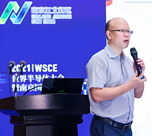
Director, General Manager, and Legal Representative of Suzhou Nanowin Technology Co., Ltd., and a member of the company’s core management team as well as one of its co-founders.
Report Abstract
Research Progress of GaN-on-Si Power Electronics
Wide Band-gap semiconductor GaN is characterized by a wide bandgap, high critical breakdown field strength, and high electron saturation velocity. It is particularly suitable for the fabrication of medium- and low-voltage, high-frequency, and high-efficiency power electronic devices, and has broad and important application prospects in power management systems for consumer electronics, robotics, data centers, and computing centers. The epitaxial growth of GaN-based high-efficiency power electronic devices on large-size, low-cost Si substrates is expected to significantly reduce manufacturing costs, representing one of the mainstream technical routes in both academia and industry worldwide. This report will first introduce the key scientific issues and technical solutions for the epitaxial growth of high-quality GaN materials on Si, and then focus on the research progress and development trends of vertical GaN power diodes and enhancement-mode HEMT lateral power electronic devices on Si.
Carbon ionization transient behaviour in GaN-on-Si HEMTs and its impact on RON stability
Carbon doping is a widely adopted technique in the epitaxial structure of GaN power HEMTs to achieve high off-state blocking voltage. However, it simultaneously introduces device stability issues, particularly dynamic on-resistance degradation. This phenomenon is commonly attributed to the accumulation of negatively charged deep-level carbon atom. In this work, a counterintuitive trend is observed, where dynamic Ron degradation exhibits a negative correlation with carbon doping concentration. Based on substrate biased current transient spectroscopy analysis and TCAD simulations, this phenomenon is attributed to the increased density of negatively charged ionized carbon under heavily carbon doping, which enhances field-induced Zener tunnelling process.
Research on High-Performance Gallium Nitride Power Devices for Space Power Applications
This work explored the irradiation characteristics of various GaN devices, including p-GaN HEMTs, MIS-HEMTs, and Diodes, by conducting heavy ion, proton, and gamma-ray irradiation experiments in multiple national large-scale scientific facilities and combining them with a self-built experimental platform for ultraviolet pulsed laser-induced single-event effects under atmospheric conditions. For the first time, a radiation-hardened GaN HEMT device with a voltage greater than 500V was achieved. The energy conversion efficiency of p-GaN HEMTs under irradiation and power switching conditions was evaluated. Based on the engineering fabrication experience accumulated on the 6-inch process platform, the work also carried out the hardening design, experimental verification, and future exploration of radiation-hardened materials and devices.
Monolithically Integrated GaN Circuit Technology for Power Conversion Applications
The rising power consumption of artificial intelligence systems has driven the need for high-frequency, high-efficiency power conversion. Conventional multi-chip GaN power systems are limited by parasitic effects, which limit overall system performance. This work advances the monolithic integration of GaN power devices by integrating driver, control, sensing, and protection functionalities on a single chip, thereby enabling higher switching speed and reduced chip area. At the device level, a platform integrating GaN was developed with optimization techniques to improve reliability and uniformity. At the circuit level, fully GaN-based PWM controllers, gate drivers, temperature sensing circuits, and protection circuits were realized, with low-power designs validated under extreme conditions. This study provides a foundation for highly integrated advanced power chips.
Registration
Scan the QR code to register

Share this event