





After growing with IBSS, Dean Eddy Fang is asking what comes next

06 May 2026


At XJTLU’s International Business School Suzhou (IBSS), Professor Eddy Fang has been thinking less about whether the School is international enough and more about a more specific question: once an international foundation has been established, what should IBSS become next?
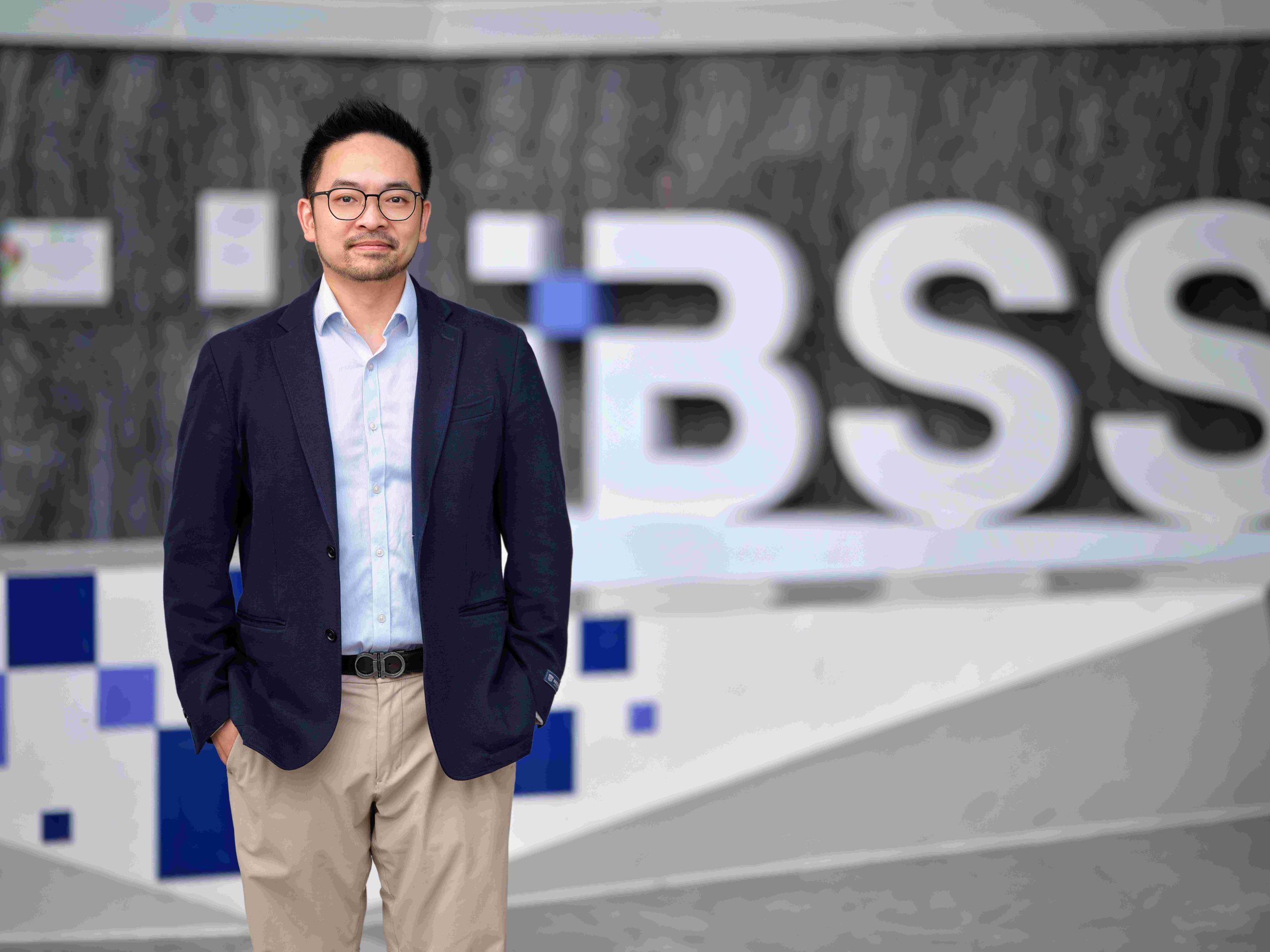
The question carries particular weight for Professor Fang, who became Dean last September, as the first person to take on the role after growing through the School from within.
He joined XJTLU in 2012, shortly after completing his PhD at Cambridge and before IBSS officially opened. Since then, he has served in a series of roles across IBSS, from Programme Director to department head, Associate Dean and now Dean. That path has given him a close view of how the School has developed – and of the questions it now needs to answer.
From foundation to impact
For Professor Fang, the early stage of IBSS’s development focused on building a strong foundation. Established in 2013, the School began with a stronger teaching focus but, over time, steadily invested in research capacity, governance, and quality assurance, gradually establishing itself as a research-led international business school.
Today, that foundation is clear. IBSS holds the “triple crown” of international accreditations – AACSB, EQUIS, and AMBA – and its research strength has continued to grow, with its Economics and Business discipline entering the top 1% of the Essential Science Indicators global ranking.
In Professor Fang’s view, that means an important phase of development is largely complete.
The question is no longer how to grow stronger, but how to generate greater impact – not only by strengthening academic research, but by ensuring that research creates real value for students, industry and society.
Making connection more central
After that, Professor Fang believes the next issue is translating IBSS’s international and research-led character into greater connection.
It is a word he returns to repeatedly when describing the School’s future.
In his view, IBSS should, of course, remain an international business school. But internationalism should not be understood only in terms of English-medium teaching, international accreditations or students’ global progression routes.
For Professor Fang, true internationalism hinges on whether the School can serve as a genuine window between China and the world – a place where knowledge exchange, business collaboration and cross-cultural understanding take shape.
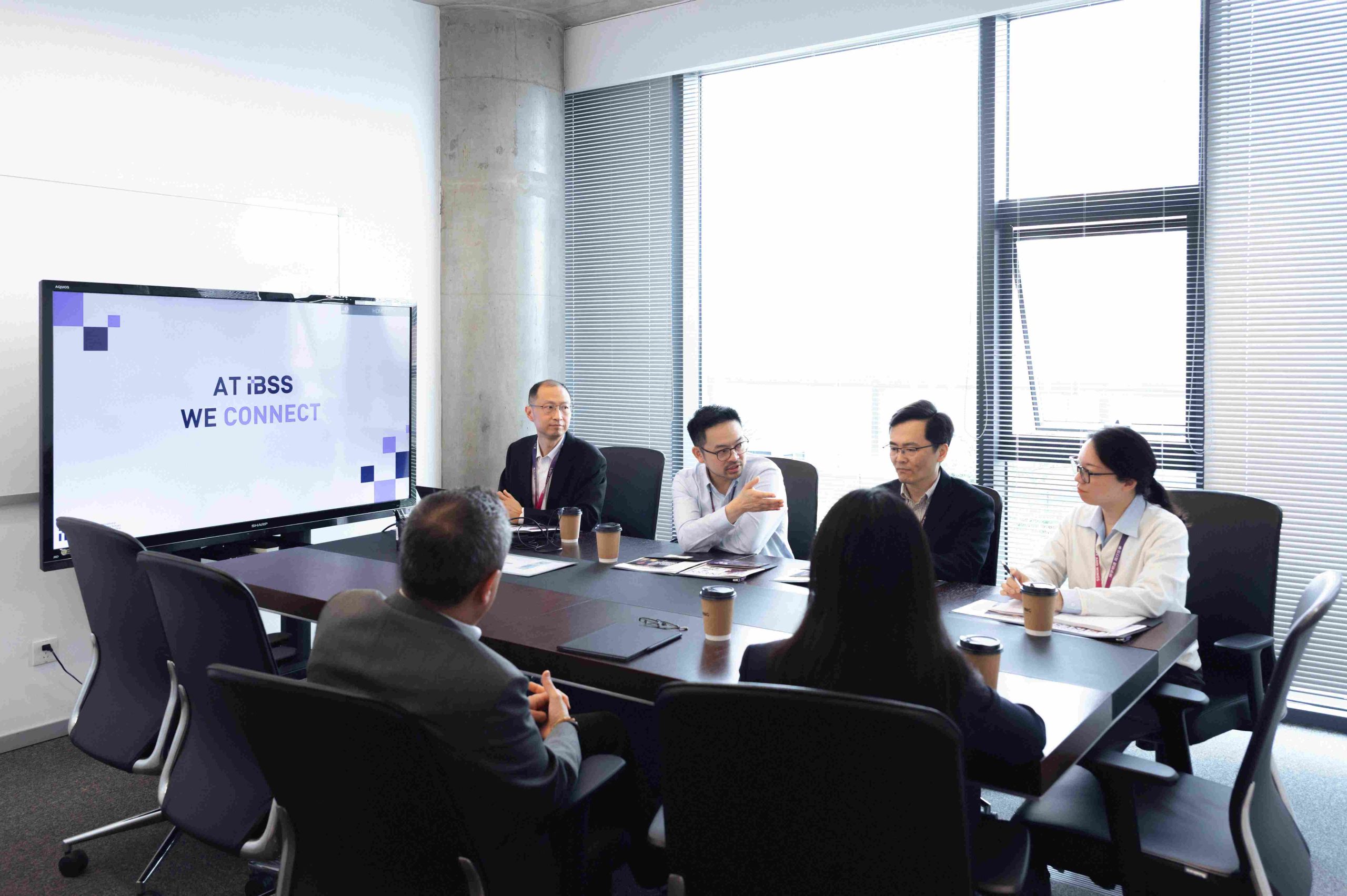
However, this is not a completely new direction. As Professor Fang sees it, this outward-facing and connecting role has long been one of IBSS’s distinctive strengths. What is changing is not the invention of that role from scratch, but the degree to which it is being made more explicit and placed more firmly at the centre of the School’s strategic development.
That strength is already visible in practice. Over the years, IBSS has prepared large numbers of students who have gone on to top business schools around the world, and its graduates have built a strong international reputation.
On the corporate side, the School has also worked with major Chinese enterprises, including railway vehicle company CRRC and steel manufacturer Baowu, to support the development of managers working in international contexts.
What makes that role newly significant, in Professor Fang’s view, is the changing external environment.
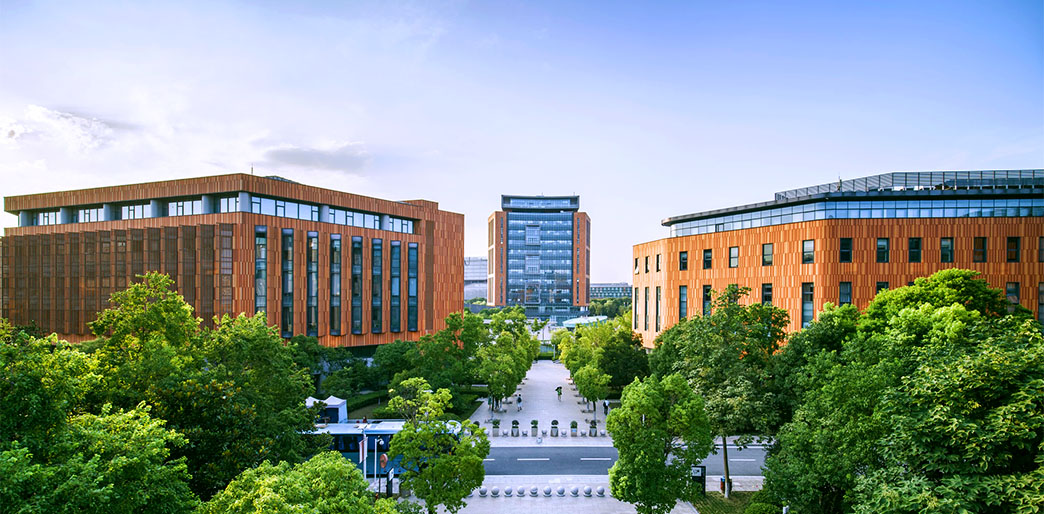
China is no longer at the edge of a globalised system; it is increasingly one of the places where new forms of internationalisation are taking shape. That means the future will involve not only continued outward movement from China, but also growing inward movement as more institutions, businesses and individuals seek ways to understand China and engage with it more deeply.
That, Professor Fang believes, creates meaningful space for IBSS to contribute more deliberately. On the one hand, it can serve as an entry point for overseas business schools, institutions, and companies seeking to understand the Chinese market and work within the Chinese context. On the other hand, it can continue supporting Chinese enterprises as they expand into international markets. It is in this two-way connection that IBSS is most likely to sharpen its distinctive value.
To make that role more concrete, Professor Fang has proposed further developing IBSS’s function as a global business intelligence unit.
In his view, a business school’s value lies not only in educating students or publishing research, but also in turning accumulated research capability, analytical strength, and industry insight into knowledge that speaks to real-world questions. By working with other schools across the University and producing more practice-facing outputs around industry, markets and China’s relationship with the world, IBSS can deepen its value for partners, industry and society.
Bringing students closer to the real world
The same thinking also shapes how Professor Fang talks about students.
For him, internationalisation should not be reduced to a line on a CV or a standardised overseas experience. What matters more is whether students can encounter real problems, real collaborations and real cross-cultural working relationships early enough in their education to understand how different markets, organisations and contexts connect.
That could mean richer exchange opportunities, greater involvement in research and projects, or more participation in international collaborative work. It could also mean creating more ways for students to engage with applied, practice-facing work linked to industry and global partners. The aim is consistent: to give students a more concrete experience of global connection and, through that experience, help them develop judgement, understand difference, and find their place in complex environments.
In the end, Professor Fang’s reflections on the future of IBSS return to people.
Because he has grown within the School over more than a decade, he is especially aware of how important its existing foundations are. He is equally aware that an institution cannot remain too comfortable with only what it has already achieved.
For Professor Fang, the next stage is therefore not about leaving behind the international path IBSS has already established, but about taking it a step further – from having a strong international foundation to developing, more consciously and more fully, the capacity to connect China and the world in both directions.
By Bo Kou
Edited by Patricia Pieterse
06 May 2026
RELATED NEWS
From chromosomes to construction: Professor Jionglong Su on interdisciplinarity
A robotic dog patrols a construction site, carefully counting every single steel bar. This isn’t some scene from a virtual world – it’s an ongoing project by...
Learn more