


2026-04-27

2:00 PM - 4:00 PM

XJTLU TaiCang Campus, B Building-B2047

yu.hu02@xjtlu.edu.cn
 先进半导体研究中心
  Register
 Event Details
- Time:14:00-16:00,27th April(Monday),2026
- Venue: XJTLU TaiCang Campus, B Building-B2047, No. 111, Taicang Avenue, Taicang, Suzhou, Jiangsu, China
- Language: Chinese & English (IFlytek translation provided)
- Host:Advanced Semiconductor Research Centre(ASRC) and School of CHIPS,XJTLU
Agenda
13:40-14:00 Sign in
14:00-14:10 Welcome Speech
14:10-14:50 Keynote:AI-Enhanced and Physics-Guided Methodology for Advancing Semiconductor Technology
Speaker:Dr. Kain Lu Low
14:50-15:10 Tea Break and Discussion
15:10-15:50 Keynote:Progress in Gallium nitride RF Semiconductor Technology
Speaker:Dr. Yi Pei
15:50-16:00: Summary & Closing Ceremony
Host Introduction
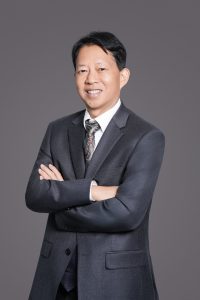
Wei Chen, Dean,School of CHIPS,XJTLU
Prof. Wei Chen is a Fellow of the National Academy of Inventors in the United States and the Dean of the School of CHIPS at XJTLU.

Wen Liu Professor
Wen Liu is a professor of the School of Advanced Technology at XJTLU and Executive Director of the Advanced Semiconductor Research Centre(ASRC).
Invited Speaker
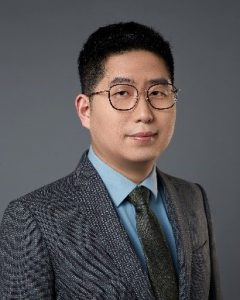
Yi Pei Technical Vice President
Doctor Pei Yi is Technical Vice President of Dynax Semiconductor, Suzhou. He earned his B.S. degree from Peking University and Ph.D. from the University of California, Santa Barbara. He is honored as a National Leading Talent in Science and Technology Innovation under the National Major Talent Program, and has received the Jiangsu May Fourth Youth Medal, the Second Prize of Science and Technology Progress from the China Institute of Electronics, and the Second Prize of Engineering Technology from the Ministry of Education. He serves as a member of the Technical Expert Committee of the National Innovation Center for Third-Generation Semiconductor Technology, a member of the Components Committee of the China Power Supply Society, and Chair of the SEMI China GaN Working Group. Additionally, he is appointed as an Industry Professor of Jiangsu Province (at Soochow University) and an External Graduate Supervisor at Peking University, University of Science and Technology of China, and Xi’an Jiaotong-Liverpool University. He has published over 120 papers and filed more than 150 patents.
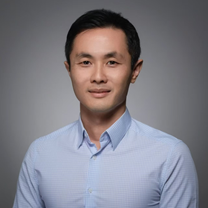
Kain Lu Low Associate Professor
Kain Lu Low is an Associate Professor at Xi’an Jiaotong-Liverpool University. His research integrates semiconductor physics, computational modeling, and AI, with a focus on physics-guided and data-driven Design-Technology Co-Optimization (DTCO). His work covers TCAD-based machine learning, explainable AI, and agentic multi-LLM workflows for automated design and optimization. Previously, he held an academic position at Shanghai Jiao Tong University and worked in the industry at GlobalFoundries and a Silicon Valley EDA startup. He holds a PhD from the National University of Singapore and BS/MS degrees from Purdue University. He currently serves as Vice Chair of the IEEE CASS-EDS Suzhou Joint Chapter.
Report Abstract
Progress in Gallium nitride RF Semiconductor Technology
Speaker:Yi Pei Technical Vice President
With the advancement of mobile communications, the vision for future 6G networks is to achieve an integrated "air-space-ground-sea" architecture. Gallium nitride (GaN) RF chips offer distinct advantages in terms of transmit power, efficiency, bandwidth, operating temperature, and radiation resistance, enabling significant reductions in device size and improvements in energy efficiency. This talk will introduce cutting-edge advances in GaN RF electronics, covering perspectives from materials, fabrication, device design, modeling, and applications. The company Dynax Semiconductor has independently developed a complete technological system for GaN RF chips. Low-voltage GaN technology has taken the lead in achieving system-level validation of GaN RF chips in mobile terminals. High-voltage GaN technology has reached a world-leading power density of 41 W/mm at 10 GHz. Breakthroughs have also been made in high-frequency applications, extending into the millimeter-wave and terahertz (THz)bands. Chip architectures are further evolving toward multi-functional integration and chiplet-based designs.
AI-Enhanced and Physics-Guided Methodology for Advancing Semiconductor Technology
Speaker:Kain Lu Low Associate Professor
As semiconductor technologies continue to advance, the strong coupling across materials, devices, circuits, and systems is making conventional design workflows increasingly difficult to scale. This talk presents a hybrid Physics–AI–Agentic methodology for semiconductor innovation, combining physics-based TCAD, machine learning, and intelligent automation to enable efficient, explainable, and scalable design–technology co-optimization (DTCO). The first part shows how physics-calibrated TCAD can be integrated with machine learning, explainable AI, transfer learning, and multi-objective optimization to accelerate failure analysis, uncover hidden device trends, build fast surrogate models, and optimize emerging devices. The second part introduces AgenticTCAD, a multi-agent framework that automates TCAD code generation, calibration, simulation, and optimization from natural-language input. Together, these developments outline a pathway toward more intelligent, explainable, and scalable semiconductor technology development and failure analysis.
Registration
Scan the QR code to register

Share this event