




26 Mar 2026


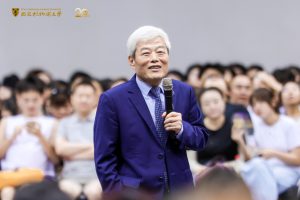
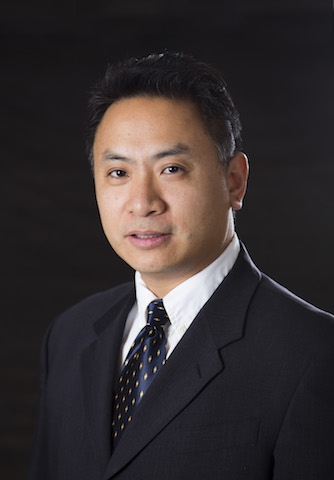
Professor Dijiang Huang, an internationally recognised researcher in cybersecurity, distributed systems, and trustworthy intelligent computing, took up the role of Dean of the School of Internet of Things at XJTLU Entrepreneur College (Taicang) this semester.
Redefining the discipline and navigating challenges
When discussing the School’s future development, Professor Huang begins with a fundamental question: how to reposition the IoT discipline itself.
“Over the past two decades, the Internet of Things has primarily focused on connectivity. With the advancement of artificial intelligence, we are now entering a new phase, what I call the ‘Internet of Intelligence’,” he explains. “In such systems, connection is no longer the ultimate goal. What truly matters is enabling systems with intelligent perception, learning, and decision-making capabilities.”
Professor Huang’s international background and research experience will advance the School’s development in three areas:
- building global research collaboration networks;
- advancing research in intelligent perception and trustworthy intelligent systems; and
- nurturing innovative students with international competitiveness through the “AIoT+X” pathway (combining AI and IoT with interdisciplinary applications).
However, he acknowledges two major challenges in implementing these plans.
The first is transforming the educational model from “learning knowledge in the classroom, then applying it” to “learning through solving problems”. In problem-based instruction, how can learning outcomes be assessed? Professor Huang believes the solution lies in designing authentic projects in collaboration with industry, with evaluation systems that balance understanding of knowledge points with practical application capabilities.
The second challenge is the anxiety brought on by artificial intelligence.
“Developing AI models represents just one direction of innovation, and only a very small number of people will actually work in this field,” Professor Huang notes. “What we truly need are people who can design, deploy, and manage AI systems operating in the real world.”
Developing students’ systematic capability as core competitiveness
Professor Huang believes that in the AI era, the way knowledge is acquired has fundamentally changed. The focus of education is no longer knowledge itself, but the ability to ask questions, understand problems, and create solutions.
Because of this, he says, the knowledge framework of the IoT discipline needs to change. Future IoT education should be organised around how intelligent systems operate in the real world, encompassing four capability dimensions: perceiving and understanding the environment, cross-layer collaborative decision-making, continuous learning and adaptation, and trustworthy security governance.
How then can students develop this system capability? Professor Huang’s answer is the “entrepreneurial mindset” — a way of thinking that identifies problems, integrates resources, and creates value.
“This system capability will become the most important competitive edge for future IoT talents,” he states.
As an entrepreneur who co-founded two technology companies, Professor Huang deeply understands the responsibilities that come with innovation.
“The development of technology should ultimately serve society,” he says. “Guiding students to grow through understanding and solving problems — this is our most fundamental mission.”
Prior to joining Xi’an Jiaotong-Liverpool University, Professor Huang served as Chief Scientist at the Beijing Academy of Blockchain and Edge Computing (BAEC). He was previously a tenured Professor at Arizona State University, where he founded and directed the Secure Networking and Computing (SNAC) Lab.
His academic honours include the Young Investigator Award (US), IEEE Communications Society Distinguished Lecturer recognition, and the JSPS Research Fellowship (Japan).
By Jiayan Ji
Edited by Patricia Pieterse
26 Mar 2026