




Patients can’t carry a fridge around: research meets the real world

17 Mar 2026


About 3km from Xi’an Jiaotong-Liverpool University (XJTLU) sits Suzhou’s BioBAY. Shuai Wang knows the route well – she made countless trips between the two during her four years of PhD studies.
While she worked as Associate R&D Director at Crystal Pharmatech (Suzhou) Co., Ltd., Wang was also a PhD candidate at XJTLU’s Wisdom Lake Academy of Pharmacy. This combination of identities – academic and industry – enabled her to approach her PhD research from both perspectives.

Shuai Wang
A PhD project born from an industry challenge
Wang’s inspiration came from a long-standing challenge in the pharmaceutical industry, around crystallisation of peptides.
In recent years, peptide drugs have emerged as a promising class of therapeutics. Unlike traditional chemical drugs, peptides have large molecular structures and are difficult to crystallise stably. As a result, most peptide drugs on the market are manufactured as lyophilised powder, which requires cold-chain storage and administration via injection, leading to high production and transportation costs.
For patients with chronic conditions, the high costs, cold-chain storage requirements and need for injection all place a heavy burden on them.
“No patient wants to carry a mini fridge around when they go out every day, do they? And nobody likes getting regular injections,” says Wang.
Wang was determined to crack the problem of peptide crystallisation, and so decided to pursue a PhD.
With a well-defined direction, she contacted supervisors at several overseas universities, but found no research topics aligned with the industrial pain points she cared about.
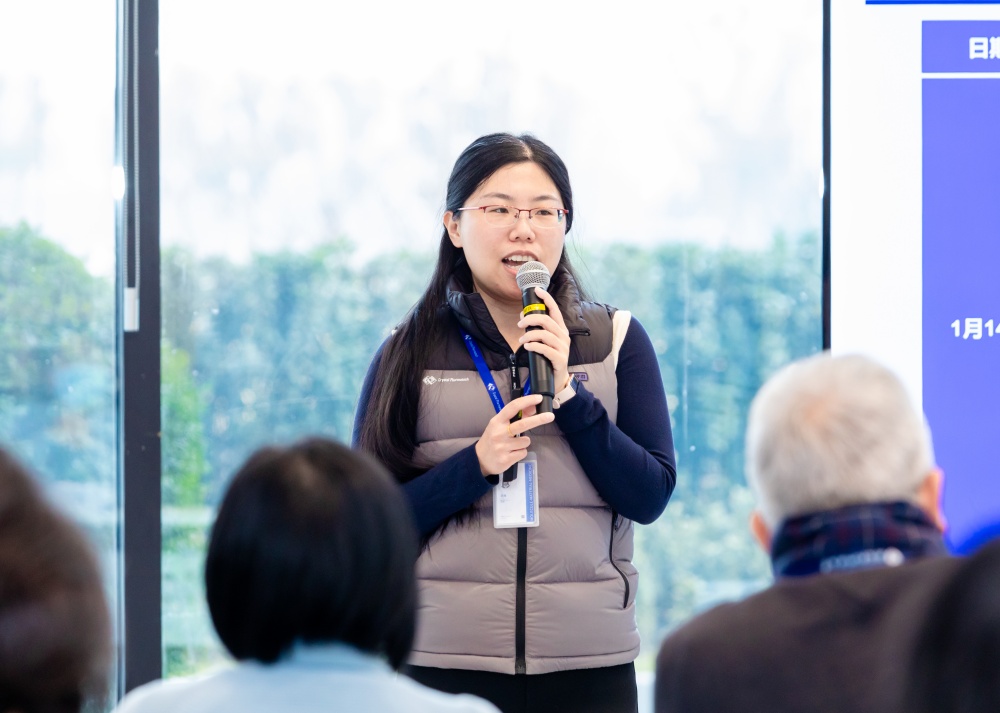
Wang presenting at a special training course on pharmaceutical crystal form research, co-hosted by XJTLU and Crystal Pharmatech
It was then that Dr Minhua Chen, Chairman and CEO of Crystal Pharmatech, shared some important news: XJTLU’s Wisdom Lake Academy of Pharmacy was recruiting PhD candidates for its industry-university joint training programme, and Crystal Pharmatech had also rolled out supportive policies for outstanding employees to pursue advanced studies while in employment.
Wang seized this opportunity.
Under the mentorship of Dr Ruiyao Wang, Senior Associate Professor at the Academy, Wang refined and finalised her research proposal and submitted her PhD application.
A multi-win proposal
Industry seeks technological breakthroughs, academia pursues cutting-edge research, and patients want effective, affordable medicines. As a jointly supervised industry PhD project, how could Wang’s research help achieve such a multi-win outcome?
“Right from the very beginning of this project, we considered its potential for future translation,” says Wang.
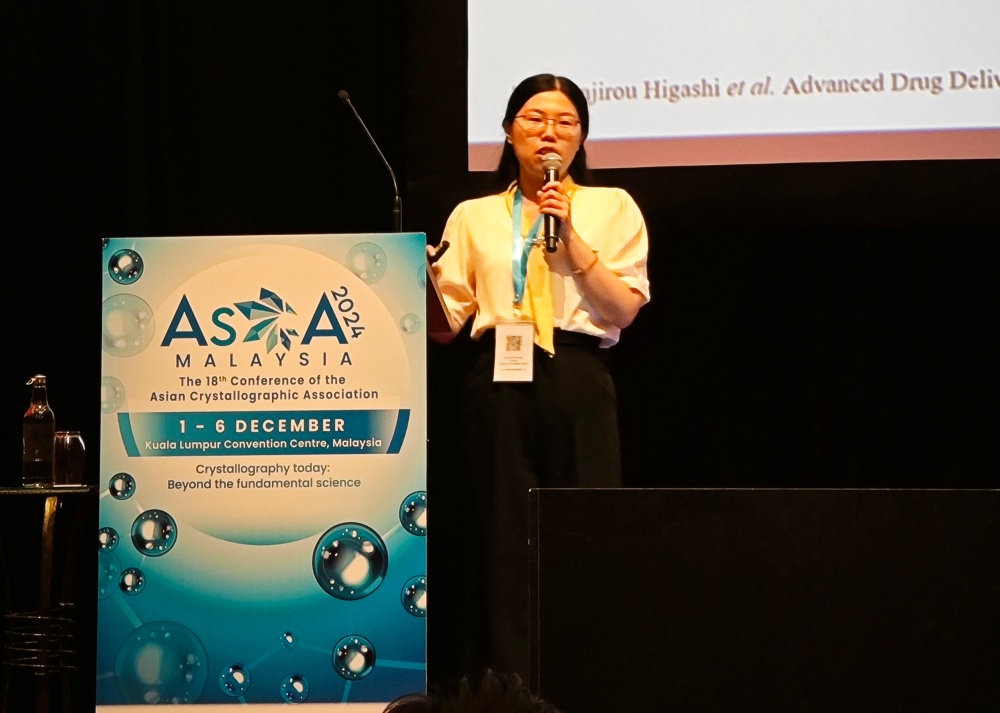
Wang delivering an academic presentation at the 2024 Asian Crystallographic Association (AsCA) conference
Achieving crystallisation of peptide drugs is a shared goal of both academia and industry, yet the two sides naturally differ in their perspectives.
“Generally speaking, academia delves deeper vertically, while industry spreads wider horizontally,” says Wang.
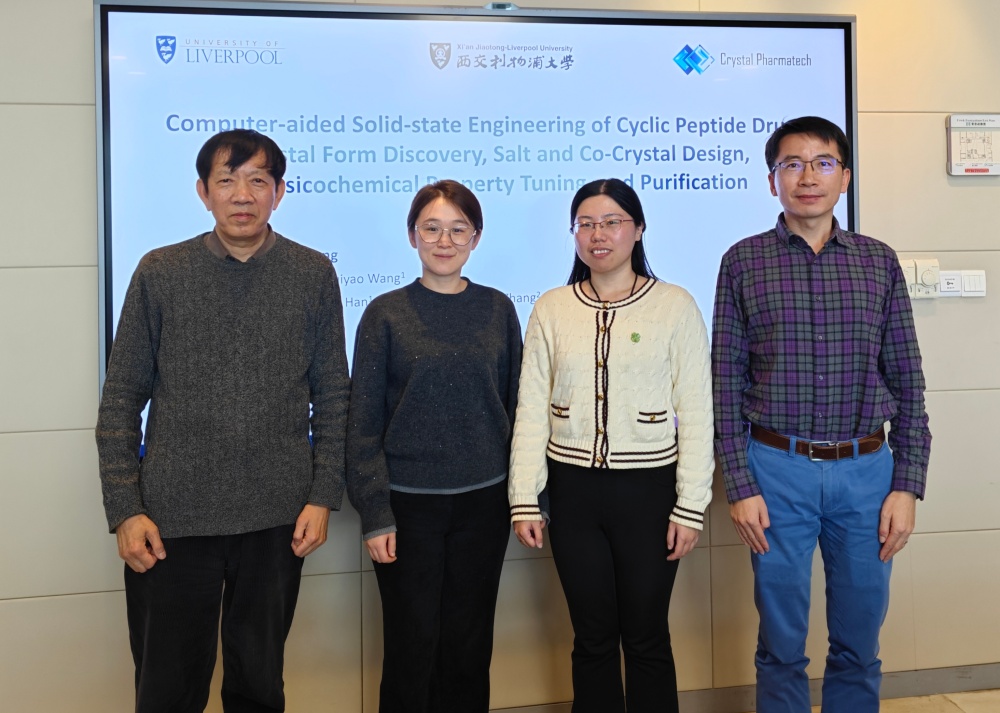
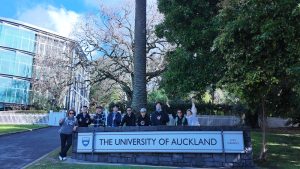
Group photo from Wang’s PhD defence. From left to right: Professor Yong Yue, Dr Yixue Qiao, Shuai Wang, Professor Ruibing Wang
Once she identified an effective crystallisation approach, the key question for industry was: What problem can it solve? “I need to demonstrate its value across all key property dimensions and explain how to achieve stable production,” she says.
From an academic perspective, however, further inquiry is needed: Why does it crystallise, and why does this crystallise while others do not? “We hope to dig deeper into the underlying principles,” Wang says.
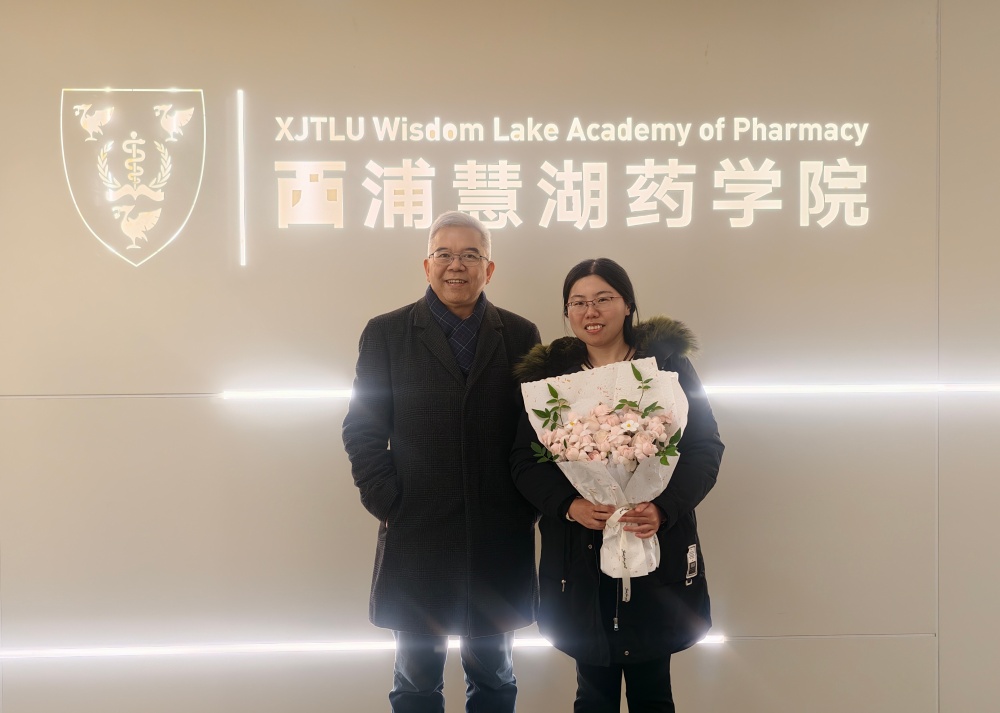
Shuai Wang (right) with her supervisor, Dr Ruiyao Wang (left)
Given this difference in focus, before the start of the PhD project, XJTLU, Crystal Pharmatech, and Wang had in-depth discussions to align on the project’s research objectives.
“Together with my principal supervisor, Dr Ruiyao Wang, and industrial supervisor, Dr Minhua Chen, we defined the common goals we aimed to achieve within the given time and resources,” says Wang.
Dr Minhua Chen is also a member of the Industrial Development Advisory Committee at XJTLU’s Wisdom Lake Academy of Pharmacy. With deep insights into industry-university-research collaboration, he provided industrial guidance for Wang’s doctoral research.
Wang says: “Dr Chen encouraged me to situate my findings within a real industrial context and focus on delivering practical, solution-oriented research.”
The unwavering purpose
“Pursuing a PhD is never easy, no matter which path you take,” Wang says.
In her first year of doctoral research, she failed to produce a single crystal, which was her darkest period. But even after being stuck at a bottleneck for a full year, her confidence in the research topic never wavered.
“I never doubted the value of the project itself. I only questioned whether the approach I was taking was right, or whether I had made a mistake in execution.”
She experimented with various methods and continuously refined her protocol, finally achieving a breakthrough at the end of her first year.
“When you have industry experience, and your research topic grows out of real problems you have faced yourself, you know exactly what your end goal is – and that gives you far stronger inner motivation,” Wang says.
“This kind of experience is incredibly valuable, whether you go on to become a Principal Investigator in academia or a senior project leader in industry.”
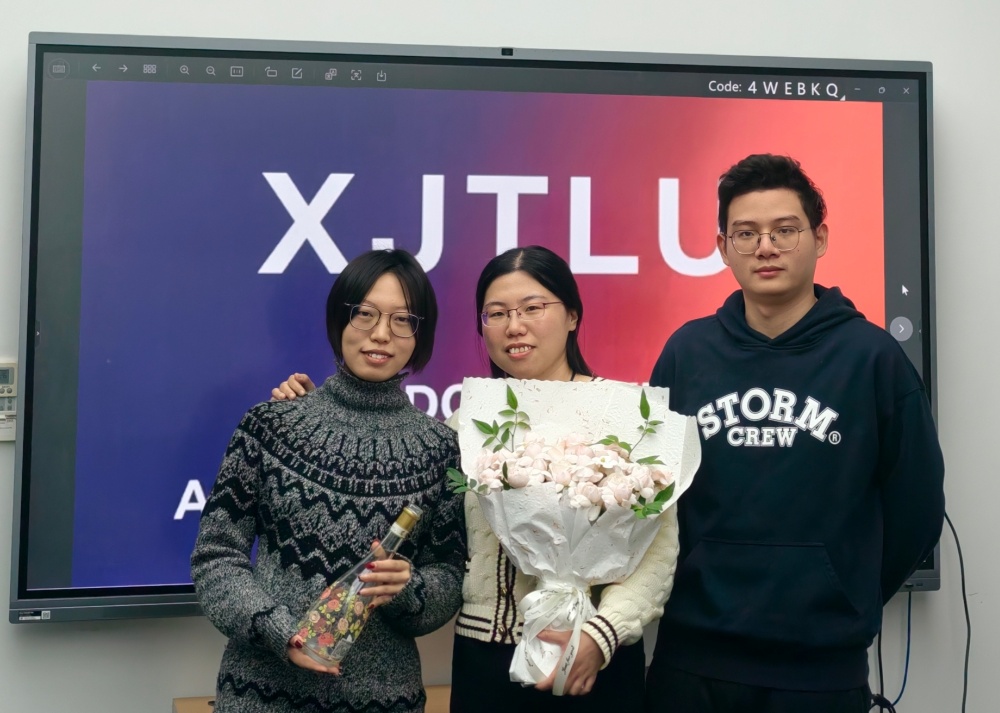
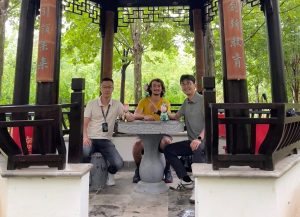
Shuai Wang (centre) with her lab mates Jingtong Li (left) and Yufeng Zhou (right)
By Luyun Shi
Edited by Bo Kou and Patricia Pieterse
Translated by Xueqi Wang
Photos courtesy of Shuai Wang
17 Mar 2026
RELATED NEWS
Step out and see the world: The journey of a geek
Whenever XJTLU alumnus Ruijiao Li – a pioneer in Chinese service robotics – is asked by students how to build a successful career, he offers one simple yet p...
Learn more