






From XJTLU to Harvard and Cambridge: How Far Can a Linguistics Path Take You?

03 Apr 2026


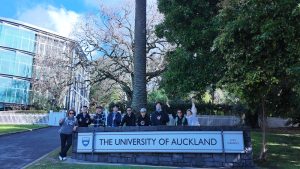
At the third session of the Department of Applied Linguistics’ Career Talk series, “Where Can a Linguistics Degree Take You?”, 2023 graduate Yiran Du, who holds a Master’s degree in Education from Harvard University and is currently pursuing a PhD in Education at the University of Cambridge, shared his academic journey.
Drawing on his own research experience, he outlined how linguistics students can build a pathway from undergraduate study to top-tier academia, while exploring interdisciplinary directions across education, psychology, neuroscience, and artificial intelligence.
The session focused on two key questions: what kinds of research linguistics can lead to, and how to develop effective strategies for applying to top master’s and doctoral programmes.
What Can You Study in Linguistics?
Yiran began by mapping out major subfields within linguistics and their different research opportunities.
Applied linguistics, particularly second language acquisition and language education, remains one of the most active areas, with relatively abundant research resources. This has also been the primary focus of his postgraduate studies.

In contrast, theoretical fields such as syntax, phonology, and semantics are well established but offer fewer PhD positions and academic opportunities, requiring stronger long-term commitment.
At the same time, linguistics is increasingly expanding into interdisciplinary domains. Fields such as psycholinguistics, neurolinguistics, computational linguistics, educational neuroscience, and AI in education are developing rapidly. However, these areas typically require additional competencies, including experimental design, background knowledge in psychology or cognitive science, and skills in statistics or programming.
Among these, educational neuroscience and AI in education represent key emerging directions. Research teams at institutions such as MIT, Harvard, and Cambridge are integrating linguistics with education, psychology, neuroscience, and artificial intelligence to study topics such as dyslexia, creativity, and critical thinking. While these areas offer strong potential, they also demand higher levels of interdisciplinary capability.
Yiran noted that applied linguistics remains a relatively structured and resource-rich path for research-oriented students, whereas interdisciplinary fields are more cutting-edge but require proactive skill development.

Undergraduate Stage: Building Research Capacity
Addressing postgraduate applications, Yiran emphasised the importance of developing both academic foundations and research capability during undergraduate study.
GPA and language proficiency scores remain essential, influencing both admission outcomes and future academic engagement.
More importantly, students need to build genuine research competence. This can be achieved through university research projects, dissertations, or systematic literature reviews. Compared with costly external research programmes, internal resources and independent research are often more practical and valuable.
He highlighted two key skill areas:
Quantitative methods, including statistical analysis (such as t-tests, ANOVA, and regression) and tools like SPSS, R, and Python
Qualitative methods, including interviews and thematic analysis
These skills directly shape students’ roles within research teams, enabling progression from basic assistance to independent problem-solving.
He also noted that priorities should differ depending on career goals. Students aiming for a PhD should prioritise research, while those focused on employment may place greater emphasis on interns
Application Strategies for Master’s and PhD
Based on his own experience, Yiran shared several practical insights.
First, applicants may consider aiming higher when conditions allow. A transnational education background can offer advantages in grade conversion and broaden application options.
Second, when choosing between institutional prestige and programme specialisation, he suggested prioritising top universities. Academic career pathways often value institutional background, and leading universities provide stronger resources, supervisory networks, and collaboration opportunities. Research interests can be refined later.
He also noted that interdisciplinary master’s programmes often offer broader perspectives, but a one-year degree may not be sufficient for direct entry into top PhD programmes, particularly in computational or psychology-related fields. Students using such programmes as a stepping stone should actively develop technical skills and secure strong references.
In contrast, professionally oriented master’s programmes focus more on practice and employment, with relatively limited academic resources. They are better suited for students with clear career goals and should be considered carefully if a PhD is the intended next step.
Regarding research assistant experience, he emphasised that its value lies not in the number of tasks completed but in the level of meaningful contribution. By developing key skills and actively engaging in research processes, students can move towards deeper involvement, which is often essential for strong recommendation letters and future opportunities.
Research Frontiers: Where Is Linguistics Heading?
The session concluded with a forward-looking discussion on emerging research directions.
In educational neuroscience, researchers use techniques such as EEG and fMRI to investigate the neural mechanisms behind dyslexia and bilingual learning.
In AI and education, some research teams are moving beyond using existing tools to participating in model development, exploring how artificial intelligence shapes learning processes, creativity, and cognition. This direction requires stronger capabilities in experimental design, programming, and interdisciplinary integration.
From undergraduate study at XJTLU to Harvard and Cambridge, Yiran’s journey illustrates a progressive academic pathway.
Linguistics is not a single-track discipline, but a bridge connecting the humanities, social sciences, and emerging technologies. Whether in applied linguistics or in fields such as educational neuroscience and AI in education, it offers diverse possibilities.
“For students still exploring their direction, what matters most may not be choosing a single path, but gradually developing the ability to navigate an evolving environment,” concluded Dr Hong Liu, organiser of the Career Talk Series and Programme Director of Applied Linguistics at XJTLU.
Reporter: Yiyi Gu
03 Apr 2026