





29 Apr 2026


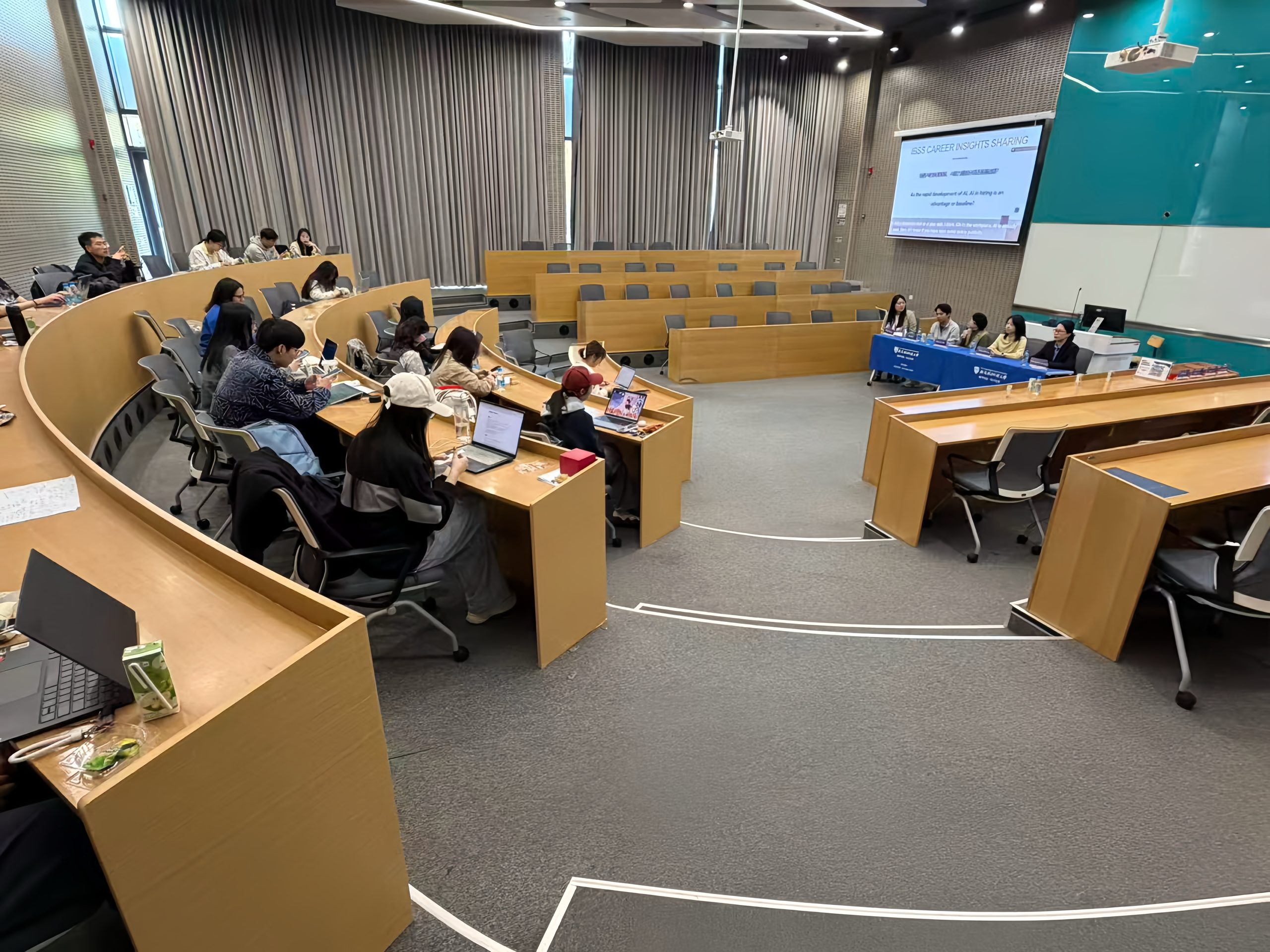
International Business School Suzhou (IBSS) at Xi’an Jiaotong-Liverpool University recently held a Career Insights Series session titled “Full-Time Track: What Employers Look For and How to Grow in Your First Year.” The event focused on key challenges faced by graduating students in job applications and early career adaptation, attracting strong in-person participation and engagement.
The session featured four experienced speakers from diverse industries: Xin Shu, International E-commerce Operations Specialist at Xiaomi; Minmin Wu, HR Director at Vinno Technology; Mi Zhang, Talent Development Expert at FESCO Adecco (Suzhou); and Mengchu Jiang, Operations Director at CITIC Securities. Drawing from perspectives in recruitment, talent development, and workplace practice, they shared valuable industry insights with students.
AI in Focus: From “bonus skill” to “core capability”
During the discussion, multiple speakers highlighted that AI skills are rapidly evolving from a “nice-to-have” to a fundamental workplace competency. Employers are no longer concerned only with whether candidates can use AI tools, but with whether they can use them effectively to improve efficiency and create value. At the same time, speakers cautioned that AI should not replace independent thinking. Over-reliance on AI—especially in CVs and interviews that lack genuine personal input (the human element)—may negatively impact candidate evaluation.
Resumes and applications: fit and authenticity matter
From a recruitment standpoint, speakers emphasised that CVs should be tailored to specific job requirements rather than using a one-size-fits-all approach. Employers prioritise alignment between the candidate and the role, making clarity, relevance, and structured presentation essential.
Equally important is authenticity. All information presented must be accurate and able to withstand follow-up questions. Any exaggeration or vague claims are likely to be scrutinised during interviews and may undermine credibility. Additionally, candidates are encouraged to demonstrate individuality and avoid generic, overly standardised, or AI-generated expressions that lack personal substance.
Overall, employers tend to favor candidates who demonstrate an “employer mindset”—those who understand organisational needs and can strategically select and present their experiences to highlight relevant strengths in a compelling and targeted manner.
First year at work: growth through foundational roles
Addressing concerns about early career development, speakers shared real-world examples and noted that starting from entry-level or foundational roles is a common and necessary stage. At this point, organisations primarily assess learning agility, execution capability, and communication skills—key indicators of long-term potential.
Moreover, seemingly simple or repetitive tasks play a critical role in building trust and unlocking future opportunities. Consistent performance in daily responsibilities helps earn recognition from supervisors and teams, laying the groundwork for taking on more significant roles. As one speaker noted, “Trust is built through the accumulation of small tasks done well.”
Job switching and adaptation: rational choices and long-term perspective
The session also covered the relatively high turnover rate among recent graduates in their first year. Speakers identified impulsive decision-making, low stress tolerance, and unclear understanding of job roles as primary contributing factors.
They advised students to adopt a more structured and long-term approach to career decisions. This includes clearly defining personal goals and career direction rather than being driven by short-term opportunities or external pressures. It is also important to understand the responsibilities of a role and the nature of the industry before starting work, helping to reduce gaps between expectations and reality. Most importantly, career development should be viewed as a long-term accumulation process rather than something dictated by temporary emotions or short-term challenges.
A comprehensive support system for career development
The IBSS Student Development and Support (SDS) Team continues to provide a wide range of career development services, including industry talks, company visits, career advising, business competition coaching, job fairs, and professional skills training. These initiatives aim to holistically enhance students’ employability and career readiness in a more holistic way.
At the end of the session, speakers also shared internship and job opportunities on-site and collected student CVs, offering valuable pathways for practical engagement and career advancement.
By: Yixin Zhang
Edited by Thoma Durham
29 Apr 2026