





06 Apr 2026


On 17 March, the Department of Industrial Design at Xi’an Jiaotong-Liverpool University welcomed the Hua & Hua Strategic design team for a campus visit and exchange. Centered on the theme of “Brand Symbols × Product Language,” the visit further advanced collaboration in curriculum reform, the introduction of industry methodology into the classroom, joint teaching, and future cooperation. The visit included not only a methodology lecture for students, but also university–industry exchange, a cooperation signing ceremony, and a campus tour, marking a move from initial alignment to a more concrete stage of teaching practice.
Hua & Hua is a methodology-driven consultancy with long-term engagement in the Chinese market. With more than twenty years of practice, the company has developed the “Super Symbol” approach as its core methodology, bringing enterprise strategy, brand strategy, and marketing communication into one integrated framework, while offering services across enterprise strategy, brand strategy, brand design, product development, packaging design, and advertising creativity.
This collaboration takes the Year 4 module IND308 Design Strategy & Ethics as its main platform, focusing on how brand symbols, cultural semantics, and product-touchpoint design can be more closely integrated into a teaching exploration grounded in real problems, real users, and real situations.
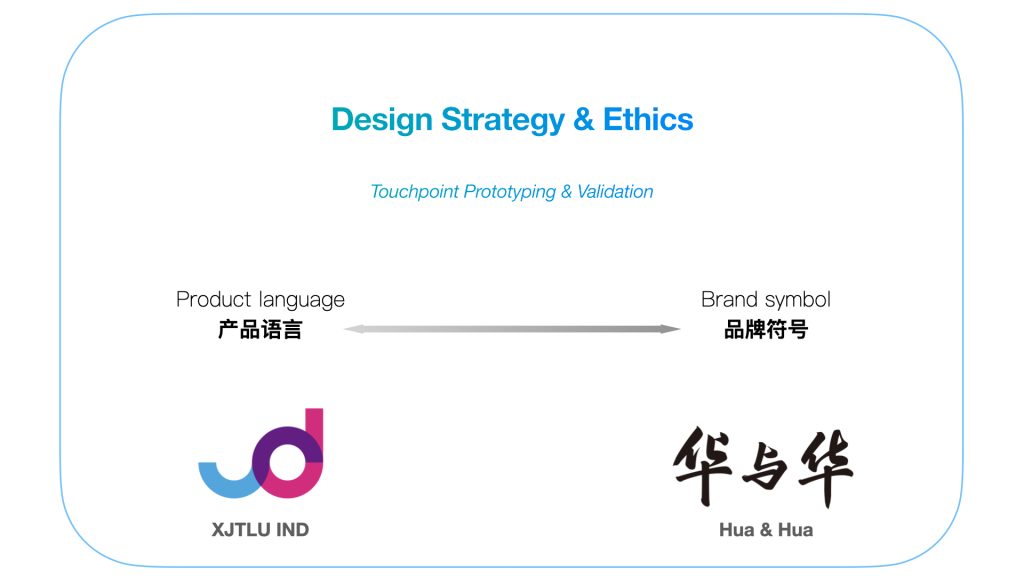
IND308 focuses on transferring brand symbols into interactive and verifiable product and touchpoint language
For the general public, the name Hua & Hua may not be as immediately familiar as some of the brands it has worked with, yet its methodology has already entered everyday consumer culture. Widely recognized brand practices such as Mixue Ice Cream & Tea, Haidilao, and Sunflower Pharmaceutical have all demonstrated the real market impact of brand strategy and design methodology. For the Department of Industrial Design, the value of such a collaboration lies not simply in inviting a company to share successful cases, but in bringing a method tested over time in the market into the design classroom, and re-examining it through products, touchpoints, and user contexts.
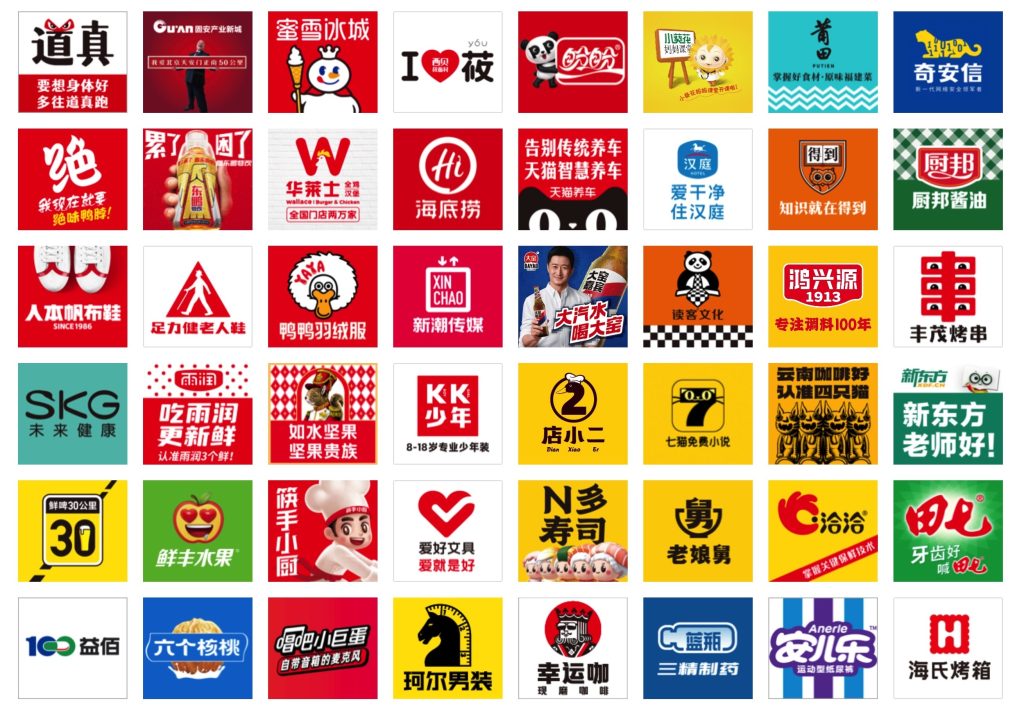
Selected brand cases presented during Hua & Hua’s lecture
For a long time, industrial design education has often been understood as training centered on function, form, and usability. Yet in a rapidly changing industrial context, design increasingly needs to respond to more complex issues involving brand, culture, market, and social cognition. In recent years, the Department of Industrial Design at XJTLU has continued to update its curriculum, aiming to ensure that students not only know how to design products, but also understand how products relate to brand language, user perception, business objectives, and social context. This collaboration with Hua & Hua is based on precisely this understanding: introducing leading industry methodology into the classroom is not intended merely to expose students to cases and concepts, but to further translate such methodology into a design pathway that is actionable, testable, and iterative. The broader collaboration also proposes extending the “Super Symbol” approach beyond brand communication into more concrete product and touchpoint levels, shaping a practice in the classroom with both design value and research potential.
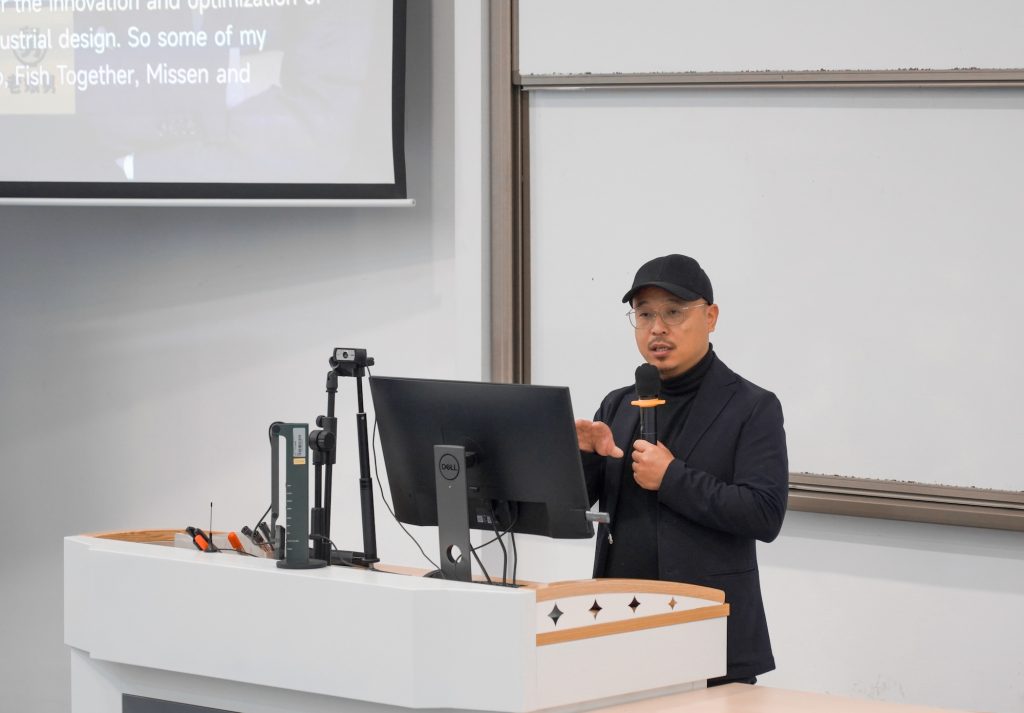
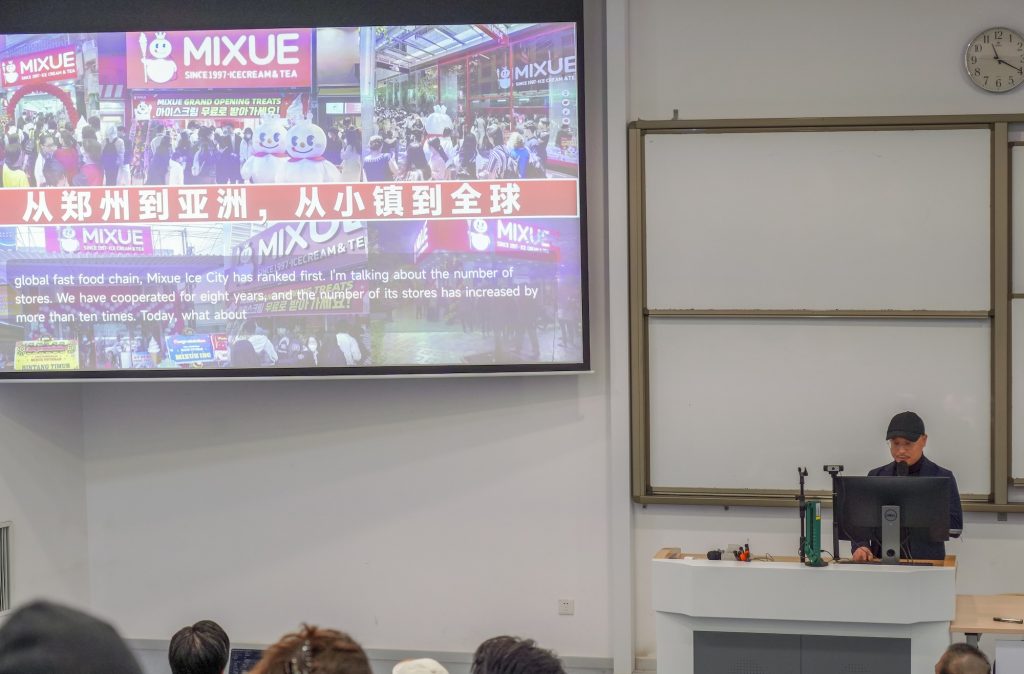
Chuan Wang, General Manager of Hua & Hua’s Spatial Business Department, introduces the brand design case of Mixue Ice Cream & Tea to students
On 17 March, the Hua & Hua team first delivered a methodology lecture for IND308 students. The lecture drew on Hua & Hua’s long-developed brand methodology, real cases, and related design thinking, introducing how brand work can begin from cultural prototypes, symbolic cues, and communication logic, and then be further understood in terms of how brands are quickly understood, accurately perceived, and translated into action at the level of products and touchpoints. After the lecture, the university and industry teams engaged in further exchange with the students and discussed follow-up curriculum collaboration, case input, and joint reviews. A cooperation signing ceremony then took place, providing a clearer foundation for subsequent course co-development and collaboration.
After the signing ceremony, the visiting team also toured teaching spaces within the Design School and several representative campus locations, gaining a deeper understanding of the university’s teaching environment and interdisciplinary practice culture. The visit also laid a strong foundation for the continued development of course co-building, teaching exchange, and further high-quality collaboration between the two sides.
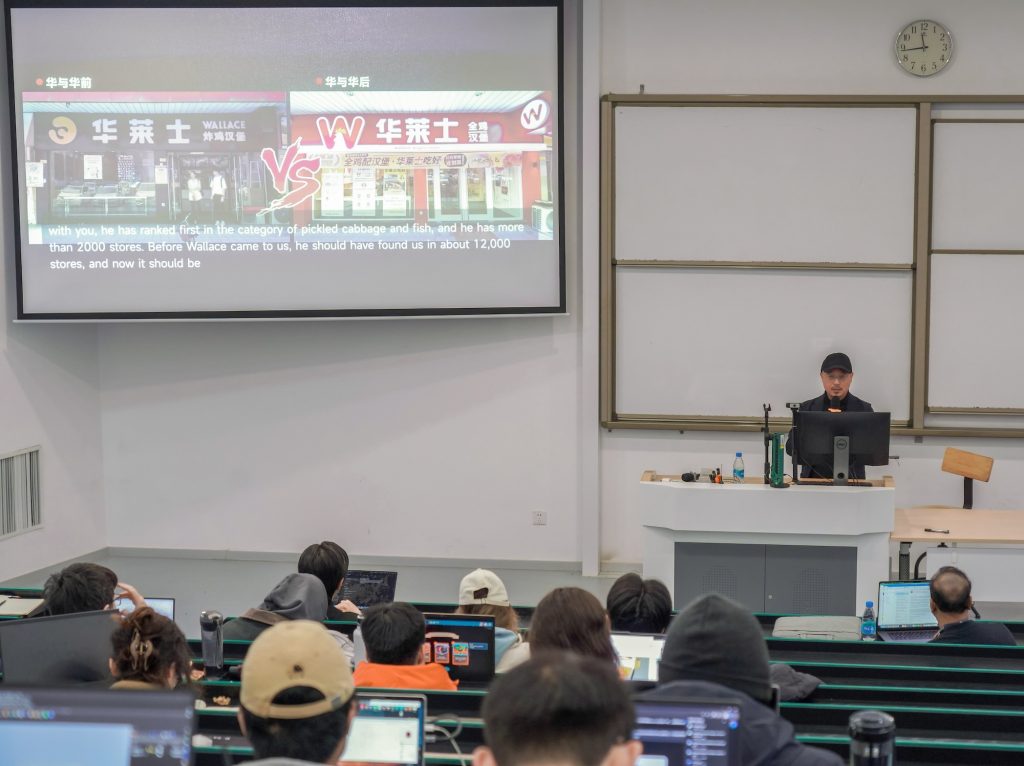
Guest speaker Chuan Wang explains the practical application of the Super Symbol methodology through real cases
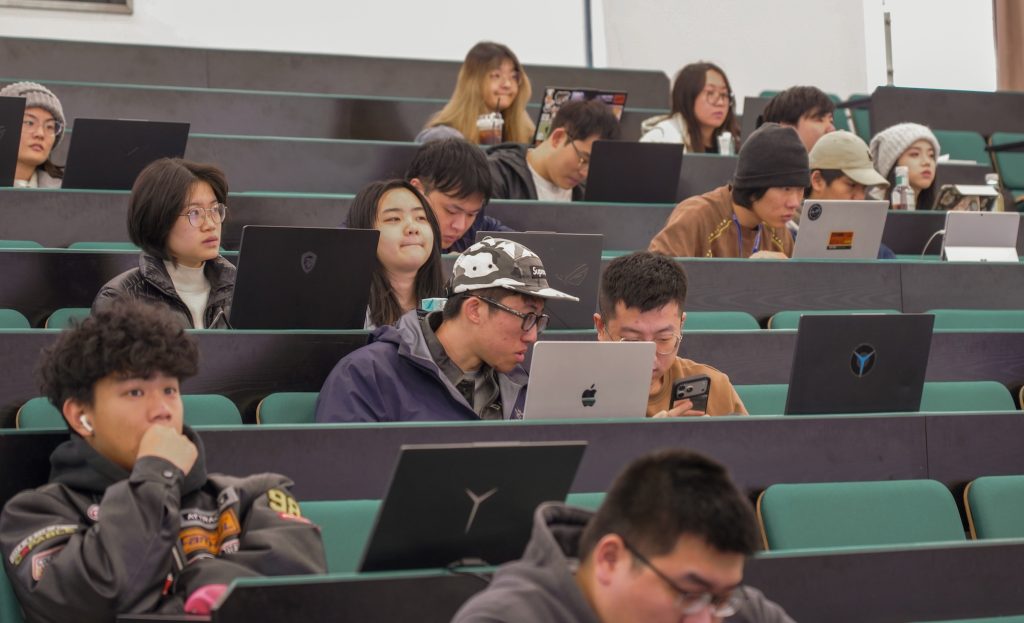
Students engaging closely with the Super Symbol design methodology during the lecture
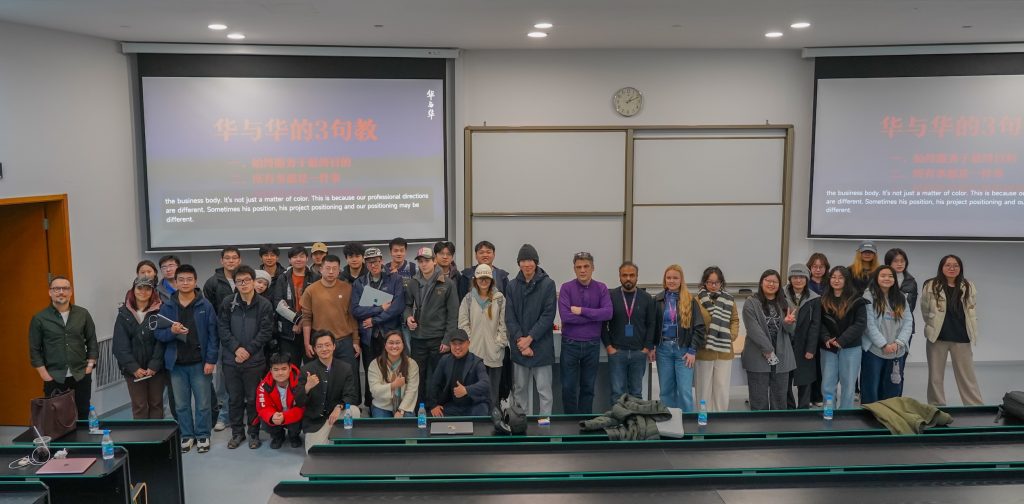
The Hua & Hua team with participating staff and students from IND308 after the lecture
For the Department of Industrial Design, the significance of this collaboration goes beyond a company visit or an industry talk. More importantly, it offers a teaching entry point for curriculum reform that is closer to real industrial challenges. IND308 itself emphasizes touchpoint-level design strategy within user journeys, asking students to build a clear evidence-led workflow from design briefs, journeys, key moments, prototypes, and testing, so that “design intent” can be translated into “verifiable outcomes” through shared metrics and comparative testing. The module does not treat “better usability” as the only goal. Instead, it asks students to consider user goals alongside brand and business goals within specific situations, such as conversion, repurchase, risk control, and trust and word-of-mouth. Hua & Hua’s presence in the classroom therefore strengthens the connection between brand, product, user, and evidence, helping students understand more clearly that design is not only a matter of formal expression, but also a strategic practice that can be tested and validated.
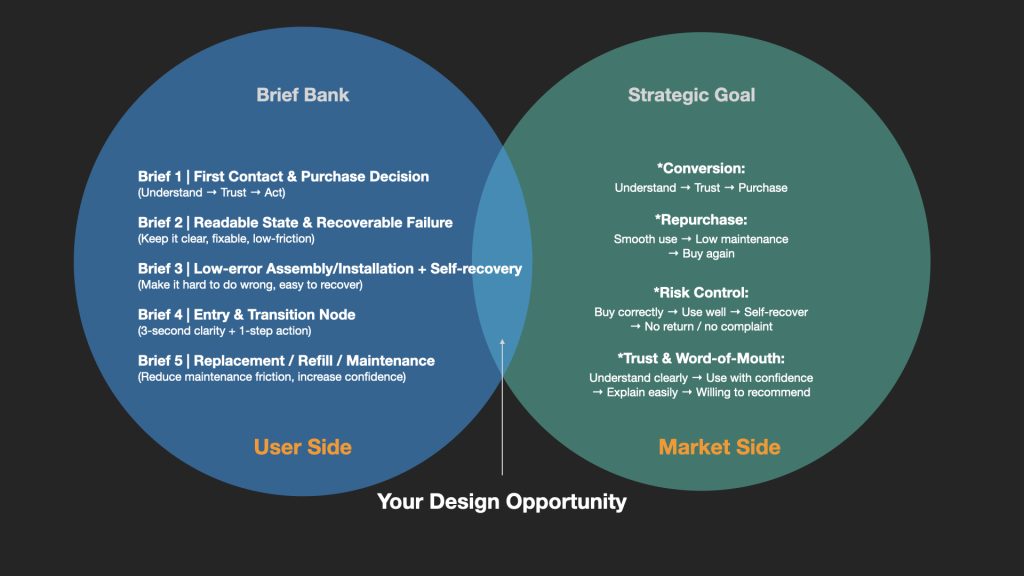
IND308 asks designers to identify potential design opportunities by connecting user needs with business strategy
More importantly, what this kind of collaboration represents is not a one-way transfer of enterprise experience into the university, but rather the Department of Industrial Design actively building a higher-quality collaborative education framework. On the one hand, it brings industry methods, real cases, and practical perspectives into the classroom, helping students understand how design enters more realistic social and commercial contexts. On the other hand, it remains grounded in design education and academic standards, placing these methods back into the contexts of teaching, research, and cross-cultural learning for further translation, testing, and development. For the School, the value of this collaboration does not lie in “doing projects for a company,” but in advancing design education from a narrow focus on form and function toward more integrated strategic thinking, semantic expression, and evidence awareness. For students, this means building a more direct connection between real industry language and design methodology, and developing a more complete professional perspective and practical judgement.
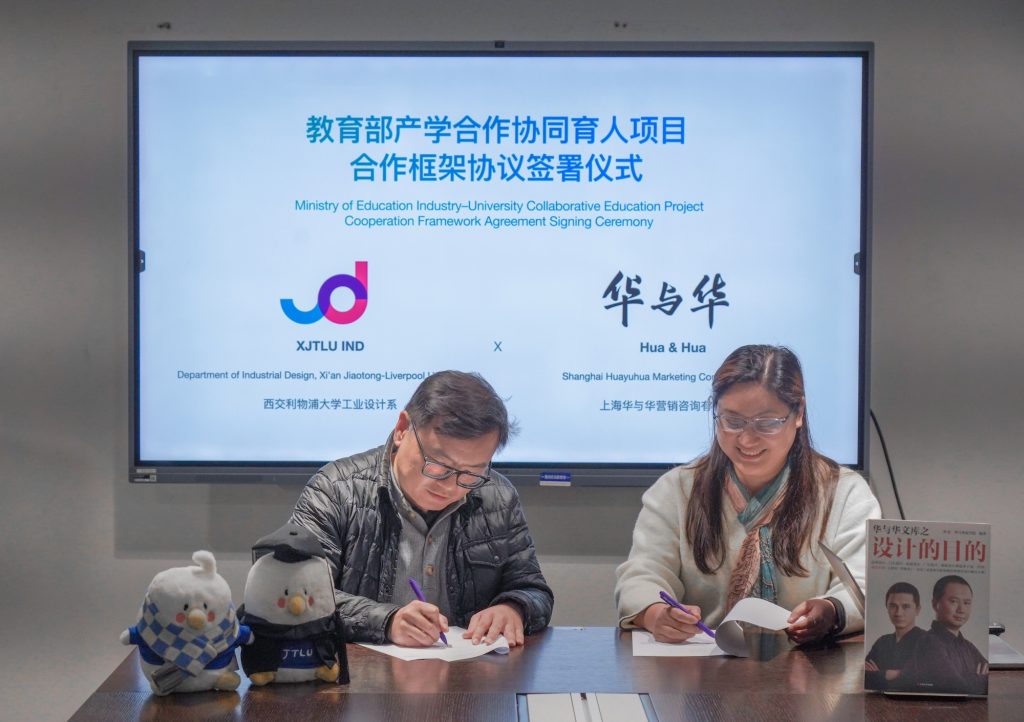
Dr Cheng-Hung Lo, Head of the Department of Industrial Design at XJTLU Design School, signs the course collaboration framework agreement with Mrs Xiaoyan Xia, President of Hua & Hua Business School
It is also worth noting that XJTLU’s international classroom environment provides a particularly distinctive condition for this collaboration. The broader collaboration concept explicitly sees XJTLU’s cross-cultural teaching setting as an important platform: within the same classroom, students are asked not only to understand Chinese brand and cultural contexts, but also to consider how these design languages may be understood, accepted, and retold by users from different backgrounds. This means that the Department of Industrial Design’s curriculum is no longer oriented only toward a single market or a single context, but instead uses a more open teaching environment to explore how locally developed brand methods can enter international design education and develop into product and touchpoint language with stronger cross-cultural potential.
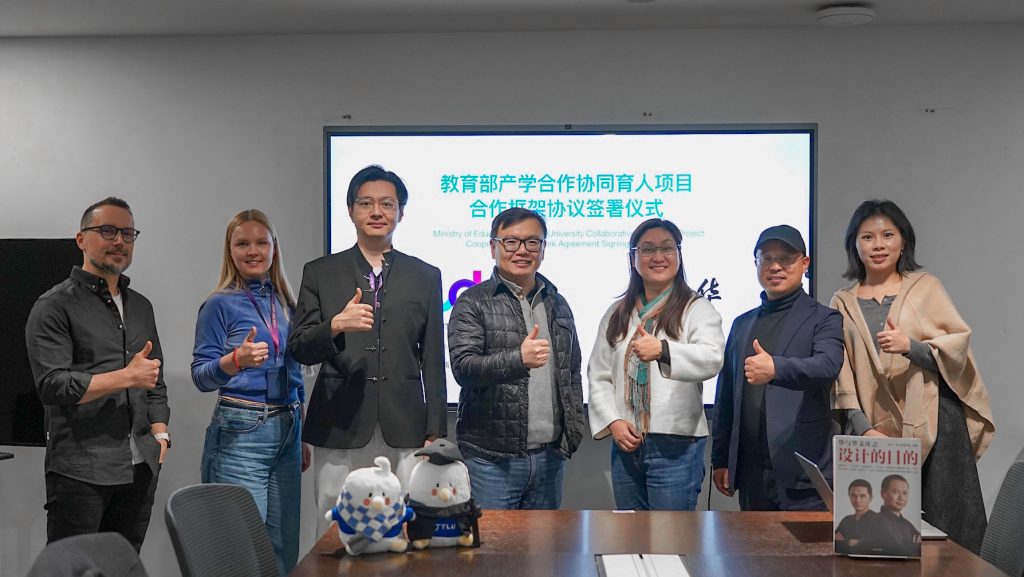
Group photo of XJTLU Industrial Design staff and the visiting Hua & Hua team. From left to right: Nuno Bernardo, Mariia Zolotova, Jiaqi Wei, Cheng-Hung Lo, Xiaoyan Xia, Chuan Wang, and Wenjun Hu
This visit by Hua & Hua marks an important step forward for the Department of Industrial Design in both curriculum development and high-quality industry collaboration. It also once again reflects the department’s ongoing efforts to engage leading industry partners and proactively advance teaching innovation.
For the Department of Industrial Design, this is not only a collaboration, but also an active exploration of future-oriented design education: how to connect industry experience, design research, and talent development more organically in a context where globalisation and localisation coexist, and in doing so form a teaching practice model with demonstrative value.
Looking ahead, both sides will continue to deepen exchange around course co-development, joint teaching, and the dissemination of outcomes, further grounding the theme of “Brand Symbols × Product Language” in industrial design education.
Story provided by Department of Industrial Design
Photos by Qinru Liu and Xiaoyan Jin
Edited by Yi Qian
06 Apr 2026