




‘No way back’: Professor Minzhu Yang on the ‘tough battles’ he fought at XJTLU

13 May 2026


In 2008, Xi’an Jiaotong University appointed Professor Minzhu Yang as Vice President of Xi’an Jiaotong-Liverpool University (XJTLU), a position he remained in for 11 years.
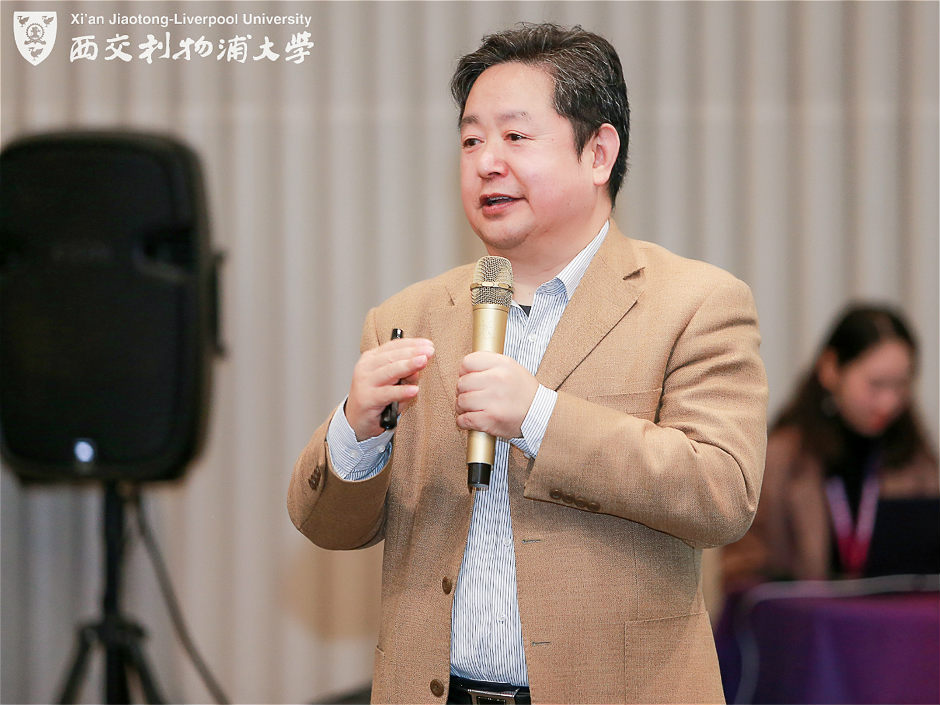
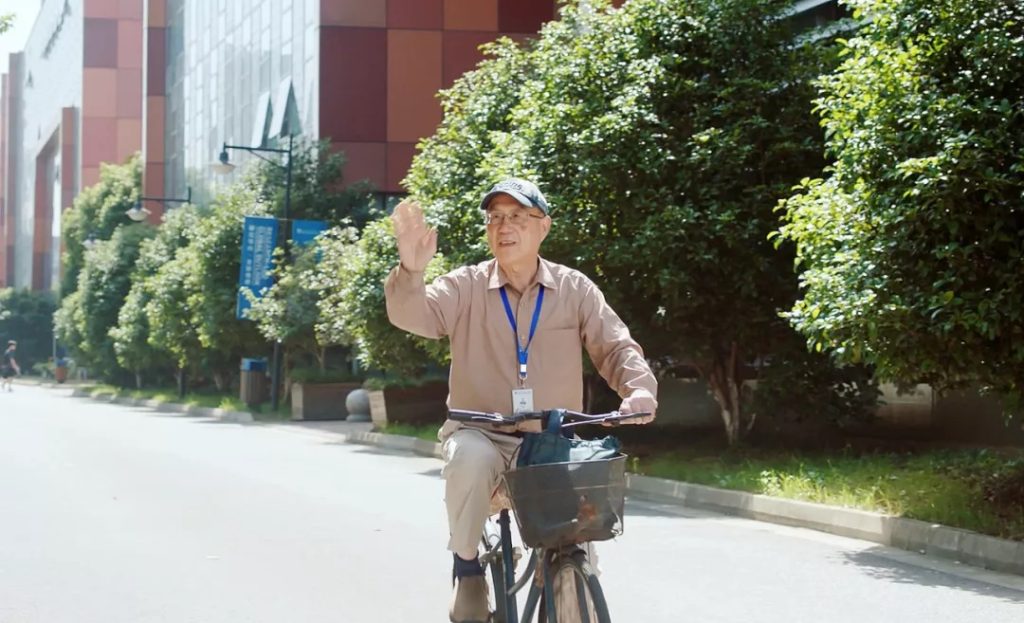
Professor Yang at XJTLU’s 2018 Autumn Communications and Media Reception
He arrived at XJTLU in the same year as Executive President Professor Youmin Xi, when the University was only two years old.
“Professor Xi had an ambitious vision: to build a different kind of university – an international university on Chinese soil,” Professor Yang says. “We did not want to copy Xi’an Jiaotong University, nor did we want to copy the University of Liverpool. We had to keep exploring through practice.”
The reality he faced, however, was stark. The University had only just started. Resources – whether people, funding, or facilities – were in short supply. Every step was difficult.
“Sending us here under such severe resource constraints meant we were being asked to take on an exceptionally difficult task at the University’s most fragile stage. Did we have a way back? No. We had no way back. We had to make it happen, whatever it took,” he says.
A matter of standards
The first, and most difficult, “battle” was obtaining degree-awarding authority.
XJTLU undergraduates receive both Chinese and UK degrees, which means the University’s teaching must meet the University of Liverpool’s quality standards while also satisfying China’s rigorous requirements for the awarding of bachelor’s degrees.
When XJTLU was first established, it was approved by the state to open new programmes, recruit students, and issue graduation certificates. However, degree-awarding authority for each programme would only be assessed when that programme was about to graduate its first cohort of students.
In 2010, experts organised by the provincial education department came to the University for an evaluation.
“They reviewed everything: the campus buildings, classrooms, library resources, and all aspects of teaching,” Professor Yang recalls. “But the biggest issue was not the hardware. It was the difference between Chinese and Western teaching models.”
After extensive on-site visits and detailed discussions, a group of experts and professors gradually moved from not understanding XJTLU to understanding it, and later to supporting it.
“They came to realise that although XJTLU’s course titles were different, and although the content was taught differently, the professional abilities and qualities our students developed over four years fully met the equivalent requirements of universities in China. XJTLU was genuinely doing what education is meant to do,” Professor Yang says.
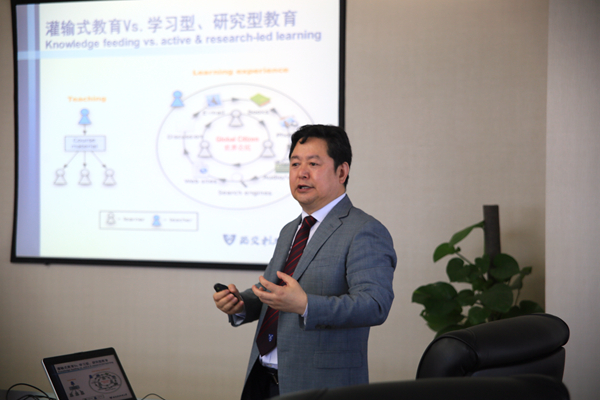
Professor Yang speaking at a degree review meeting in 2015
In those years, XJTLU applied for new programmes every year, and each newly established undergraduate programme had to undergo such reviews four years later.
“It was extremely difficult at the beginning. Once we achieved the first breakthrough, the later degree-awarding processes became much smoother,” he says.
Power on, internet on
In traditional Chinese universities, student management often means setting rules: what time the lights go out at night, when internet access is cut off, when students get up for morning exercises, and even where each student sits in class to prevent absenteeism.
After arriving at XJTLU, Professor Yang built its student affairs system around XJTLU’s philosophy of treating students as “young adults”.
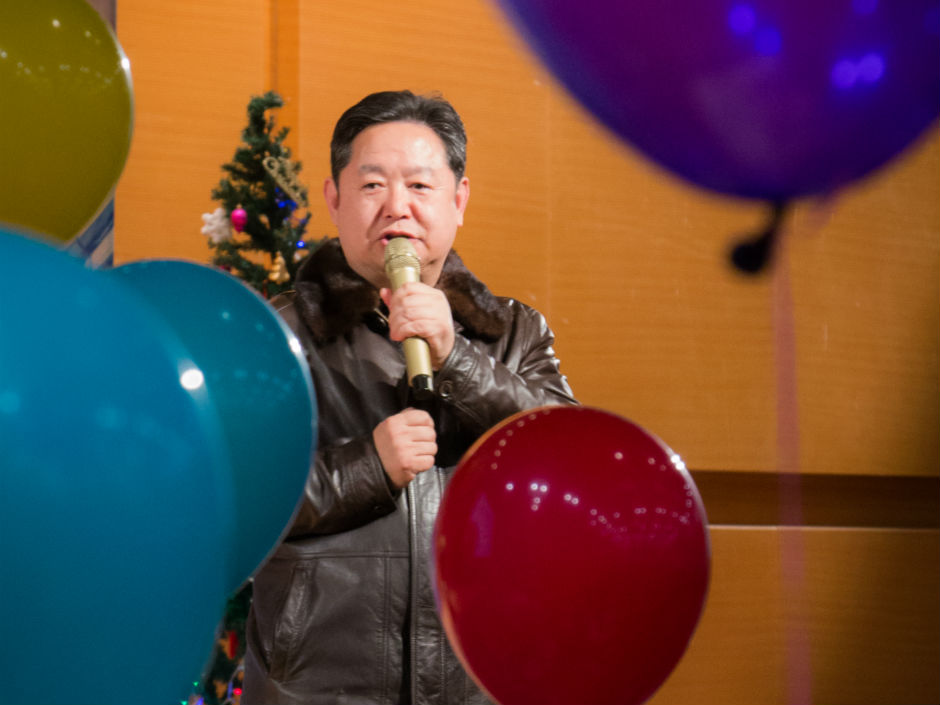
Professor Yang at an XJTLU external mentor meeting with students in 2016
“Our management is not about controlling students, but about providing support and services,” he says. “Students are adults, and there are two aspects when it comes to student management. One is about setting boundaries – ensuring that students’ behaviour does not go beyond the student code of conduct, and that they do not violate laws or regulations. But more often, it is about guidance: supporting students’ learning and development through services and advice, while giving them room for autonomy.”
This decision was once controversial. Some teachers who had transferred from other universities and had experience in student affairs thought the approach was “dangerous”.
“We did this under pressure at the beginning, but later we found that our approach was right,” Professor Yang says. In a free and open environment, with the support they needed for growth, students quickly developed a sense of self-management and successfully made the transition from children to young adults, and then to global citizens.
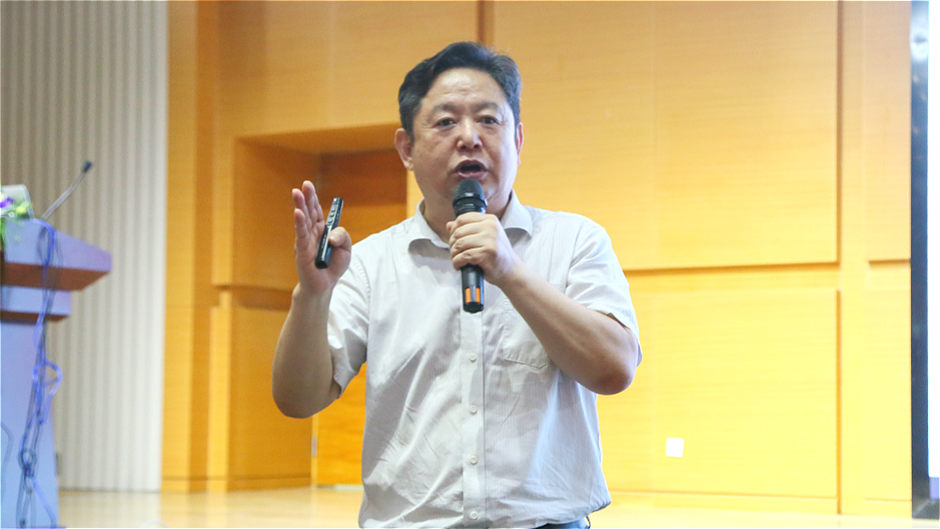
Professor Yang speaking at a lecture during orientation week in 2018
From daily management to systems and cultures
“In the early days of this ‘start-up’, difficulties occurred all the time. Almost everything was urgent, and almost everything was stretched,” Professor Yang says.
An international joint-venture university is costly to run. At the time, XJTLU had a limited student quota, heavy financial pressure, and only one building, which had been funded and built by the local government. The University was seriously understaffed. Many administrative staff took on multiple roles, while their pay was below the average salary in the Suzhou Industrial Park.
“I had to keep the team going. Even when resources were scarce and conditions were far from ideal, we had to find a way forward and make things happen. Whenever a problem came up, we would jump in and deal with it immediately,” Professor Yang says.
As XJTLU gradually developed, its management approach also had to be upgraded. “At that point, we needed to establish rules and regulations, improve the corresponding management systems, use systems to manage affairs, and use institutions to guide people,” he says.
In his view, the University has now reached a stage where “things no longer need to be managed by individuals, and people no longer need to be managed by executives.” Guided by systems and rules, schools, departments, and professional service units can each fulfil their own responsibilities.
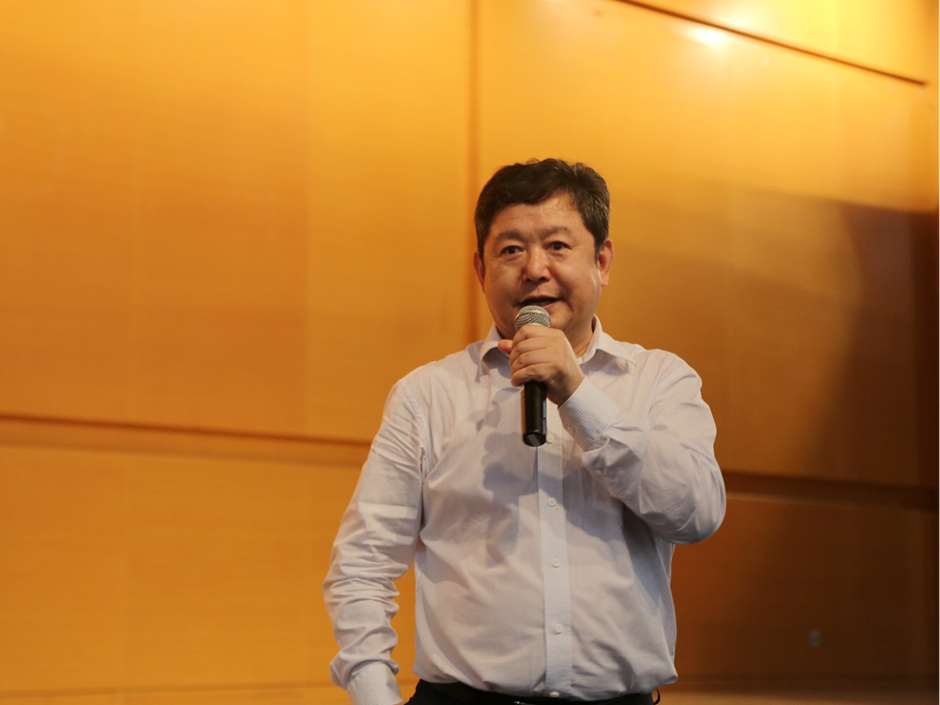
Professor Yang speaking at the award ceremony for students’ summer social practice programmes in 2017
In 2019, Professor Yang retired from his position as Vice President of XJTLU. Trained as a mathematician, he chose to join the School of Mathematics and Physics as a full-time teacher of foundational mathematics courses.
Reflecting on the milestone of XJTLU’s 20th anniversary, Professor Yang says: “XJTLU’s development has far exceeded my expectations.”
“Education is a century-long undertaking. For a person, 20 is still the age of a young adult; for a university, 20 years is still an early stage,” he says. “The blueprint we drew has only just begun to unfold. There is still so much waiting to be written by those who come after us.”
By Luyun Shi
Edited by Patricia Pieterse
Translated by Xiangyin Han
13 May 2026
RELATED NEWS
Professor Jingming Guo: Reimagining how mathematics is taught
If you only sat in on one of Professor Jingming Guo’s mathematics classes, you might not immediately realise that behind it lies something of the early teach...
Learn more

The chance to create something new: The beginnings of IBSS
In 2012, Professor Sarah Dixon, then Dean of the School of Management at the University of Bradford in the UK, accepted a position to set up a business schoo...
Learn more