

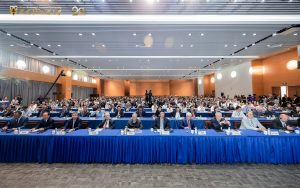
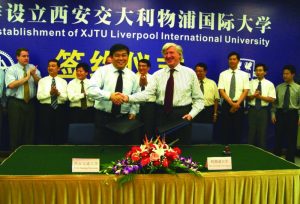


2026 International Workshop on Post-Quantum Cryptography Frontiers and Applications


Invited Keynote Lecturers
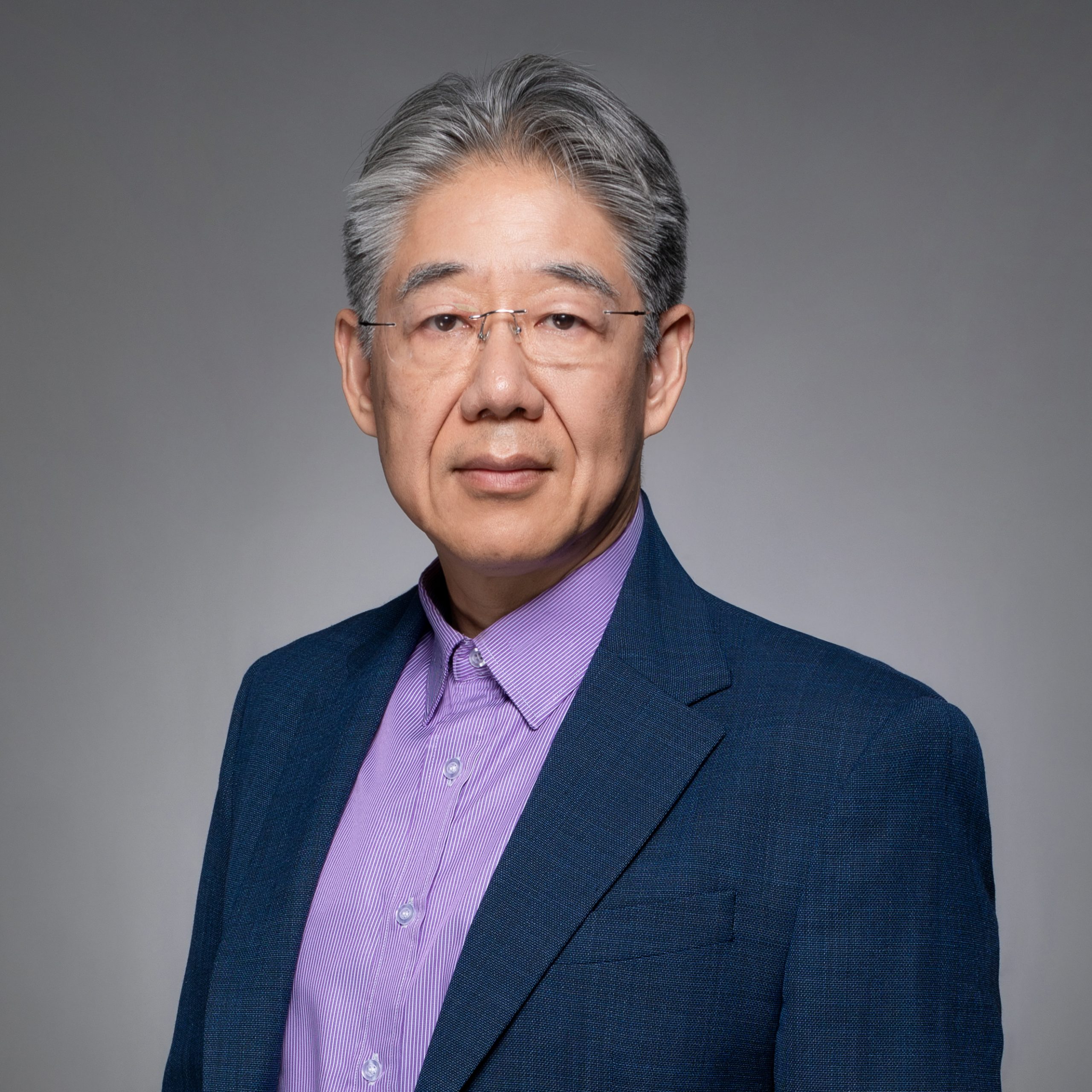
Professor Jintai Ding
Affiliation: Director of the Post-Quantum Migration Interdisciplinary Laboratory (PQC-X), Xi’an Jiaotong-Liverpool University / Chair Professor, Tsinghua University
Academic Status: Internationally recognised leader in post-quantum cryptography, one of the main founders of multivariate public-key cryptography.
Core Contributions:
- NIST Standard Design: A core designer of Kyber (ML-KEM), the first post-quantum Key Encapsulation Mechanism (KEM) selected by NIST, which has become the cornerstone of global PQC migration.
- Multivariate Cryptography Authority: Schemes such as the Rainbow Signature proposed by him have had a profound impact on the development of multivariate cryptography.
- Industry Promotion: Dedicated to promoting the standardisation and industrial deployment of post-quantum technology in finance, IoT, and national critical infrastructure.
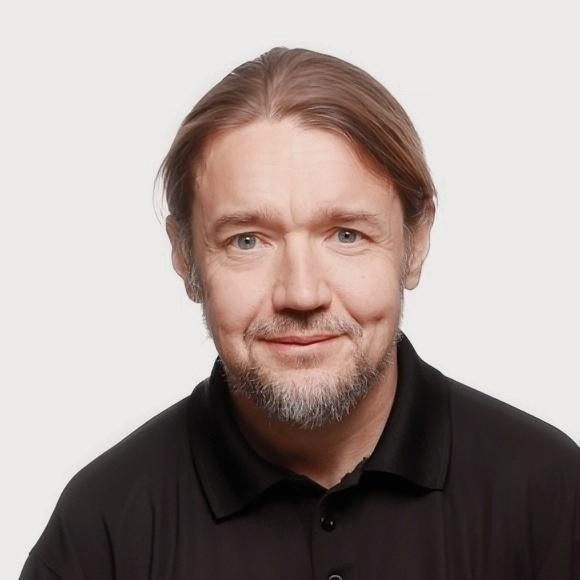
Dr Markku-Juhani O. Saarinen
Affiliation: Professor of Practice, Tampere University, Finland
Expertise: A seasoned cryptographer with over 25 years of experience, specialising in PQC, hardware security architecture, and side-channel analysis.
Core Contributions:
- Standard Engineering: A key contributor to the NIST PQC signature standard SPHINCS+ (SLH-DSA), leading research on its hardware acceleration and side-channel defense. Also a co-designer of the new round candidates Raccoon (Lattice) and LESS (Code-based).
- Hardware Ecosystem: Member of the RISC-V International Cryptography Task Group, participating in defining the RISC-V Vector Cryptography Extension instructions, promoting native PQC support in next-generation chips.
- Academic Leadership: Co-chair of the PQCrypto 2024 & 2025 Program Committee.
Workshop Agenda
Time: 3 March – 6 March 2026
Location: Post-Quantum Migration Interdisciplinary Lab (PQC-X)
10th Floor, South Building, Life Sciences Building, Xi’an Jiaotong-Liverpool University, 39 Qingning Road, Suzhou Industrial Park, Suzhou, Jiangsu Province, China
Day 1: Mar 3, 2026 (Tue)
Morning:
| Time | Topic | Lecturer |
| 08:00 – 08:50 | Registration | – |
| 09:00 – 10:00 | Introduction to PQC & Motivation | Professor Jintai Ding |
| 10:00 – 10:20 | Q&A | Professor Jintai Ding |
| 10:20 – 10:40 | Coffee Break | |
| 10:40 – 11:40 | 1.1. From Digital to Quantum Cryptanalysis – Historical Parallels – Little bit about Quantum Computing – Predictions and Quantum Attack Timelines – Not PQC: Quantum Key Distribution |
Dr. Markku-Juhani O. Saarinen |
Afternoon:
| 13:20 – 14:20 | 1.2. Post-Quantum Security Metrics – Traditional Cryptanalytic Strength Metrics – Concrete Post-Quantum Security of RSA – NIST’s Post-Quantum Security Levels – Implementation / Platform Security |
Dr. Markku-Juhani O. Saarinen |
| 14:40 – 15:00 | Coffee Break | |
| 15:00 – 15:20 | Recap & Discussion | Dr. Markku-Juhani O. Saarinen |
| 15:20 – 16:20 | 1.3. PQC Transition: Internet Protocols – Timelines, Compliance, Corporate IT Life – TLS & PKI: Nuts and Bolts of Post-Quantum Internet – Other Internet Protocols and Technologies |
Dr. Markku-Juhani O. Saarinen |
| 16:20 – 16:40 | Coffee Break | |
| 16:40 – 17:40 | 1.4. Testing and Validation, Hardware – FIPS Cryptographic Modules, ACVP Test Vectors – Random Numbers, Common Criteria Testing – Comments on Crypto Hardware & PQC |
Dr. Markku-Juhani O. Saarinen |
Day 2: Mar 4, 2026 (Wed)
Morning:
| Time | Topic | Lecturer |
| 09:00 – 09:20 | Recap & Discussion | Dr. Markku-Juhani O. Saarinen |
| 09:20 – 10:20 | 2.1 Introduction to Lattice Theory – Definitions, Lattice Basis – Shortest Vector Problem (SVP), Learning with Errors (LWE) – Algebra of Ring-LWE and Module-LWE |
Dr. Markku-Juhani O. Saarinen |
| 10:20 – 10:40 | Coffee Break | |
| 10:40 – 11:40 | 2.2. Lattice-Based Key Establishment and ML-KEM / Kyber – A Public Key Cryptosystem – IND-CCA: Chosen Ciphertext Security – ML-KEM is a CCA-secure Key Encapsulation Mechanism (KEM) |
Dr. Markku-Juhani O. Saarinen |
Afternoon:
| 13:20 – 13:40 | Recap & Discussion | Dr. Markku-Juhani O. Saarinen |
| 13:40 – 14:40 | 2.3. Lattice Implementation – Polynomial Multiplication – Number Theoretic Transform: The Discrete Analogue of FFT – Compression and Rounding |
Dr. Markku-Juhani O. Saarinen |
| 14:40 – 15:00 | Coffee Break | |
| 15:00 – 16:00 | 2.4. Lattice-Based Signatures and ML-DSA / Dilithium – Fiat-Shamir with Aborts – Rejection Sampling and Security – Strong Unforgeability |
Dr. Markku-Juhani O. Saarinen |
| 16:00 – 16:20 | Coffee Break | |
| 16:40 – 17:40 | Sharing: Lattice-based Cryptography Research | Professor Jintai Ding’s team (Dr. Han Xia) |
| 17:40 – 18:00 | Q&A | Professor Jintai Ding’s team (Dr. Han Xia) |
Day 3: Mar 5, 2026 (Thu)
Morning:
| Time | Topic | Lecturer |
| 09:00 – 09:20 | Recap & Discussion | Dr. Markku-Juhani O. Saarinen |
| 09:20 – 10:20 | 3.1. Hash Functions in PQC – Hash Function Properties – Traditional and Quantum Security – SHA2 and SHA3 Standards – Case study |
Dr. Markku-Juhani O. Saarinen |
| 10:20 – 10:40 | Coffee Break | |
| 10:40 – 11:40 | 3.2. Hash-Based Signatures – Building Blocks: One-Time Signatures – Merkle Trees, XMSS and LMS Stateful Signatures – SLH-DSA, the Stateless Hash-Based Signature Standard |
Dr. Markku-Juhani O. Saarinen |
Afternoon:
| 13:20 – 13:40 | Recap & Discussion | Dr. Markku-Juhani O. Saarinen |
| 13:40 – 14:40 | 3.3. HQC, Hamming Quasi-Cyclic – HQC’s Binary Ring, Error Correction Codes – Key and Ciphertext Sizes, Parameter Sets – HQC as a Key Encapsulation Mechanism |
Dr. Markku-Juhani O. Saarinen |
| 14:40 – 15:00 | Coffee Break | |
| 15:00 – 16:00 | 3.4. Other Code-Based Schemes, Security – Information Set Decoding – McEliece Public Key Cryptosystem – Niederreiter and “Classic McEliece” – Note on Code-Based Signatures |
Dr. Markku-Juhani O. Saarinen |
| 16:00 – 16:20 | Coffee Break | |
| 16:20 – 17:20 | Sharing: Code-based Cryptography Research | Professor Jintai Ding’s team (Dr. Neng Zeng) |
| 17:20 – 17:40 | Q&A | Professor Jintai Ding’s team (Dr. Neng Zeng) |
Day 4: Mar 6, 2026 (Fri)
Morning:
| Time | Topic | Lecturer |
| 09:00 – 09:20 | Recap & Discussion | Dr. Markku-Juhani O. Saarinen |
| 09:20 – 10:20 | 4.1. Multivariate Cryptosystems – Multivariate Quadratic Maps and the MQ Problem – Typical Multivariate (and Code-Based) Crypto Arithmetic – UOV: Unbalanced Oil-and-Vinegar |
Dr. Markku-Juhani O. Saarinen |
| 10:20 – 10:40 | Coffee Break | |
| 10:40 – 11:40 | 4.2. Isogeny-Based Crypto and the NIST On-Ramp – What are Isogenies? – SIDH/SIKE and its demise. Current proposals… – NIST Signature On-Ramp Status |
Dr. Markku-Juhani O. Saarinen |
Afternoon:
| 13:20 – 13:40 | Recap & Discussion | Dr. Markku-Juhani O. Saarinen |
| 13:40 – 14:40 | 4.3. Research questions – Other current cryptography standardization – What’s next… – Course feedback |
Dr. Markku-Juhani O. Saarinen |
| 14:40 – 15:00 | Coffee Break | |
| 15:00 – 16:00 | Sharing: Multivariate Cryptography Research | Professor Jintai Ding’s team (Dr. Wenbin Zhang) |
| 16:00 – 16:20 | Q&A | Professor Jintai Ding’s team (Dr. Wenbin Zhang) |
Organisation
Organiser: Suzhou Langkong Post-Quantum Technology Co., Ltd. (LK Quantum)
Co-organiser: Post-Quantum Migration Interdisciplinary Laboratory (PQC-X), Xi’an Jiaotong-Liverpool University
Implementer: Zaizao Cloud Al (Shandong) Co., Ltd. (ZZC)
【Registration Open】2026 International Workshop on Post-Quantum Cryptography Frontiers and Applications
— Ushering in the PQC Migration Year One, Building a “Real-World” Cryptographic Defense Line
The rapid development of quantum computing is pushing traditional public-key cryptography to the brink of collapse. With the official release of the NIST Post-Quantum Cryptography (PQC) standards, global cybersecurity has entered a critical phase of “migration and deployment.” In this era of transformation, how do we move from theoretical algorithms to engineering practice? How can a secure post-quantum defense line be deployed in real hardware environments?We sincerely invite you to attend the “2026 International Workshop on Post-Quantum Cryptography Frontiers and Applications” to be held at Xi’an Jiaotong-Liverpool University (XJTLU) in Suzhou. This four-day event (March 3 to March 6, 2026) brings together leading figures and practical experts in the field of post-quantum cryptography, aiming to bridge the gap between academic theory and industrial application.
This workshop has specially invited Professor Jintai Ding, a core designer of the NIST PQC standards, and Dr Markku-Juhani O. Saarinen, a globally renowned expert in PQC engineering, to co-lecture. The conference will centre on the core theme of “Real-World Post-Quantum Cryptography,” not only covering the principles of mainstream algorithms such as lattice-based cryptography, hash-based signatures, and code-based cryptography, but also delving into engineering pain points like hardware acceleration, side-channel defense, RISC-V architecture support, and internet protocol migration.
Why You Cannot Miss This Workshop