We are building a cross-medium unmanned vehicle that can operate both underwater and in the air, with a focus on fast, reliable, and repeatable transitions between the two environments. FunJourney brings together students from different schools and majors to tackle the most demanding part of cross-medium mobility: making the “switch” efficient, stable, and safe in real-world conditions. Our project is driven by engineering realism — integrating structural configuration, propulsion switching, waterproofing, and control stability into one unified platform. But what truly motivates us? To push beyond “it can fly and it can swim,” and turn cross-medium mobility into something practical, agile, and demonstrable.
Team Information
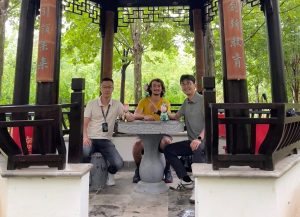
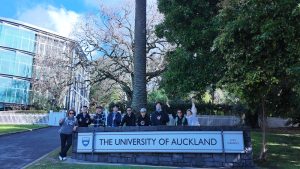
This team is constructed of 6 undergraduate students from multiple schools and majors. The project is supervised by Prof. Shenhong Wang. By combining cross-disciplinary collaboration with hands-on prototyping, the team aims to establish a solid foundation for cross-medium system integration and build a compelling demonstration platform for campus-wide showcase and future development.
Application Scenarios
Cross-medium vehicles face fundamentally different constraints in air and water — density, loads, sealing requirements, and stability characteristics all change dramatically. As a result, the transition phase becomes the central technical challenge, requiring coordinated solutions rather than isolated optimization. FunJourney addresses this challenge with a system-level approach: coordinating structural configuration for reduced resistance, enabling propulsion mode switching across media, and maintaining controllability and attitude stability during the most dynamic moments of transition. This integrated direction aims to make cross-medium operation more agile, more robust, and more repeatable under practical conditions.
Future Development
Looking ahead, FunJourney aims to strengthen reliability and adaptability across a wider range of operating conditions, and to continuously enhance controllability, structural robustness, and system integration. With ongoing validation and refinement, we expect the project to evolve into a demonstrable cross-medium platform that supports research exploration, student training, and scenario-oriented applications — making cross-medium mobility a tangible capability rather than just a concept.








Team Introduction
We are building a cross-medium unmanned vehicle that can operate both underwater and in the air, with a focus on fast, reliable, and repeatable transitions between the two environments. FunJourney brings together students from different schools and majors to tackle the most demanding part of cross-medium mobility: making the “switch” efficient, stable, and safe in real-world conditions. Our project is driven by engineering realism — integrating structural configuration, propulsion switching, waterproofing, and control stability into one unified platform. But what truly motivates us? To push beyond “it can fly and it can swim,” and turn cross-medium mobility into something practical, agile, and demonstrable.
Team Information
This team is constructed of 6 undergraduate students from multiple schools and majors. The project is supervised by Prof. Shenhong Wang. By combining cross-disciplinary collaboration with hands-on prototyping, the team aims to establish a solid foundation for cross-medium system integration and build a compelling demonstration platform for campus-wide showcase and future development.
Application Scenarios
Cross-medium vehicles face fundamentally different constraints in air and water — density, loads, sealing requirements, and stability characteristics all change dramatically. As a result, the transition phase becomes the central technical challenge, requiring coordinated solutions rather than isolated optimization. FunJourney addresses this challenge with a system-level approach: coordinating structural configuration for reduced resistance, enabling propulsion mode switching across media, and maintaining controllability and attitude stability during the most dynamic moments of transition. This integrated direction aims to make cross-medium operation more agile, more robust, and more repeatable under practical conditions.
Future Development
Looking ahead, FunJourney aims to strengthen reliability and adaptability across a wider range of operating conditions, and to continuously enhance controllability, structural robustness, and system integration. With ongoing validation and refinement, we expect the project to evolve into a demonstrable cross-medium platform that supports research exploration, student training, and scenario-oriented applications — making cross-medium mobility a tangible capability rather than just a concept.