







Keeping it loose: how complex molecules form glass

16 Dec 2025


A new model explains how complex molecules form glassy materials, opening avenues for designing advanced materials
Glass seems deceptively simple. Glassy materials are commonplace, but the chemistry behind how they form is surprisingly complex. While glass formation from small molecules is relatively well understood, scientists are still trying to fully grasp how glass forms from longer polymer molecules. Understanding these dynamics would help researchers customise the properties of solid-state materials, such as their strength or electrical properties.
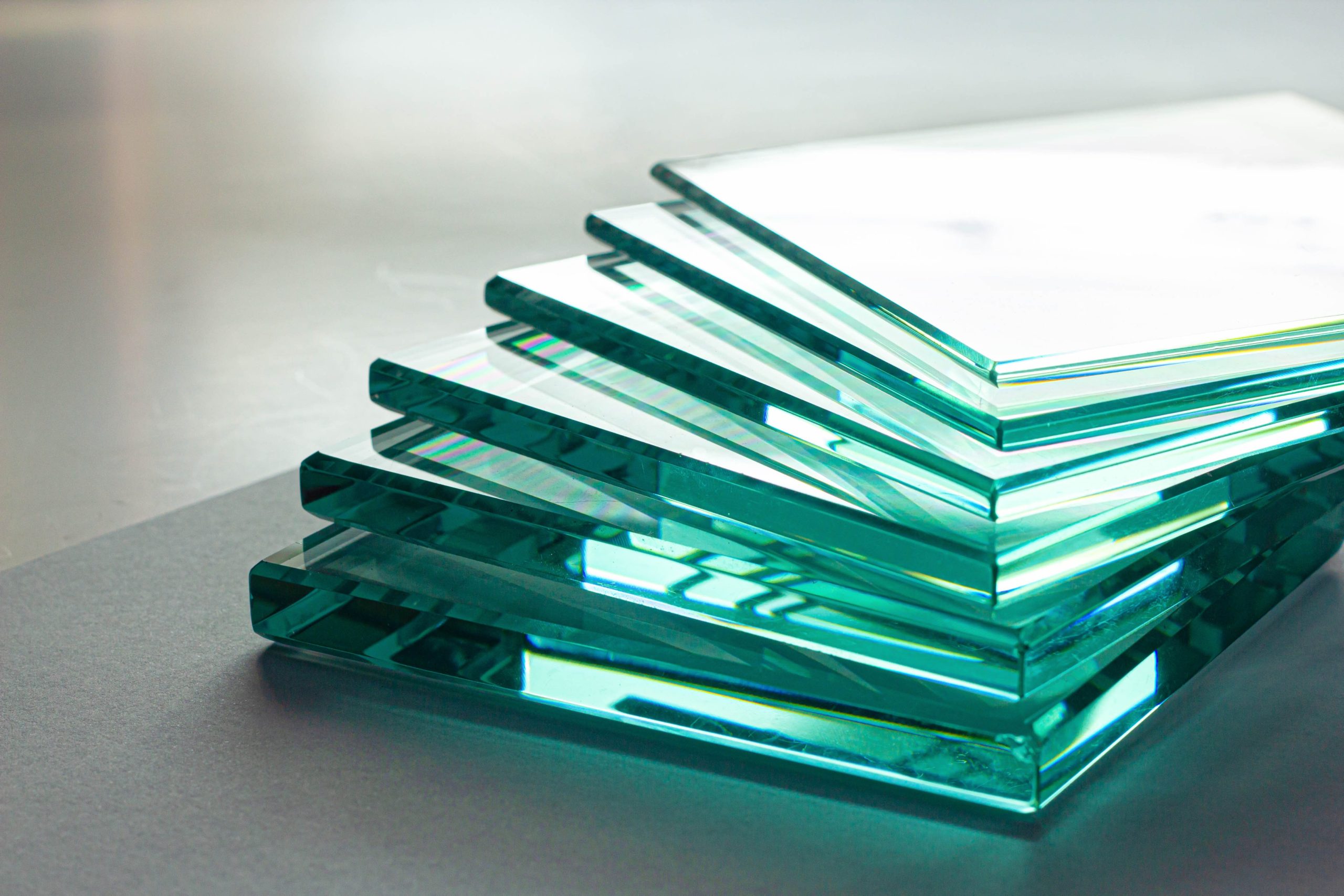
Now, an international team of researchers from Zhejiang Sci-Tech University, Xi’an Jiaotong-Liverpool University (XJTLU), Princeton University, Chinese Academy of Sciences and Southwest University has provided a clear theoretical description of how polymers and other long, chain-like molecules settle down and collectively rearrange themselves during glass formation.
Their research, published in Science Advances, provides a clear mechanism for the process and explains how various molecular properties, such as the length of the molecule or the presence of modifications, affect glass formation.
In general, the temperature at which a glassy material transitions between being viscous (liquid-like) and glassy (solid) depends on the length and weight of the molecules that make up the material. The shape of the molecules – for example, straight, star-shaped, or ring-like – affects how strongly the weight and length influence the transition temperature.
The researchers focused on understanding the role of chain ends in this process. Chain ends, the last links in a polymer, have more freedom to move around than the links in the middle of the chain, which are constrained by bonds on both sides. Scientists believe the extra mobility might affect how easily the molecules can form glass.
The team combined experiments, molecular simulations, and theoretical work to clarify the role of chain ends in the creation of glass. They showed that the mobility of chain ends helps unjam polymers, making it easier for the molecules to move in the coordinated way needed to form glass. Based on this analysis, they defined two new parameters that can be used to characterise and optimise glass formation. One is the number of chain ends in a region of molecules undergoing the transition, and the other is a measure of how well the chain ends can unjam polymer molecules.
“This fundamental discovery not only provides a brand-new perspective for understanding polymer glass but also opens up new avenues for the future ‘programming’ of solid-state properties of soft matter materials through the precise regulation of the chemistry and quantity of macromolecular chain ends,” writes Dr Zhenghao Wu, Assistant Professor at XJTLU and one of the study’s lead authors.
Editor:Patricia Pieterse
16 Dec 2025