




Before XJTLU had a name

18 May 2026


On 18 September 2003, Professor Junhua Wu accompanied Professor Daqing Fang from the University of Liverpool on a visit to Suzhou Industrial Park.
The schedule was full: briefings, site visits, meetings, and a closer look at the area where a new educational partnership might one day take shape. Professor Wu still remembers what happened after the visit ended.
Professor Fang, who had long-standing links with Xi’an Jiaotong University and was one of the important figures in promoting cooperation between the two universities, did not take a break for dinner. He sat down and began preparing materials for a report to Professor Drummond Bone, then Vice-Chancellor of the University of Liverpool.
For Professor Wu, the moment captured something simple but decisive.
“There are some things you have to see for yourself,” Professor Fang told him.
For Liverpool, which was still considering where and how to develop an educational collaboration in China, Suzhou began to stand out. For the institution that would later become Xi’an Jiaotong-Liverpool University, it was one of the first moments when an idea began to look possible.
Professor Wu is careful not to make the story sound inevitable. “No one was a fortune-teller,” he says. “No one knew whether XJTLU would be approved.”
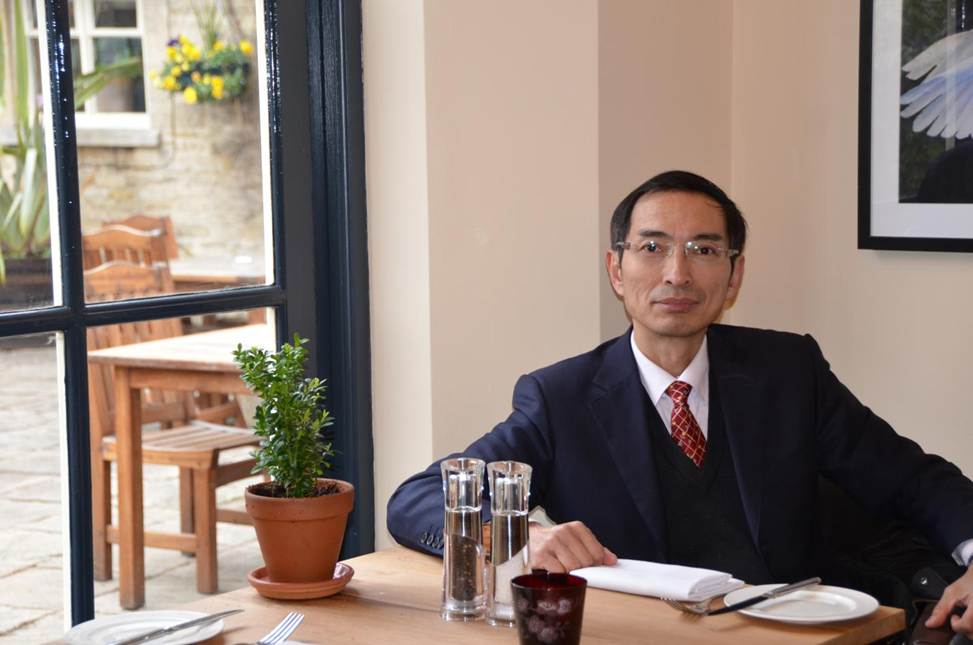
Before the idea became XJTLU, it went through an important shift in direction.
In March 2003, Xi’an Jiaotong University and the Suzhou Municipal Government signed an agreement to jointly establish a Suzhou campus. The original plan followed the more familiar branch-campus route, with an expected student body of around 10,000.
But Professor Wang and Professor Youmin Xi, then Vice-President of Xi’an Jiaotong University responsible for strategy and development, began to consider another possibility: could the university take the route of Sino-foreign cooperative education and create something larger?
Suzhou: the ground where an idea could take root
At the time, the University of Liverpool was exploring educational cooperation in China and had considered several leading Chinese universities and cities. Competition was strong. What made Suzhou stand out was a combination of factors: an international industrial setting, efficient local government support, room for future development, and a sense that an ambitious education project could realistically be built there.
The policy environment then opened a further possibility.
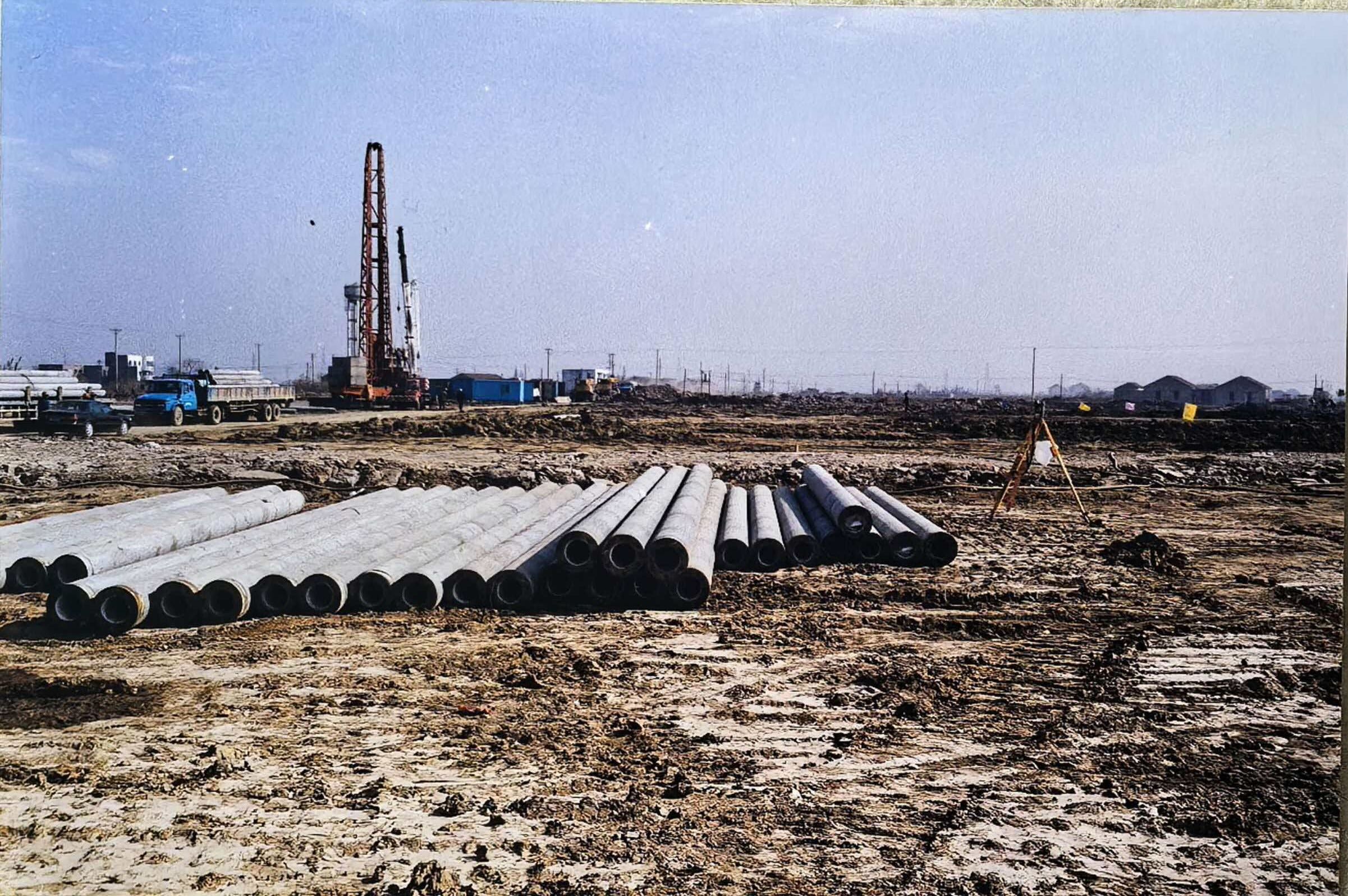
The site in Suzhou Industrial Park in early 2003. Construction of XJTLU’s first teaching building began on this land two years later
In March 2004, Xi’an Jiaotong University and the University of Liverpool signed an agreement for a 2+2 cooperation programme. Three months later, when Xi’an Jiaotong University reported the matter to China’s Ministry of Education, the university received important news: new regulations on Sino-foreign cooperative education were about to be issued, and beyond joint programmes, the establishment of independent institutions — including universities — would be encouraged.
Professor Wu remembers that once the message returned to Xi’an Jiaotong University, people quickly realised that a programme alone might not make full use of the opportunity. If the policy now allowed the establishment of an independent legal entity, why not try to build a university?
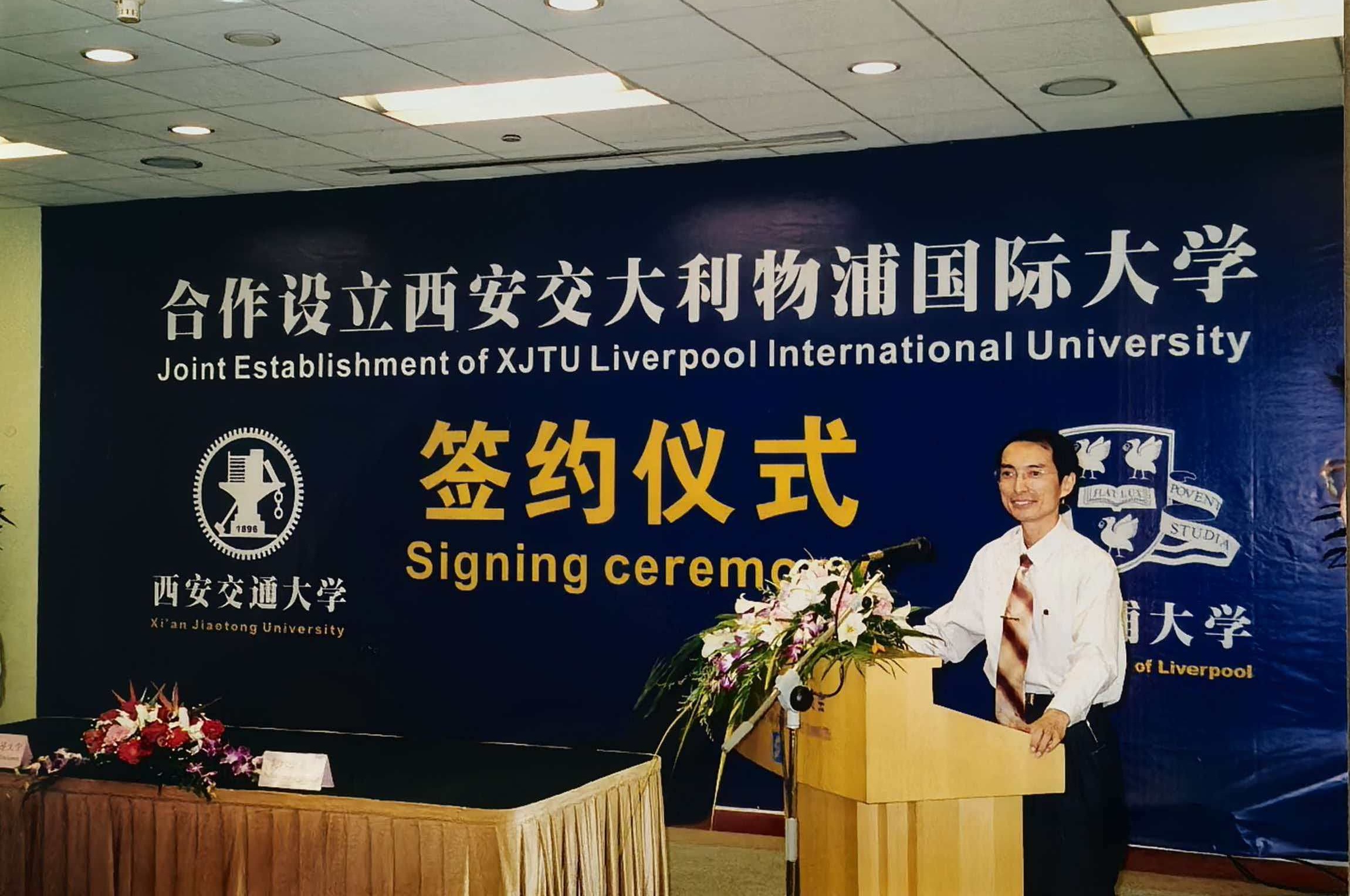
At the end of September 2004, the two universities signed an agreement in Suzhou to prepare for the establishment of “Xi’an Jiaotong-Liverpool International University”.
Building cooperation by solving problems
Representing Xi’an Jiaotong University, Professor Wang and Professor Xi negotiated with the University of Liverpool on the key questions of the partnership. Major issues also had to be discussed through Xi’an Jiaotong University’s formal decision-making processes. Differences in national context, culture, policy, and higher education practice meant that many matters required repeated negotiation.
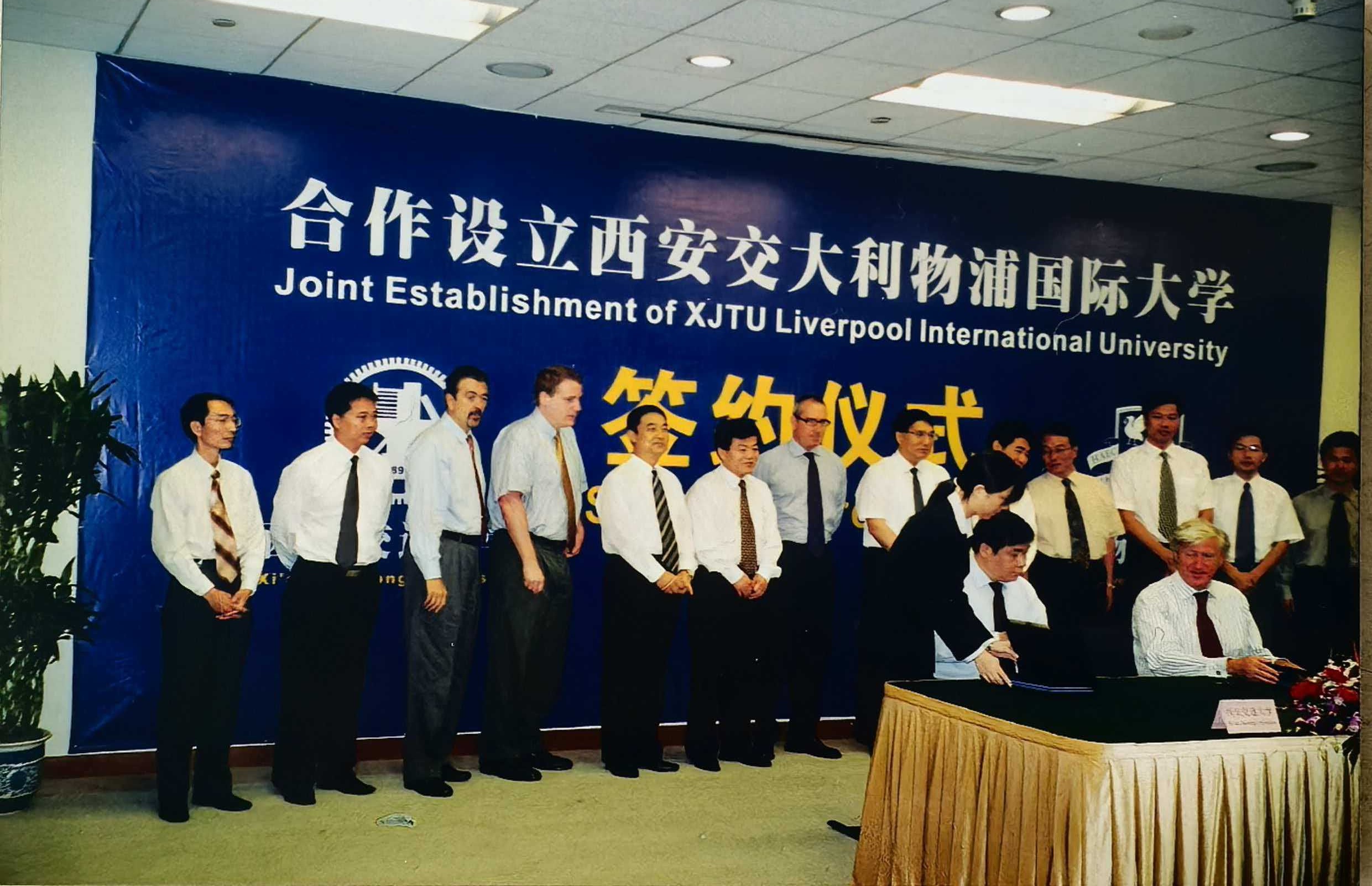
The signing ceremony for the cooperation agreement
The two sides eventually reached an agreement through repeated coordination. One detail stayed with Professor Wu: the ownership structure.
“The equity ratio was 50:50,” he says. “Equal shares represented equal status.”
Under the governance arrangement, the Chair of the Board and President would be selected by Xi’an Jiaotong University, while the University of Liverpool would select the Vice-Chair and Executive President. The structure enabled Liverpool’s international education experience to be incorporated into the university’s operations, while ensuring Xi’an Jiaotong University’s leading role in the institution’s development.
Before preparations could begin, the project needed the support of Suzhou and Jiangsu Province.
Professor Wu remembers a day in December 2004 when he and Haihong Yu arrived early in Nanjing to prepare for a briefing. Professor Xi had been teaching outside the province that morning. As soon as his class ended, he travelled to the Jiangsu Provincial Department of Education and began the presentation without stopping for lunch.
For nearly two hours, Professor Xi explained the national context, the development needs of Chinese higher education, why Xi’an Jiaotong University wanted to establish a university in Suzhou, why it was prepared to build an international university with a science and engineering orientation, how the two founding universities would support the new institution, and what arrangements were being made for governance, disciplines, and curriculum. He also answered complex questions from the department’s leaders.
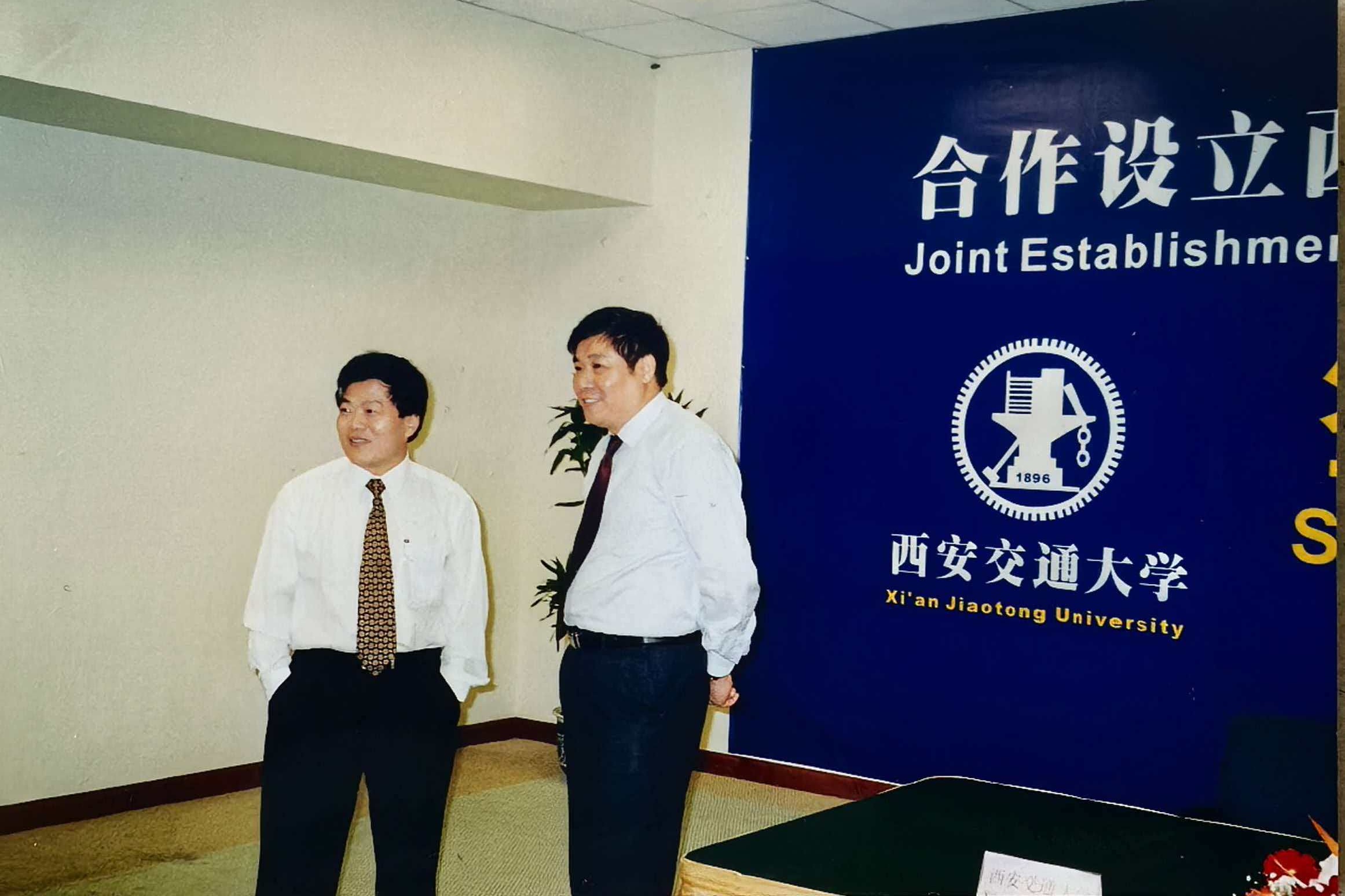
From left: Professor Youmin Xi and Professor Jianhua Wang
Professor Wu has returned to that scene many times in his memory. The briefing, he says, helped the local authorities believe that the project was not a temporary impulse. It had been thought through, and there were people prepared to carry it out.
Soon afterwards, the Jiangsu Provincial People’s Government wrote to the Ministry of Education in support of Xi’an Jiaotong University’s plan to establish XJTLU in Suzhou.
The next critical step was an on-site evaluation by a Ministry of Education expert panel.
In early 2005, to prepare for the visit, Xi’an Jiaotong University brought together core members of the Suzhou Research Institute, along with staff from XJTU. More than a dozen people worked together from a villa in Suzhou, preparing the materials required for evaluation.
After two months, Professor Wu recalls, there were enough materials to fill the exhibition hall.
In March 2005, the expert panel arrived as scheduled. The panel recognised the work already done, but also raised several concrete concerns. The conclusion was that approval for student recruitment that year would be difficult. The recommendation was to continue preparation.
The result gave the team hope, but also intensified the pressure. Professor Wu remembers often moving between confidence and worry. Confidence came from the enthusiasm of the local government, changes in national policy, the reputations of Xi’an Jiaotong University and the University of Liverpool, and the leadership’s determination to make the project succeed. Worry came from the basic conditions, expert feedback, and the many specific commitments that would have to be fulfilled once the university opened.
Approval after a difficult preparation process
In March 2006, a Ministry of Education expert panel returned to Suzhou for a second evaluation and recognised the progress made.
As the British side confirmed further arrangements, expert evaluations moved forward, and the Ministry of Education approval process advanced, XJTLU reached the final step.
On 22 May 2006, the Ministry of Education formally approved the establishment of Xi’an Jiaotong-Liverpool University.
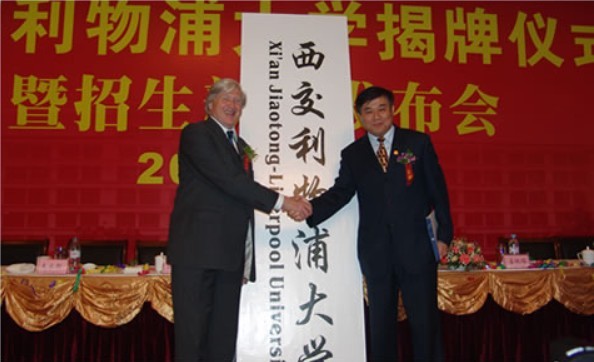
The official inauguration of Xi’an Jiaotong-Liverpool University on 29 May 2006
For people looking back today, it is a landmark date in the University’s history. For Professor Wu, who took part in the preparations, it marked the point when many separate elements finally came together as a university.
“I was able to take part in the preparation and witness XJTLU’s birth,” he says. “That was one of the most wonderful periods of my working life.”
By Bo Kou
Edited by Patricia Pieterse
18 May 2026