







CKI and CIE hold workshop on digital empowerment

19 May 2026


In April, Xi’an Jiaotong-Liverpool University (XJTLU) held its Internal Workshop on Digital and Intelligent Empowerment for Administrative Applications. Nearly 100 administrative department leaders and key staff members across the University attended the event co-hosted by the XJTLU Centre for Knowledge and Information (CKI) and the Digital Transformation Research Centre of the College of Industry-Entrepreneurs (CIE).
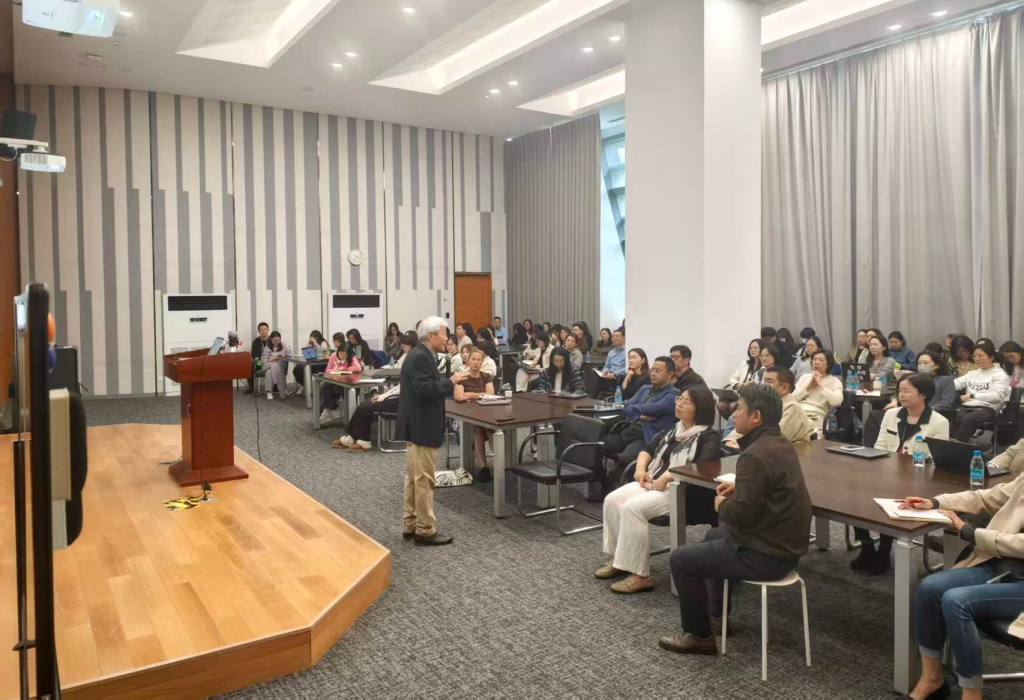
Professor Youmin Xi delivers his keynote address
In his keynote address, Professor Youmin Xi, Executive President of XJTLU, reviewed XJTLU’s 20-year journey: from XJTLU 1.0, which focused on developing professional elites with an industry background, to XJTLU 2.0, which explored Syntegrative Education, and XJTLU 3.0, which co-created an industrial innovation ecosystem. He noted that XJTLU is now moving towards XJTLU 4.0 – a social ecosystem of learning and innovation in the AI era.
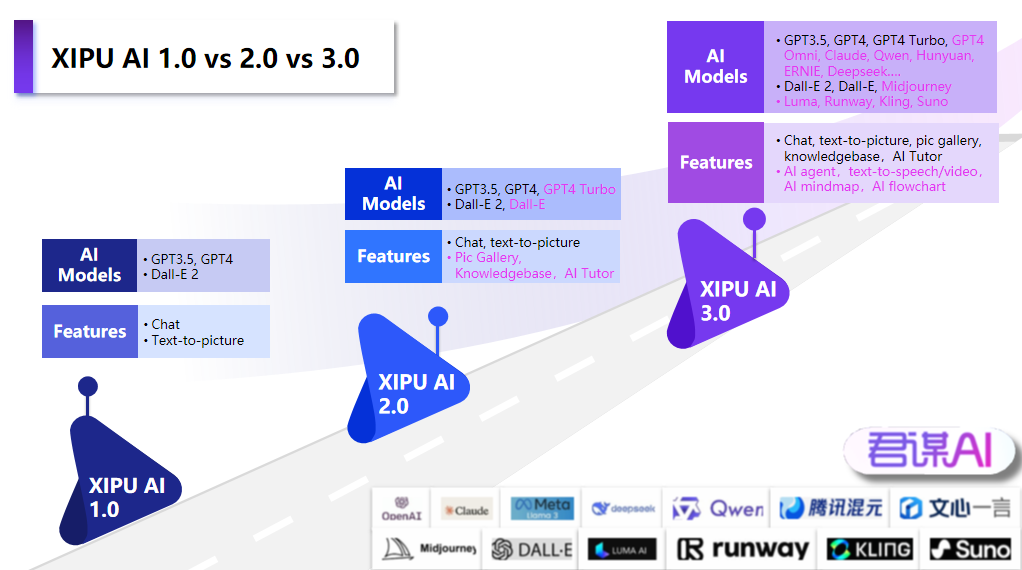
XIPU AI from 1.0 to 3.0
Dr Xin Bi, Chief Officer of Data, Director of CKI, and Director of the Digital Transformation Research Centre at CIE, chaired the workshop. He outlined the development of the XIPU AI platform’s three major stages.
In the initial stage (2023), XIPU AI, one of the first university-level AI platforms in higher education, was launched. In the growth stage (2024 and 2025), university departments initiated a wide range of micro-innovations in AI-enabled work. In the current deepening stage, AI has been embedded more deeply in business processes and has become a foundational capability for decision support and collaboration.
The XIPU AI platform has now integrated multiple large language models and launched numerous knowledge bases and AI agents developed by staff members. The Learning Mall has delivered around 400 digital and AI training sessions, reaching nearly 7,000 teachers and staff.
Rethinking the professional
Feifei Zhu, Operation Director of the Centre for Academic Affairs, delivered a presentation titled “Rethinking the Professional in the Age of AI”. Against the backdrop of rapid technological innovation, she argued that rethinking the capabilities of professionals is more urgent than simply mastering new technologies.
Using meeting minutes as an example, she said AI tools may improve efficiency, but the deeper task is to rethink the purpose of meeting minutes – moving from recording decisions to capturing decision logic – and to transform them into a strategic framework that AI agents can learn from. This marks a shift from efficiency improvement to value creation.
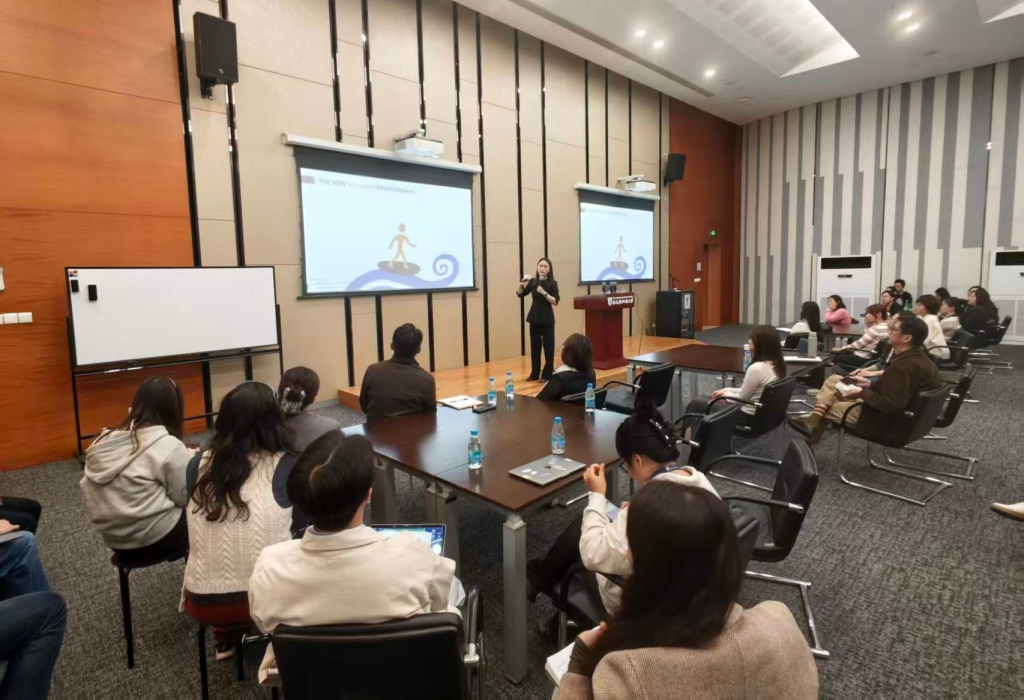
Feifei Zhu, Operation Director of the Centre for Academic Affairs
From days to minutes
Ma Dan, Deputy Director of the Centre for Administrative Affairs, shared systematic practices in AI-enabled operations.
The centre’s AI customer service system handles between 13,000 and 20,000 campus inquiries each year and has reduced manual workload by 45%. Users have neither complained nor praised the system while using it – meaning that AI has taken over nearly half the workload without being noticed.
At XJTLU’s Taicang base, the team independently developed an autonomous drone inspection system that enables 24-hour thermal-imaging patrols, abnormal body-temperature detection, and nighttime monitoring of sudden or unusual behaviour, reducing the time needed to identify safety risks from days to minutes.
Ma concluded: “AI-powered work orders make service responses less dependent on human memory, and drones bring the physical world into digital management.”
The right time in the right way
The Centre for Student Affairs (CSA) discussed their AI strategy for student services. Its core objective is to build, along the entire student lifecycle and through intelligent means, a data-driven, personalised, and precision-based student service ecosystem.
In practice, the intelligent Q&A system covers weekend and nighttime inquiries. The further study advisory AI agent, trained on data from previous undergraduate cohorts, provides students with personalised advice on university and programme selection. The integrated one-stop AI customer service and automated email reply system can also handle a large volume of work orders during peak periods. In CSA’s philosophy: “AI is not intended to replace student advisers, but to enable them to support the right students, at the right time, and in the right way.”
Making data actionable
Liping Yang, University Librarian of the XJTLU Library, shared several practices for making data actionable. The Library uses data visualisation tools to analyse digital resource usage and costs, supporting evidence-based budget decisions. It has also developed no-code/low-code systems for library operations, including the in-house ContractPro system, which manages large numbers of digital resource subscription agreements and sends automated alerts before contracts expire.
She concluded: “Data itself has no value; it only becomes valuable when used flexibly.”
Self-service development
Xiangang Hu, team leader of the Management Information Technology and System Office (MITS), introduced the profound transformation of the technical department. In the traditional IT development model, business departments submitted requirements, while the IT department acted as a contractor responsible for system development and maintenance. As requirements increased, this model increasingly revealed pain points. By providing no-code/low-code platforms, a report platform, and an AI agent development platform, MITS enables staff without technical backgrounds to independently and flexibly build applications.
Currently, the X-Report platform has supported 21 independent developers from 11 departments in creating 263 self-service data reports. The no-code/low-code platforms have supported the creation of 159 applications, 81 of which have been deployed.
Disconnected systems
Chuncheng Tong, Director of the Purchasing Office, says in the past, the procurement process involved multiple disconnected systems, resulting in information silos, repeated data entry and reversed process flows. Today, through a material database, e-signing, business-finance system integration and procurement dashboards, the procurement platform supports both compliance and efficiency improvement.
Text and images courtesy of the Centre for Knowledge and Information and Digital Transformation Research Centre (CIE)
Edited by Patricia Pieterse
19 May 2026
RELATED NEWS

XJTLU establishes a CIE Belt and Road Division in Singapore
Xi'an Jiaotong-Liverpool University (XJTLU) officially opened a new overseas division in Singapore as part of its growing initiatives to connect academic exp...
Learn more