



When Translation Meets the Future: A 9-Day Exploration From Macao to XJTLU

07 May 2026


——On the“Cultural Bridge Boot Camp”Co-hosted by Pui Ching Middle School & XJTLU
From 8 to 16 April 2026, the “Cultural Bridge Boot Camp” event was successfully held as a result of the close collaboration between the Department of Literature and Translation Studies and the Learning Mall team of Xi’an Jiaotong-Liverpool University. This project connected XJTLU and Pui Ching Middle School Macao, both renowned practitioners of international education who have led the way in exploring the frontiers of digital and smart teaching. It was this shared vision with brought the “Cultural Bridge Boot Camp” training event to life.
This April, therefore, an invisible bridge has been built on the campus of XJTLU, linking Macao and Suzhou, junior high school and University. It has allowed nine junior high students from Macao with Chinese-English competency to step into the translation classroom. At the conclusion of their nine-day journey, what they presented was not just a final assignment, but a whole new understanding of “translation”.
Translation is not merely the conversion of words and sentences, but the ability to effectively build bridges between different worlds. At a time when globalisation and digitalisation are in sync, versatile language professionals who can harness technology, precisely understand cultures, and freely navigate between different contexts are a precious resource.
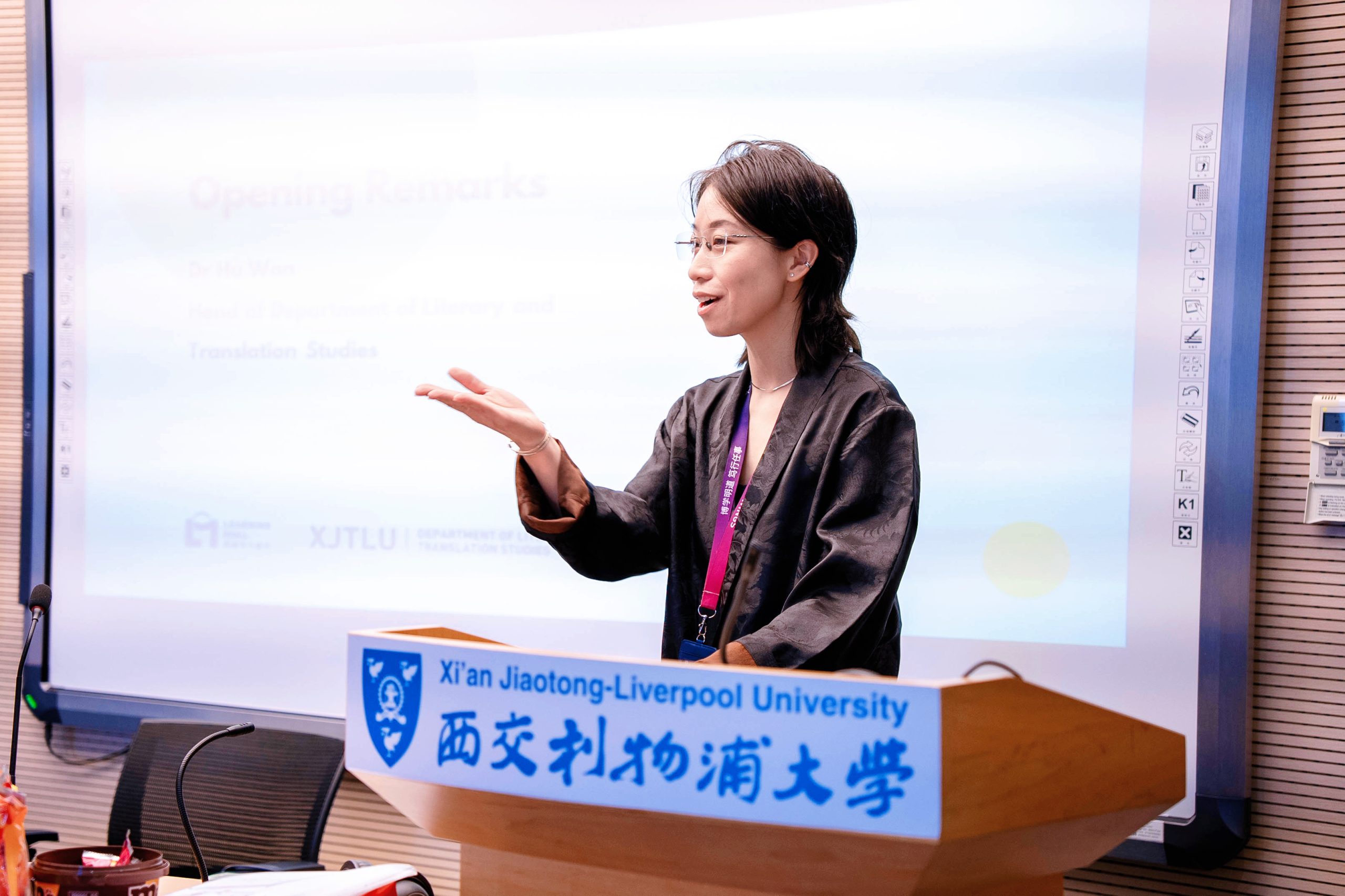
Ms. Siyu Chen, from the Translation and Interpreting programme, introduced the background of the camp at the opening ceremony
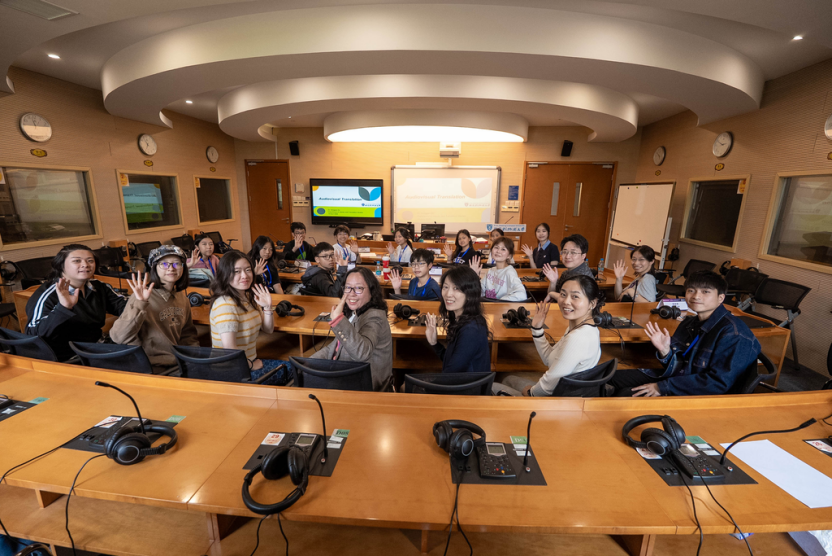
Group photo of all the camp teachers and participating students from Macao
From the Interpreting Booth to Cross-Disciplinary Integration –
“Translation+” Is Cooler Than You Thought
While many people still picture Translation Studies as a traditional major involving “dictionary plus grammar”, these nine junior high students from Macao have sat inside interpreting booths and immersed themselves in the charm of XJTLU’s “Translation+” courses:
Introduction to Interpreting — putting on headphones, trying out discourse anticipation, and experiencing the “verbal ballet”;
Multimodal Audiovisual Translation — adding subtitles to video clips, and getting in touch with the industry’s cutting edge through hands-on practices while having fun;
Traditional Chinese Medicine Translation — finding a balance between ancient wisdom and modern narratives;
Machine Translation — exploring the boundaries of AI and the irreplaceability of human beings, and learning to “harness technology rather than be replaced by it”;
Digital Media Translation — understanding how translation is disseminated and transformed across different media platforms;
Translating China — how to convey the unique imagery and narratives of Chinese culture to the world with both precision and warmth.
These courses weave independent classroom exercises into a larger web that encompasses each aspect of translation competencies. The modules relating to technologies offer students the confidence to face AI; those revolving around culture endow them with irreplaceable humanistic depth; practical sessions make learning engaging and entertaining. This teaching structure reflects the shift in today’s translation education from “purely cultivating linguistic competencies” to “honing versatile skills”.
“The moment I first sat inside the interpreting booth, I felt a mixture of nervousness and excitement. I paid so much attention using only headphones and a microphone, and experienced the on-the-spot pressure to complete the interpreting right then and there. Nothing compares to it.”
—So said one Macao student after an interpreting class. In the dialogue interpreting and consecutive interpreting sessions, the moment each student put on the headphones and approached the microphone, the noise of the outside world was instantly shut out. Inside the booth, there was only their own breathing and the flow of speech waiting to be interpreted. This tense feeling created by the immediate response dynamic is a unique gift of the Boot Camp programme, an experience that no classroom drill or software simulation can ever replicate. Although these Macao junior high students are still very young for the interpreting tasks, after several attempts they were able to carry themselves with something close to the poise a professional interpreter.
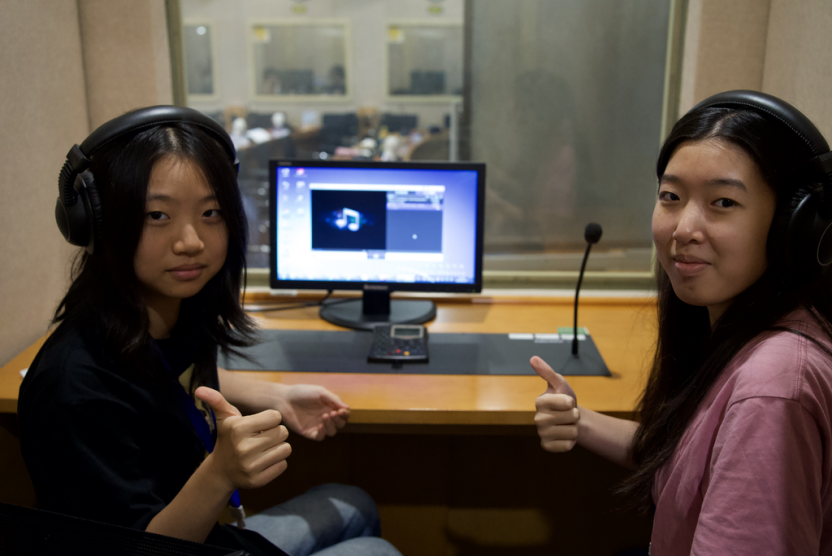
Participating students from Macao experiencing interpreting booths in the interpreting lab
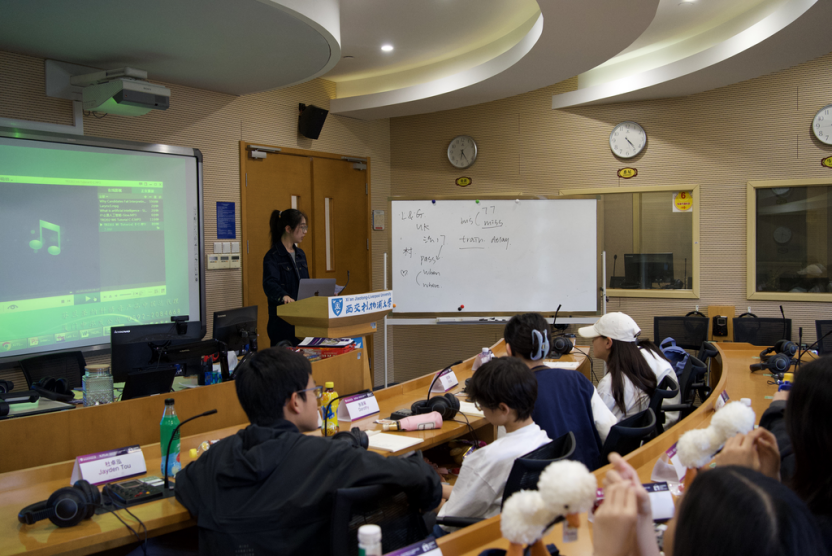
Yiyan Pu, a teaching assistant and Year-4 student from the Translation and Interpreting Programme, teaches consecutive interpreting note-taking
In the digital media translation classroom, students delved into the characteristics of news translation. The “new media trans-editing workflow” introduced in the course was particularly impressive. Its step-by-step logic of communication enables news translators in the digital age to truly serve the needs of real-time information-flow. It also provided students with the insight that, in the news industry, translation is no longer a static transfer of words but a dynamic decision-making process embedded in the rhythm of communication.
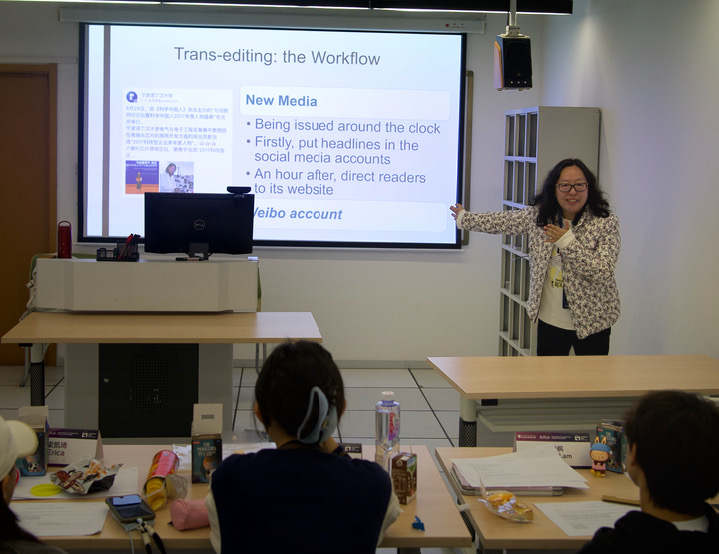
Dr. Wan Hu, from the Translation and Interpreting Programme, explaining news translation
In Dr. Songyan Du’s multimodal audiovisual translation class, the junior high students faced their most “immersive” challenge: adding Chinese subtitles to a short English video and then dubbing the characters themselves. Notably, the course introduced emerging industry topics such as game localisation and instant global dissemination of short videos, making students realise that multimodal audiovisual translation is not just “adding words to a video”, but a combined skill urgently needed in today’s entertainment, gaming, and advertising industries. Through “playing” with subtitling software and dubbing equipment, they gained a profound understanding that translation can be so vivid filled with voice and vision.
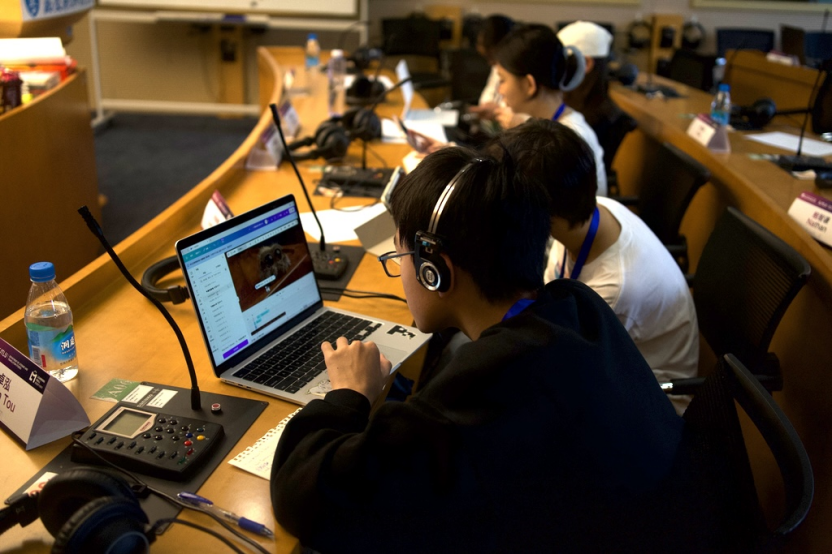
Students exploring subtitle editing in multimodal audiovisual translation
Learning reaches far beyond classrooms.
Suzhou’s classical gardens have always embodied the idea that “each step reveals a different view”. In the eyes of XJTLU translators and interpreters, isn’t this precisely the essence of language? At every corner lies a cultural encounter. With this perspective in mind, interpersonal connections grow closer! The warmth of the Chinese language, as carried by the gentle Wu dialect that flows alongside the bridges and the murmuring streams, achieved a tremendous power to nourish the heart.
“What we learned in class yesterday could be put into practice today,” one participating Macau student described. This immersive experience of instant application is one of the hallmarks of translation teaching at XJTLU.
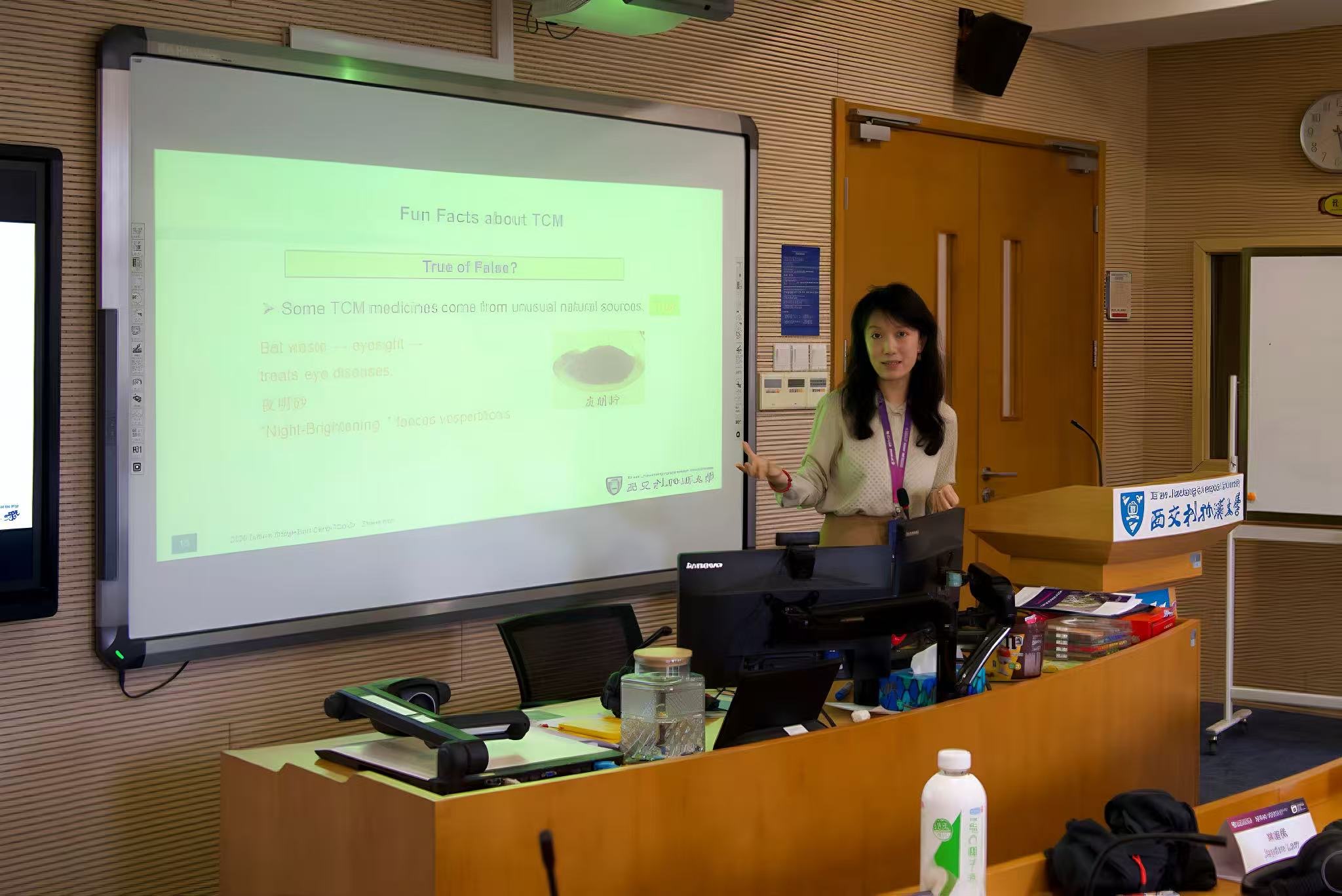
Dr. Zhiwei Han, from the Translation and Interpreting Programme, explaining traditional Chinese medicine translation
During the nine days, every trip the students made was a literal “translation exercise”: not merely a conversion from one language to another, but an insight into and re-expression of cultural contexts. The students walked into the Taihuxue Silk Culture Space and grasped the cultural significance of every single thread. Standing in front of the artefacts at the Wu Culture Museum, they thought about how to tell the story of the Jiangnan cultural lineage to an overseas audience. Touching the ink and paper during ink rubbing practice, they felt the profundity of the Chinese mainland’s cultural heritage.
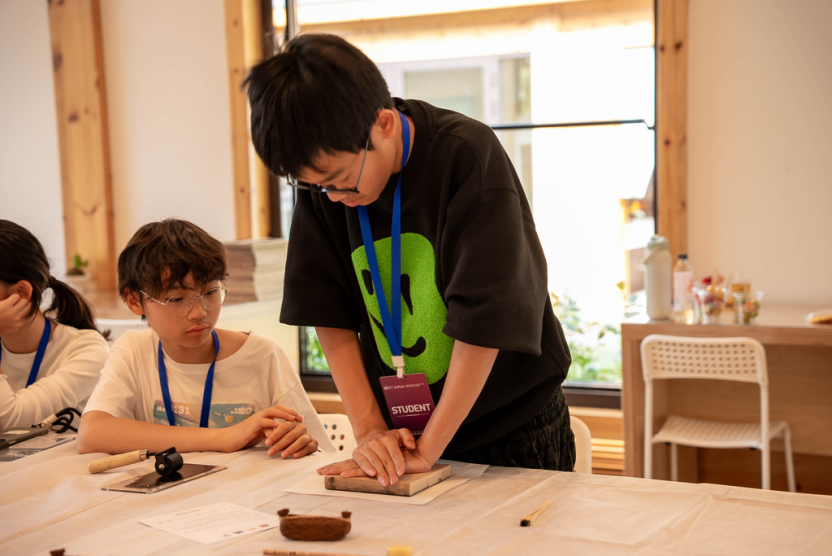
Hands-on ink rubbing experience
As they strolled in the Master-of-Nets Garden, the mellifluous tones of Kunqu opera drifted gracefully amid the pavilions, terraces, and waterside halls. The poetic imagery they had once read about in their textbooks quietly merged with the real scenery before their eyes. As Mr. Tang Chenfei, the teacher from XJTLU Learning Mall in charge of student management of the camp, pointed out: “What connects Pui Ching Macao with XJTLU, and Macao students with learning and teaching on the mainland, is not merely the synergy of multiple resources but, more profoundly, a steadfast belief in educational integration and cultural connection.”
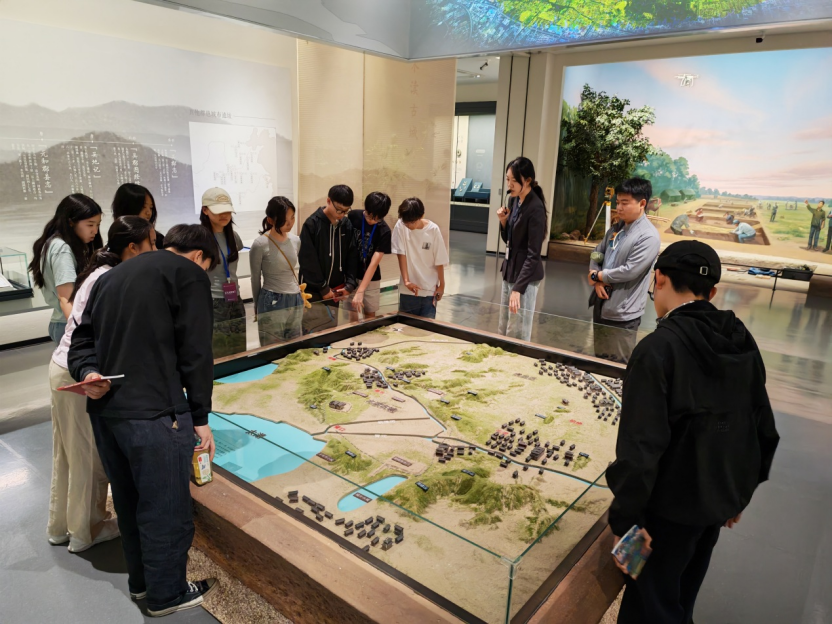
Visiting the Wu Culture Museum
Bridges Extend, Echoes Resonate — From “Learning Translation” to “Oblivious of Oneself”
During the closing presentations, the students demonstrated creative posters to showcase what they had achieved over the nine days. Each poster was a crystallisation of a Macao perspective on the mainland context, embodying a mastery of translation skills and personalised interpretations of culture.
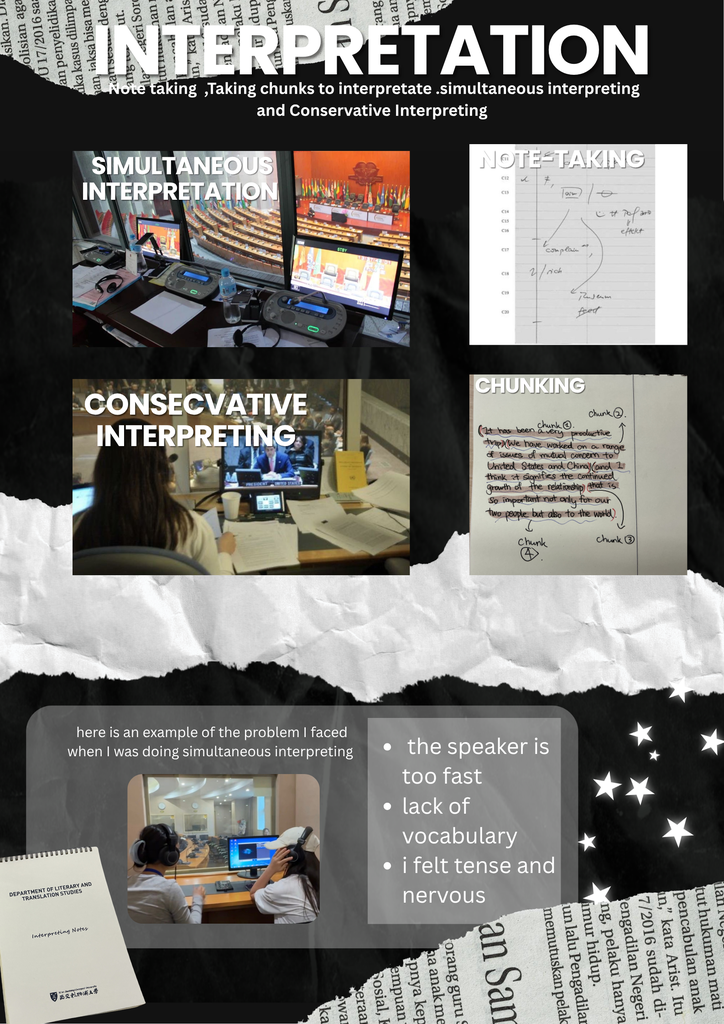
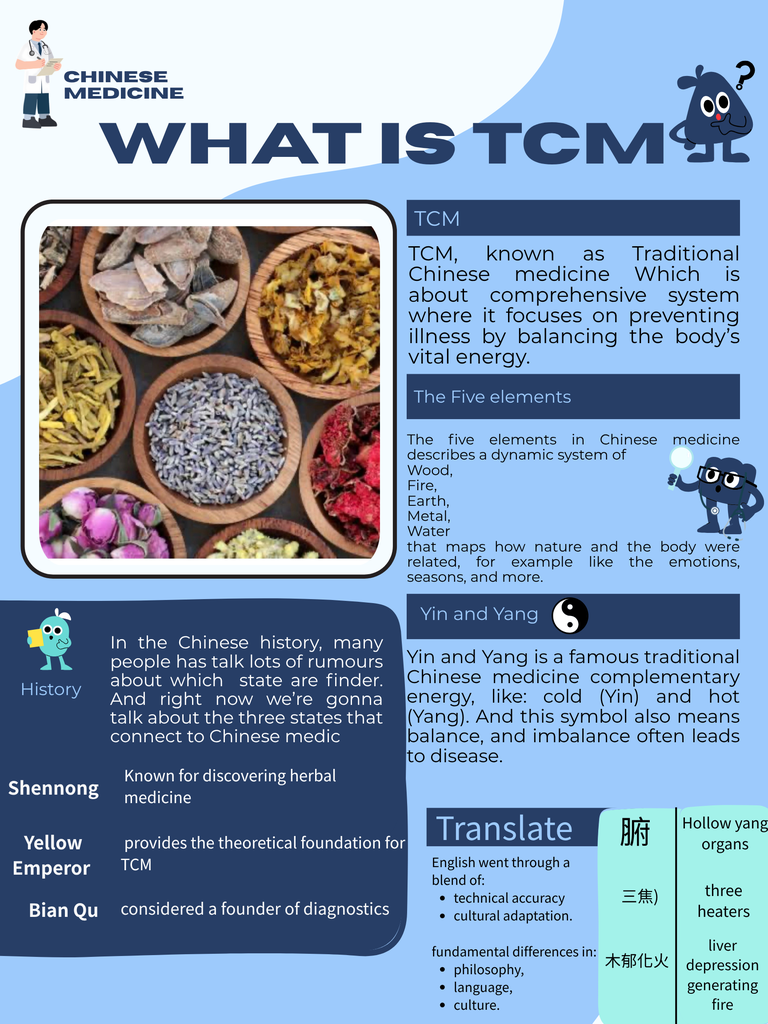
Closing ceremony — outstanding poster presentations by Macao students
What is even more remarkable is the change in the student’s mindset. One student frankly admitted that at first they thought translation was simply “finding equivalents between two languages”, but after nine days, they began to understand the message delivered by Dr. Wan Hu, Head of the Department of Literature and Translation, in her opening remarks: “Language learning has never been just about mastering a tool. It is, more importantly, about building bridges of understanding in the hearts of people from different places and different backgrounds.”
Interestingly, many participants said after the event, “At times I even forgot I was learning translation.” This is not really forgetfulness, but a deeper form of integration: when language becomes an instinctive tool for connecting with one another, we no longer deliberately “translate”, but simply “communicate”.
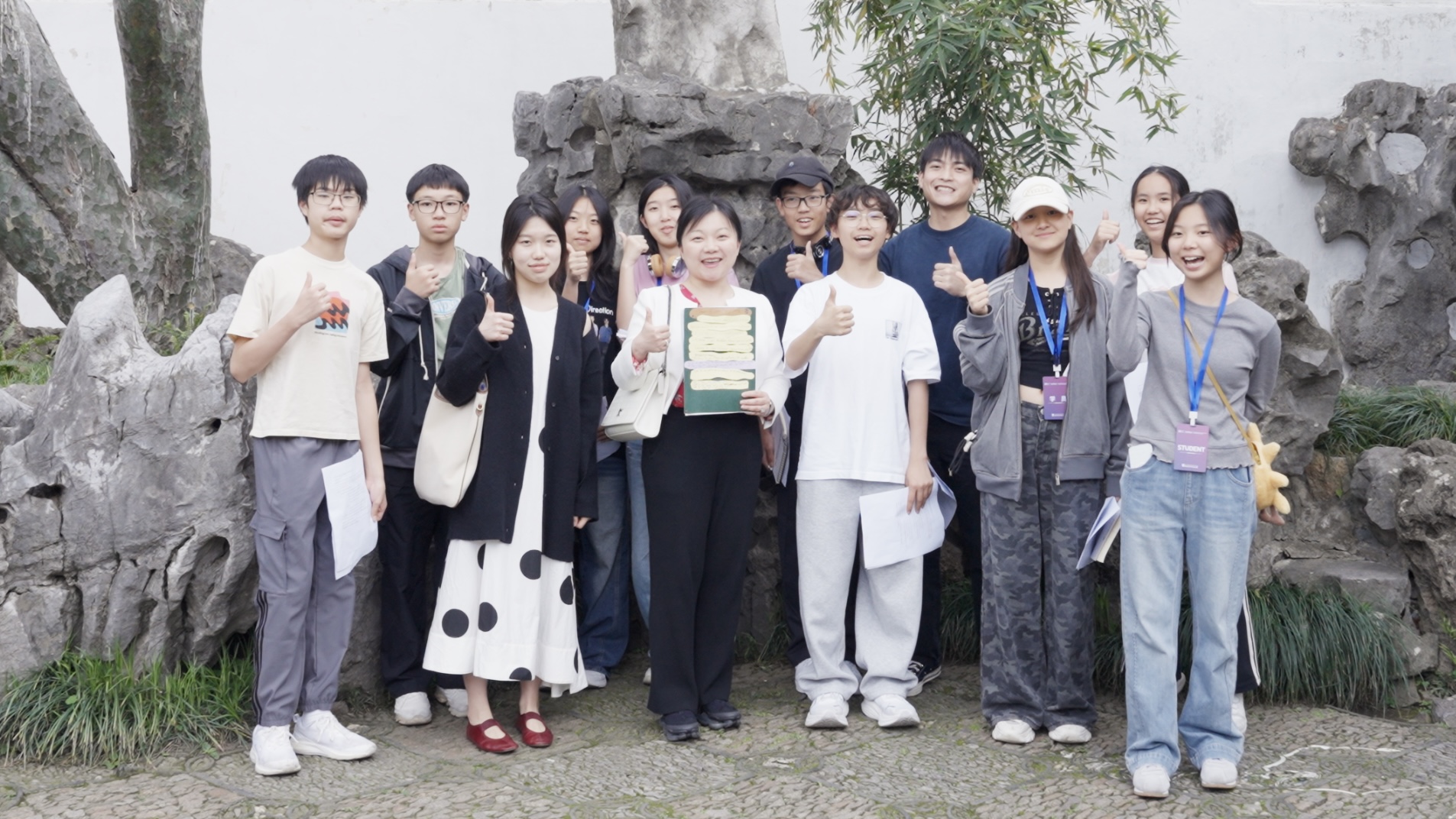
Dr. Yangyang Long, from the Translation and Interpreting Programme, led the group to the Master-of-Nets Garden to study and experience traditional Chinese gardens and culture
Indeed, from Macao to Suzhou, from the interpreting booth to the waterside pavilions of the garden, from the translation workshop to the silk culture space, bridge after bridge has been built. The nine-day “wall-breaking” journey of these nine junior high students from Pui Ching Middle School may well be a mirror worth looking into. What does it tell us? At XJTLU, translation classes extend beyond the walls of the classroom. What you learn here is not “craftsmanship” that could be replaced by AI, but the core ability to harness language through translation, to connect cultures, and to create value in the world.
Together, we welcome you to build and cross the next bridge with us.
Writers: Qiaohui Li, Zijie Wei
Visual Materials: XJTLU Learning Mall, Yiyan Pu
Language Advisor : Dr Peter Yacavone
Editorial Planning: Dr Zhiwei Han
07 May 2026