




From recruiting graduates to building a university

20 May 2026


Around 2001, Yunguan Pan, then Deputy Secretary of the Party Working Committee of Suzhou Industrial Park (SIP), travelled to Xi’an with more than 20 companies from SIP. Their purpose was simple: to recruit graduates.
SIP, which began as a partnership between China and Singapore, was expanding quickly. Companies were arriving, and many needed engineers and graduates in science and technology.
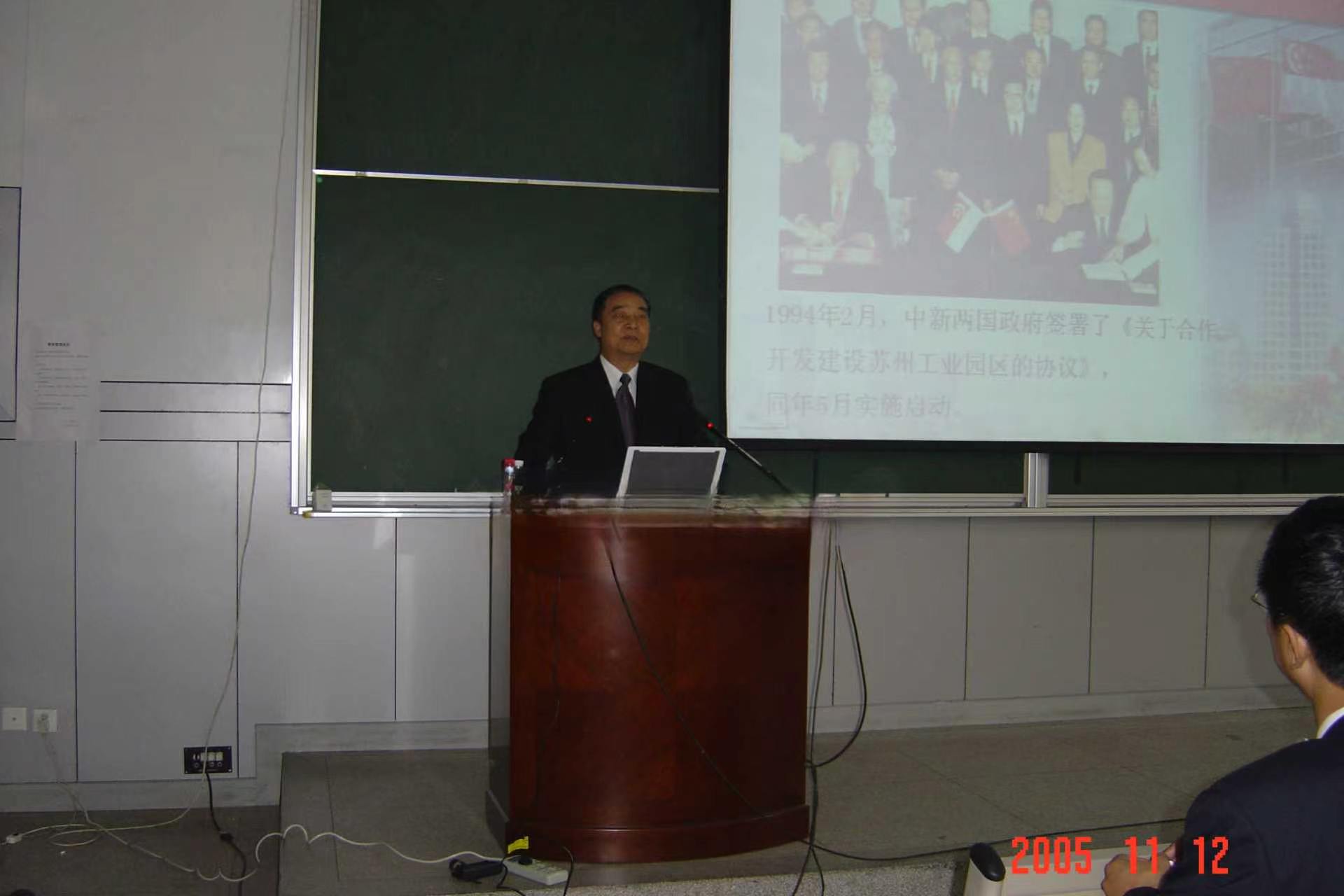
In 2005, Yunguan Pan led companies from Suzhou Industrial Park to recruit talent in Xi'an
But Suzhou’s local higher education base was still limited. Each recruitment trip reminded Pan of the same problem: SIP could not build its future by always looking elsewhere for people.
“The most important thing was talent,” he says.
For Pan, the answer was not only to recruit more widely but to help create the conditions for talent to be educated and retained locally. That thinking later became part of the logic behind Dushu Lake Higher Education District – and the arrival of Xi’an Jiaotong-Liverpool University in SIP.
Higher education was part of the design
SIP later set aside five square kilometres for Dushu Lake Higher Education District. In a development zone where land was valuable and investment was arriving steadily, it was a deliberate bet on the future.
Pan and his colleagues did not see universities as supporting facilities. They saw them as part of the region’s infrastructure.
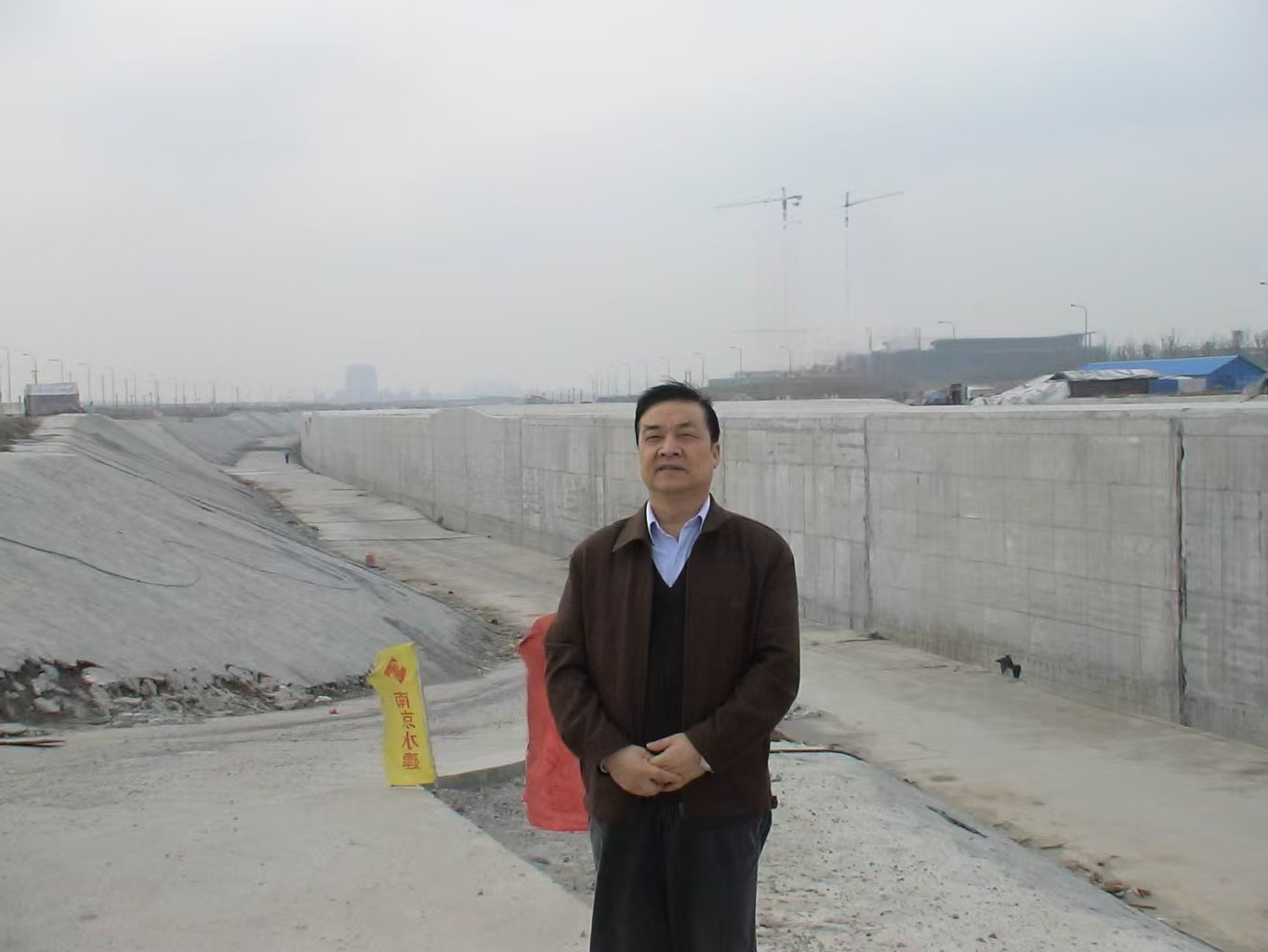
Yunguan Pan at a construction site in the Dushu Lake Higher Education District
So the Park tried to make it easier for universities to arrive and stay: subsidised land, financed buildings, shared dormitories and canteens, public libraries and sports facilities, and housing support for staff.
For Pan, the role of government was to think one step ahead – to understand what would make universities hesitate, and remove as many of those obstacles as possible.
XJTLU would later take root in that soil.
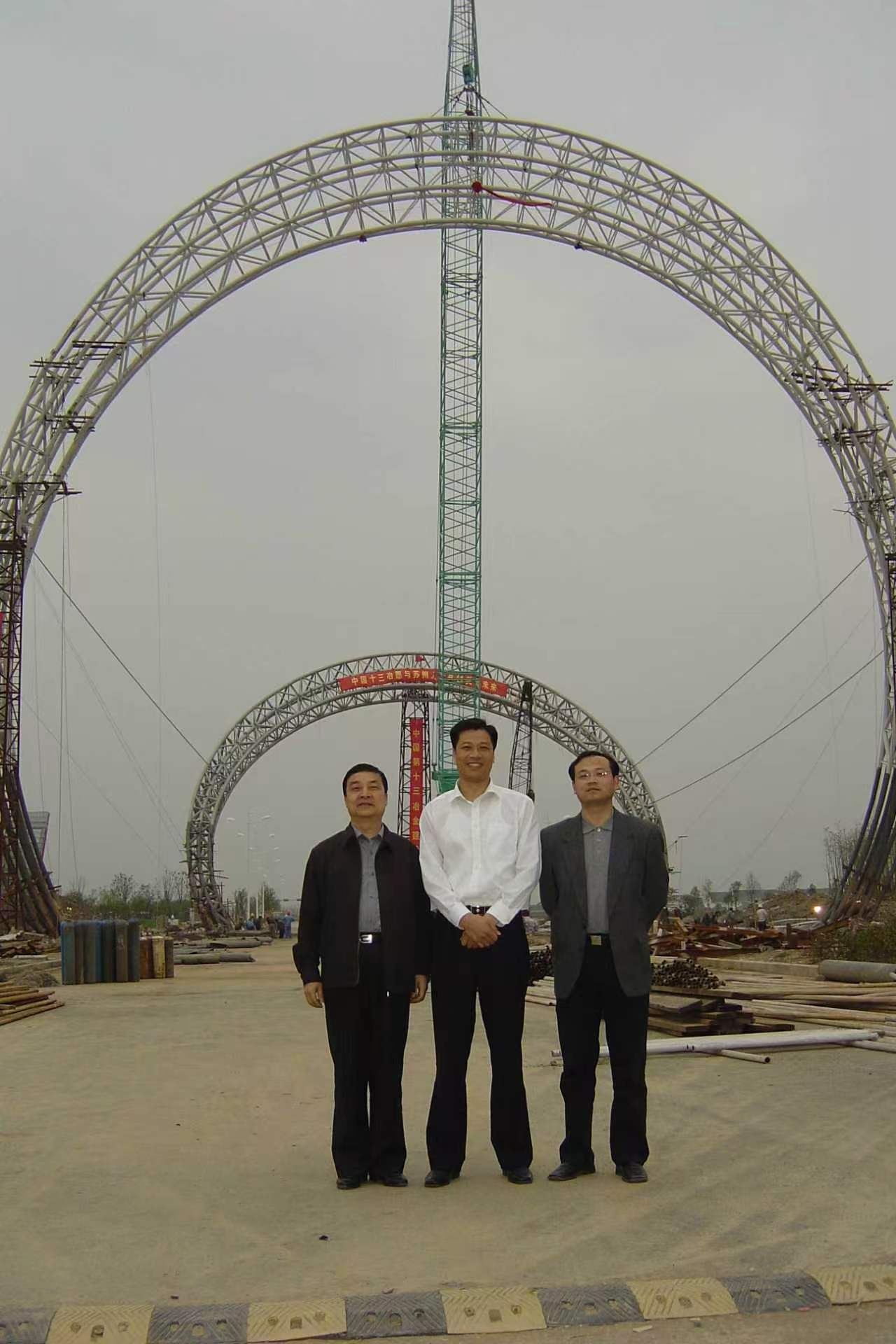
Yunguan Pan (left) at the construction site of the archway in the Dushu Lake Higher Education District
Building the platform
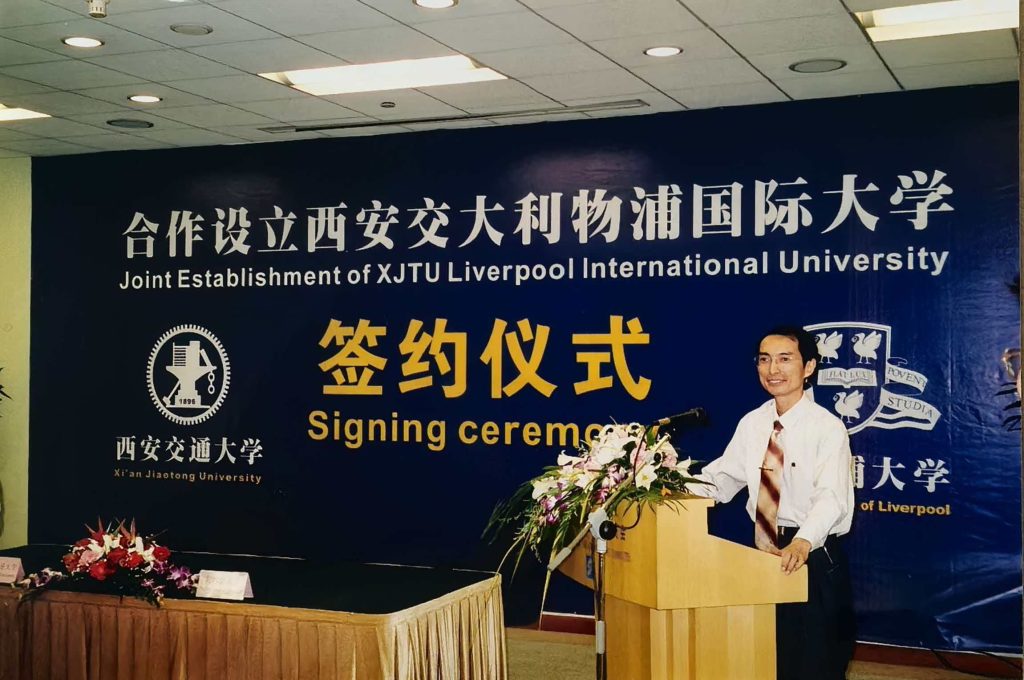
Pan is clear that the idea did not start with SIP. Xi’an Jiaotong University had already established a research institute in Suzhou, and later proposed working with the University of Liverpool to build a Sino-foreign university in the area.
The proposal arrived as China’s policy window for Sino-foreign cooperative education was opening. SIP saw the fit: the project could serve the region’s need for internationally minded talent and matched the area’s open, innovation-driven character.
When teams from Xi’an Jiaotong University and the University of Liverpool visited Suzhou, Pan received them, showed them SIP, explained the policies, and introduced what Dushu Lake Higher Education District could offer.
But he is careful about where the government’s role ends.
“The government only makes sure the platform is built for you,” he says. “How the two of you perform on that stage is up to you.”
Looking back, he sees XJTLU’s later development in the same way: SIP prepared the ground, but the University had to grow by itself.
No precedent, so try
At the time, China had no mature model for a Sino-foreign university. XJTLU would have to be worked out while it was being built.
Pan did not see that as a reason to hesitate.
“Things without precedent are the ones that are interesting to do,” he says.
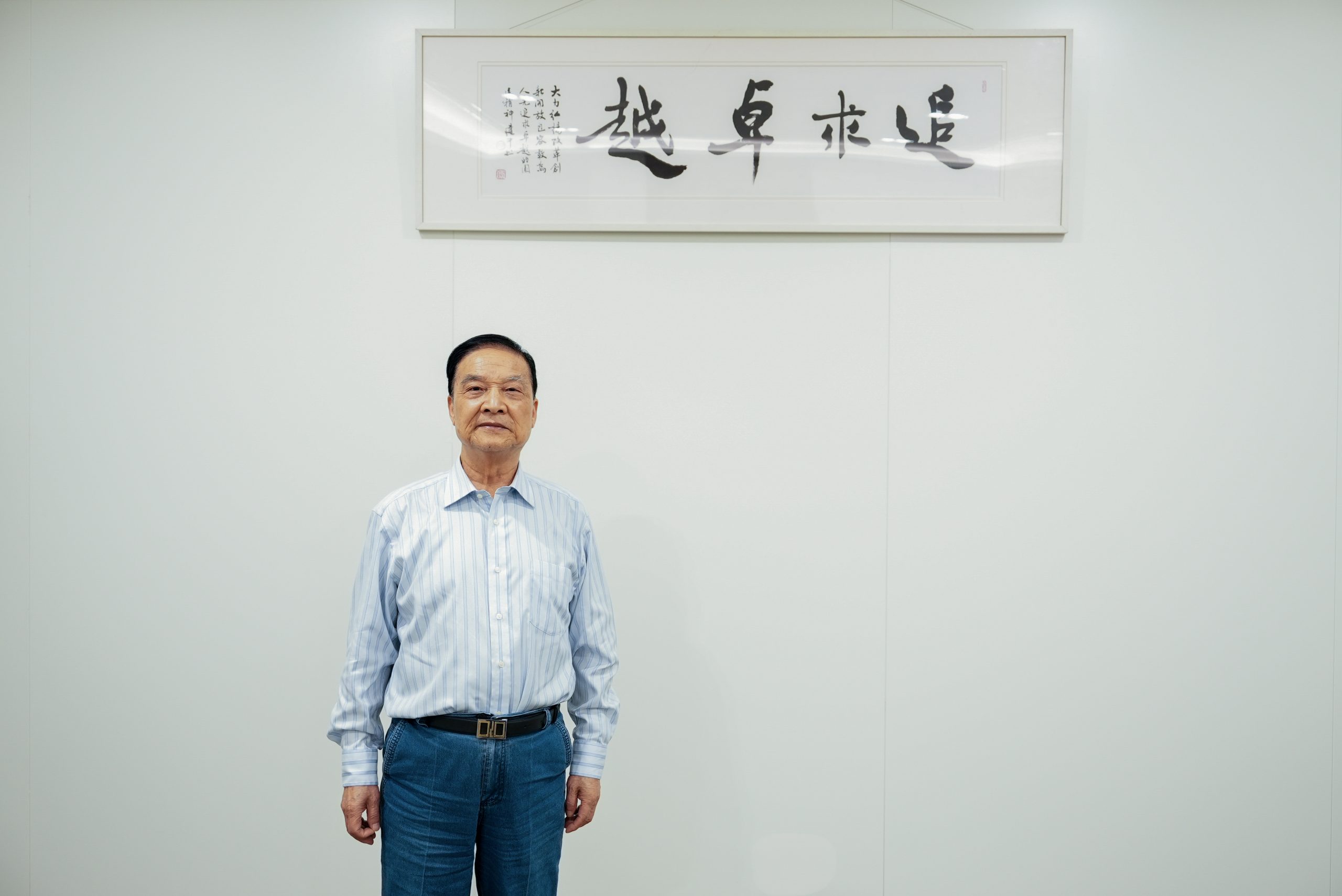
SIP itself had grown without a ready-made template. It had not simply copied Singapore, nor followed the usual path of a Chinese development zone. XJTLU, he believed, needed the same spirit: it could not copy a British university or a traditional Chinese one.
“You have to try boldly and break new ground,” he says. Success would become experience; failure would still leave a lesson.
For Pan, XJTLU’s value lies not in offering a model to be copied, but in showing that a new path could be made under real conditions.
After the stage was set
Pan often returns to the same distinction: SIP could prepare the ground, but XJTLU had to take root on its own.
He credits much of the University’s development to its leadership team, especially Professor Youmin Xi’s educational philosophy and management approach. What stayed with Pan was Professor Xi’s belief that students should not simply be managed, but given room to grow.
As he sees it, the changes in XJTLU students gradually became visible to classmates, parents, and society, and helped the University earn recognition in its own way.
For XJTLU’s 20th anniversary, Pan borrows a phrase often used by Professor Xi: to “live in ideals, be immersed in the real world, and walk the path from reality to ideals”.
He hopes the University will continue on that road, “going further and achieving more”.
By Bo Kou and Qiuchen Hu
Edited by Patricia Pieterse
20 May 2026
RELATED NEWS
The ‘angel board’ that helped XJTLU begin
By dawn, the promises around the table had to become something more concrete: written conditions, stamped documents and a plan that both the Ministry of Educ...
Learn more
Before XJTLU had a name
On 18 September 2003, Professor Junhua Wu accompanied Professor Daqing Fang from the University of Liverpool on a visit to Suzhou Industrial Park. The sch...
Learn more