We welcome your high-quality, research-based and practice-oriented contributions that align with the scope of the ASA and the conference theme, “Resilient Futures.”
Topics include, but are not limited to:
Architectural Science and Civil Engineering for a Changing Climate:
Architecture, design, and environmental performance
Resilient and sustainable infrastructure systems
Structural resilience, disaster mitigation, and adaptive building codes
Building and energy simulation, prediction, and evaluation for extreme weather
Geotechnical and hydraulic engineering for climate adaptation
Life cycle analysis, circular economy, and regenerative design principles across projects of all scales
Indoor environmental quality and occupant well-being in a warming world
The Intelligence-Augmented Design and Construction Frontier:
Generative AI for sustainable design exploration, optimisation, and structural integrity
AI-driven building performance simulation and smart infrastructure control systems
Machine learning in urban analytics, transport planning, and outdoor environmental modelling
Digital fabrication, robotics, and mass customisation in architecture and civil engineering
BIM/CIM, digital twins, and AI for construction management and asset lifecycle
The ethics, philosophy, and societal impact of AI in architectural and engineering practice
Extended Reality for the simulation of the Design, Construction and Operation Environments
Integrated Urban Systems and Social Equity:
Resilient cities, Smart City, infrastructure networks, and adaptation planning
Socially just transitions and community-led design and development
Outdoor environmental quality, public space, and urban health
Practice, policy, and industry engagement for sustainable development
Architectural and civil engineering theory in the context of global challenges
Circular Economy in the Built Environment
Intelligent Built and resilient Environment
Materials, Innovation, and Cross-Disciplinary Education:
Low-carbon and advanced construction materials (e.g., smart composites, bio-based materials)
Innovations in construction technologies and methods
Integrating resilience, AI, and SDGs into architectural and engineering andragogy
Novel methods in design education and transdisciplinary research
Community co-design and participatory action research
Exploring the new landscape of higher education in Architectural Science
Theory, philosophy and methodology in Architectural Science
Interconnectivity between research and industry
Heritage and Conservation in Architectural Science:
Heritage resilience, climate risk, and adaptation strategies for historic environments
Adaptive reuse as a resilient and circular pathway (life extension, embodied carbon, and regenerative redevelopment)
Digital heritage documentation: reality capture, photogrammetry, laser scanning, and semantic modelling
HBIM, digital twins, and data-driven conservation planning for asset lifecycle and maintenance
AI for condition assessment (damage detection, decay prediction, monitoring, and decision support)
Risk preparedness and post-disaster recovery for heritage sites and communities
Governance, ethics, and community values in conservation practice (identity, inclusivity, and social equity)
All submissions will undergo a double-blind peer-review process, and selected papers will be published in the conference proceedings. Detailed formatting guidelines and submission templates will be available on the conference website.





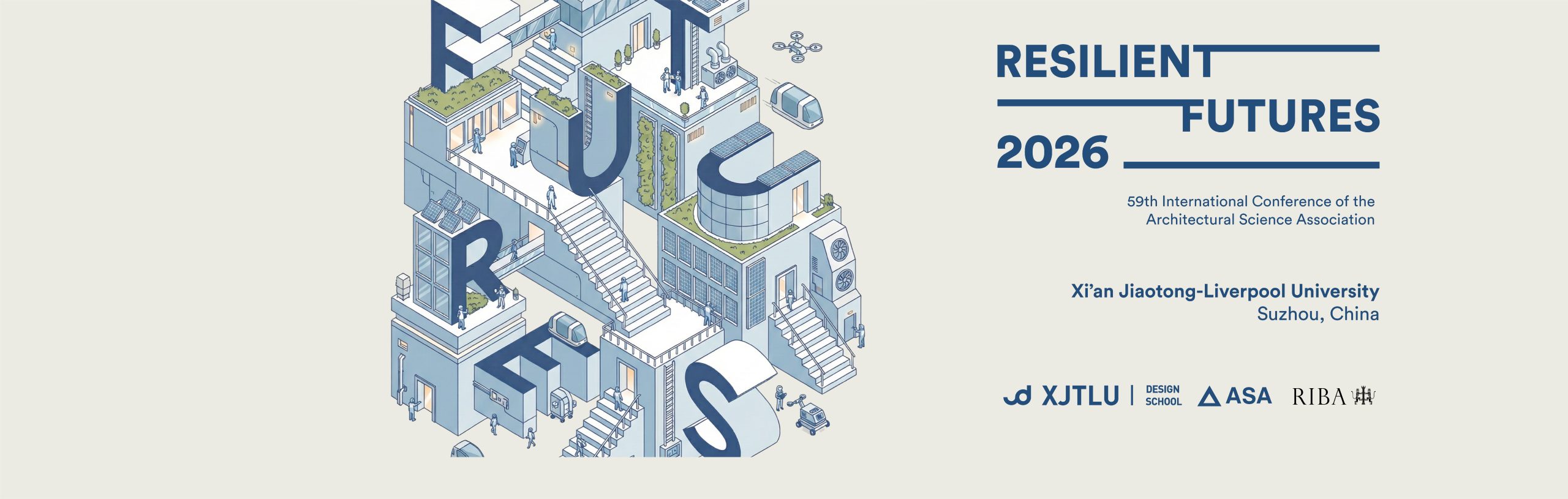

Conference Themes & Topics
We welcome your high-quality, research-based and practice-oriented contributions that align with the scope of the ASA and the conference theme, “Resilient Futures.”
Topics include, but are not limited to:
Architectural Science and Civil Engineering for a Changing Climate:
The Intelligence-Augmented Design and Construction Frontier:
Integrated Urban Systems and Social Equity:
Materials, Innovation, and Cross-Disciplinary Education:
Heritage and Conservation in Architectural Science:
All submissions will undergo a double-blind peer-review process, and selected papers will be published in the conference proceedings. Detailed formatting guidelines and submission templates will be available on the conference website.