





MSc Entrepreneurship and Innovation



February / September

Full time

24 months

Taicang, Suzhou
Download file


This programme leads to a University of Liverpool degree which is recognised by Ministry of Education, China.
Knowledge and skills
- Systematically develop design thinking mindsets: Through practical training, master the full-process design thinking methodology from demand insight to scheme iteration, be able to independently complete product prototype development or software prototype construction, and transform ideas into visual results.
- Pioneering research methods for a new paradigm of Human-Machine Intelligence: Learn industry trend analysis, market dynamics monitoring, and user behaviour research methods empowered by artificial intelligence technology and accurately capture business opportunities through data-driven research methods.
- Deeply explore the commercial value of cutting-edge technologies: Conduct in-depth analysis of the development context and application scenarios of cutting-edge technologies such as artificial intelligence, blockchain, and the Internet of Things, and possess a keen insight to identify entrepreneurial entry points from technological breakthroughs.
- Forge full-chain capabilities in business and technological innovation: Focus on identifying new technologies, new business opportunities, new product research and development, new model design, new service construction, and new value creation, and form innovative solutions covering the entire business chain.
- Master core project management methodologies: Systematically study project planning, risk control, team coordination, and resource integration skills, and be able to efficiently promote the implementation of entrepreneurial projects from the conceptual stage.
- Cultivate entrepreneurial literacy in the new era: Shape entrepreneurial thinking that combines foresight and practicality, deeply understand the core and boundaries of the entrepreneurial spirit, and establish a development concept that integrates business success with social responsibility.
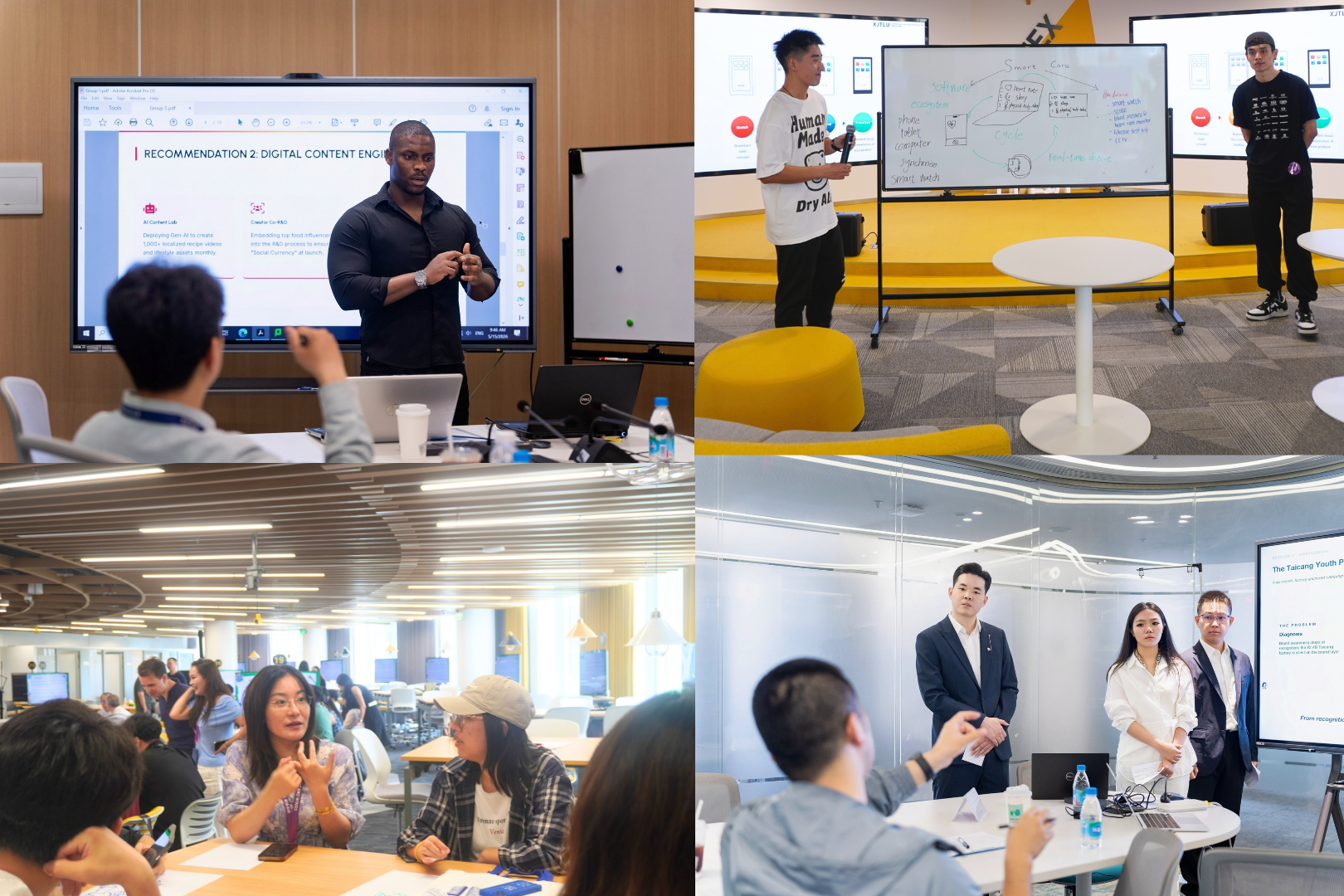
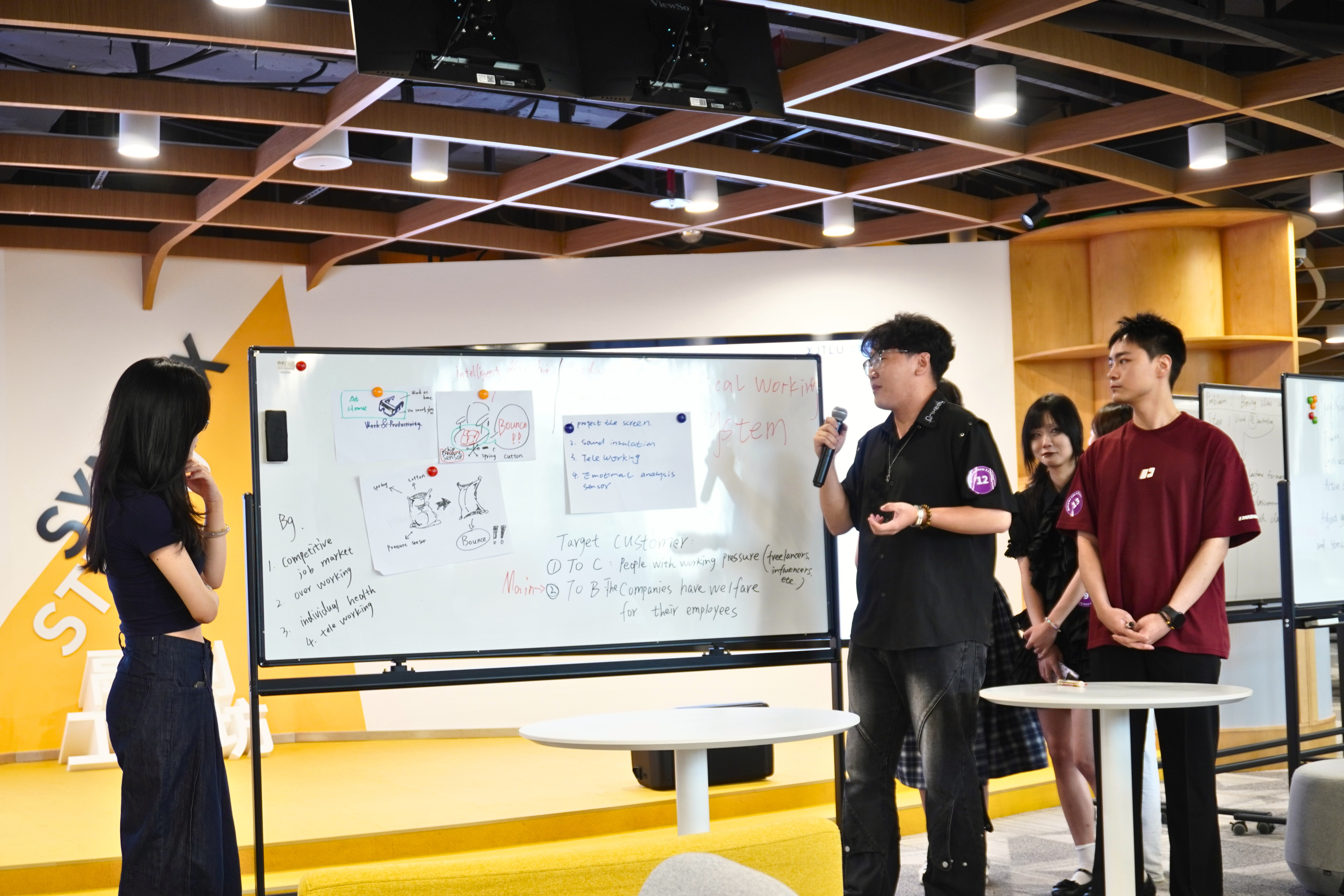
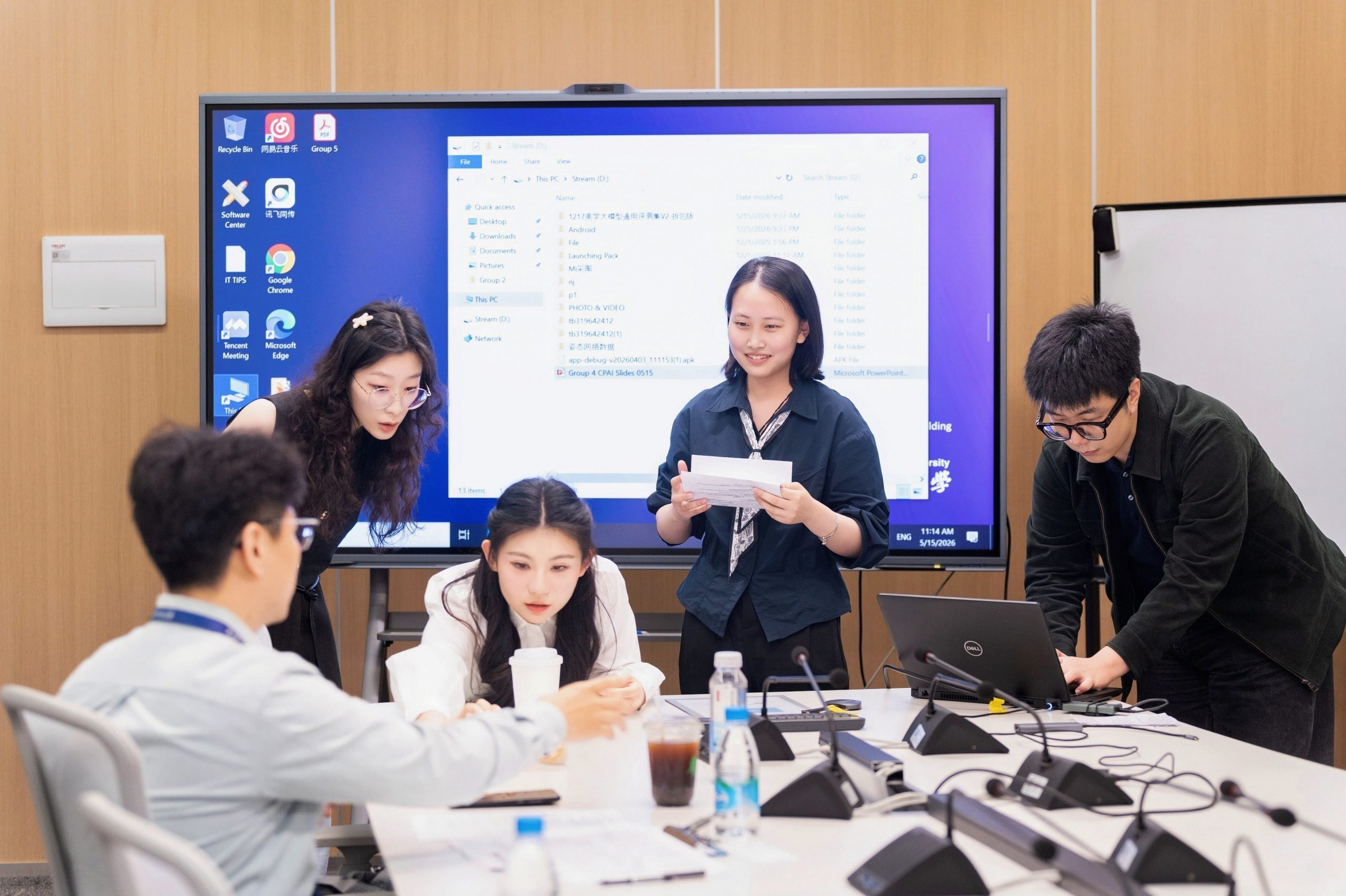


We aspire to cultivate multidisciplinary talents with entrepreneurial mindset and innovative capabilities for China and the world through a project-based and Syntegrative educational model that combines technology specialist courses with entrepreneurship courses. We look forward to discussing future-oriented business solutions with our students, exploring new technologies, business models, products, services, experiences, organizations, markets, and values. I hope that our students will enjoy the pleasure of creating value while using business and technology to change the world and achieve self-actualization.


Dr Tong He (Sophie)
Programme Director
Welcome to our Master's Program in Entrepreneurship and Innovation! Our program is designed to equip students with the skills and knowledge needed to drive transformative change in today’s dynamic global economy. We invite and welcome aspiring entrepreneurs, and visionary stakeholders to join us in shaping the future of business and technology. Through cutting-edge curriculum, hands-on projects, and a collaborative learning environment, this program offers unparalleled opportunities to turn ideas into impactful ventures. Together, let’s build a community that thrives on innovation, creativity, and sustainable growth.

Dr Antonio Benitez Garcia
Deputy Programme Director
This program is tailored to provide you with the knowledge, mindset, and skills necessary to succeed in today’s ever-changing business landscape. You will be able to tackle real-world projects, work alongside peers who share your aspirations, and gain invaluable insights from our esteemed faculty and industry partners. We warmly invite you to become part of our vibrant community—a diverse network of aspiring entrepreneurs and forward-thinking leaders ready to shape the future.

Dr Kai Liu
Deputy Programme Director
Modules
*Programme modules listed below are for the 2026–2027 academic year, provided for illustrative purposes only and subject to change. XJTLU students are advised to log in to the e-Bridge Portal to view the effectuated module structure.
Semester 1
Core Modules
Semester 2
Core Modules
Semester 3
Optional Modules
Semester 4
Optional Modules
Semester 1
Core Modules
Semester 2
Core Modules
Semester 3
Optional Modules
Semester 4
Optional Modules
Semester 1
Core Modules
Optional Modules
Semester 2
Core Modules
Semester 3
Optional Modules
Semester 4
Optional Modules
Semester 1
Core Modules
Optional Modules
Semester 2
Core Modules
Optional Modules
Semester 3
Optional Modules
Semester 4
Optional Modules
Semester 1
Core Modules
Semester 2
Core Modules
Semester 3
Optional Modules
Semester 4
Optional Modules
Semester 1
Core Modules
Semester 2
Core Modules
Semester 3
Optional Modules
Semester 4
Optional Modules
Semester 1
Core Modules
Semester 2
Core Modules
Semester 3
Optional Modules
Semester 4
Optional Modules
Semester 1
Core Modules
Semester 2
Core Modules
Semester 3
Optional Modules
Semester 4
Optional Modules
Semester 1
Core Modules
Semester 2
Core Modules
Semester 3
Optional Modules
Semester 4
Optional Modules
Semester 1
Core Modules
Semester 2
Core Modules
Semester 3
Optional Modules
Semester 4
Optional Modules
Semester 1
Core Modules
Semester 2
Core Modules
Semester 3
Optional Modules
Semester 4
Optional Modules
Mr. Tao Wang, an alumnus of XJTLU, has a bachelor degree in BA Marketing from IBSS at XJTLU. Being an entrepreneur, Mr. Wang founded his own company OM-Class in 2016 before his graduation. With the support of XJTLU and Dushu Lake Entrepreneurship and Development Centre, not only has OM-Class maintained a steady growth, but has also received several awards in its field. With his valuable entrepreneurship experience, he is very keen on studying on this industry-oriented programme.

Prospective student, MSc Entrepreneurship and Innovation
Pathways
The MSc Entrepreneurship and Innovation programme offers a broad range of pathways to meet diverse students’ interests and needs: Business and AI Innovation, Sustainable Solutions and Inclusive Technology, Creative Technology, Enterprise Governance, Innovation and Succession, Venture Investment, Smart Cities, Technology Transfer Management, Strategic Human Resources Management, Intelligent Robotics, Smart Ageing and Health Management.

Centered on “Syntegrative Project,” this pathway partners with frontier enterprises such as Thailand’s Charoen Pokphand (CP) Group to bring real corporate scenarios and needs into the classroom. Students learn to pinpoint innovation opportunities in live business environments and, through hands-on practice, uncover the core value of merging AI with commerce. Throughout this practice-driven journey, students not only grasp how AI technologies re-engineer business operations and reshape entire industries, but also systematically strengthen strategic planning, managerial decision-making and cross-disciplinary collaboration. The curriculum keeps pace with emerging global trends—AI-powered industrial digitalization, intelligent business-ecosystem design, etc, and dissects concrete AI deployments in manufacturing, consumer markets and beyond. The graduates who think innovatively and see the world globally can tackle complex business challenges with integrated acumen. This pathway is open to applicants from all academic backgrounds, with no restrictions on undergraduate majors.
 Dr Jiawei Hai, Pathway Director of Business and AI Innovation
“Discover the Pathway to Business Development and AI Innovation—a dynamic, industry-focused program that seamlessly integrates entrepreneurial vision with cutting-edge AI-driven technologies. Central to this transformative journey is the unique “Syntegrative Innovation Project,” where students collaborate with industry leaders to solve real-world challenges, gaining hands-on experience and deep insights into AI-enabled business dynamics while mastering essential business strategies. The curriculum blends emerging industry trends with practical applications, fostering innovative thinking, global perspectives, and adaptive skills for today’s interconnected business landscape. Designed for aspiring innovators and entrepreneurs, this programme empowers participants to enhance expertise, build impactful networks, and fast-track careers in the AI-powered global economy. Join us to shape the future at the crossroads of business and AI innovation!”
Developed by Entrepreneurship and Enterprise Hub of XJTLU Entrepreneur College (Taicang), this pathway integrates curricular resources from School of Internet of Things, School of Robotics and School of Intelligent Finance and Business to explore how cutting-edge technologies can advance sustainable development. The curriculum foregrounds the use of frontier tech to tackle social and environmental challenges. Through real corporate cases and live projects, students learn to craft implementable,
sustainability-focused solutions. Working side-by-side with high-tech partners such as Rokid (human-computer interaction), learners will solve authentic industry problems; prototype innovative sustainability schemes in team projects; master interdisciplinary research methods that balance technology, business and social responsibility; grasp the deep links between technology and sustainable development, and apply this insight to corporate strategy and governance. Rooted in sustainability & inclusive-innovation research, classroom outputs are designed for immediate uptake by society and industry. Ideal for Science and Engineering graduates (computer science, AI, robotics, environmental engineering, IoT, etc.), business students passionate about deploying technology for future sustainable scenarios, and bachelor’s holder eager to drive cross-disciplinary fusion and green transformation.

Dr Bo Zhang, Pathway Director of Sustainable Solutions and Inclusive Technology
“Merely possessing knowledge within a single engineering discipline is no longer sufficient to meet the demands of the future job market. Future society increasingly requires interdisciplinary talents. With the rapid development of artificial intelligence (AI), coupled with the uncertainty of the global industrial landscape and the increasingly competitive job market, university students should acquire more advanced skills, such as teamwork, problem-solving, and project management and execution. Earlier participation in the study and practice of real-world enterprise projects can train students’ adaptability and expand their career options. Although I have been teaching at a traditional university like East China Normal University for many years, I agree with the necessity of future education shifting towards Syntegrative Learning. I firmly believe that true knowledge comes from practice, and what future society needs are interdisciplinary talents.”
This pathway cultivates next-generation leaders in global digital audiovisual content creation and production, co-delivered with Academy of Film and Creative Technology. Built on interdisciplinary integration and hands-on industry practice, the programme develops hybrid talent who command digital technologies, generate compelling content and understand end-to-end production pipelines. This pathway focuses on the intersection of creative arts, emerging tech and entrepreneurship— offering Responsible Digital Innovation and Sustainability, Venture Funding & Growth Capital, and more—dissolving traditional silos. Through project-based learning, students sharpen technical expertise, commercial acumen and creative strategy, turning ideas into market-ready solutions. Graduates emerge as pioneering innovators ready to reshape film, gaming, digital exhibitions and beyond.

Chengshuo (Eddie) Hou, Pathway Director of Creative Technology
“As technology reshapes the creative industries, the field increasingly calls for professionals who can adapt, innovate, and lead across both craft and emerging media. At its core, the Creative Technology Pathway is dedicated to the creative production of digital audiovisual content, distinguished by its specialism in immersive media and interactive media content. Working hand in hand with our Dome Theater, the Pathway opens new spatial and experiential possibilities, where the boundaries between disciplines and dimensions dissolve and bolder collaboration becomes possible. Augmented by AIGC and other new-generation tools, the Pathway reaches beyond traditional handcraft, fusing established creative skill with the technologies of a new era to produce work of greater scale, depth, and impact. Drawing on EEH’s distinctive entrepreneurial and industry-facing ethos, the Pathway places real-world industry practice at the heart of its teaching: through project-based learning, case studies, built around live briefs and partnerships with studios, cultural institutions, and technology companies. Students gain professional-grade experience from concept through to final delivery. This industry-embedded, project-driven model cultivates the entrepreneurial mindset and strategic acumen to launch their own creative ventures, lead industry innovation, and rise into leadership roles across film, animation, gaming, music, digital media, and the cultural industries. Chengshuo (Eddie) Hou is an audio engineer, sound designer, and mixer whose work spans the game, film and music industries. He focuses on immersive audio technology, exploring how advanced spatial and 3D sound techniques can transform user experience, storytelling, and emotional engagement across virtual reality and interactive media. He has contributed to major international projects, from Blizzard’s World of Warcraft and Overwatch to Tencent’s Honor of Kings and PUBG, as well as Apple Vision Pro’s Encounter Dinosaurs. Building on this experience, his practice spans audio architecture, immersive 3D audio design, and binaural listening for VR/MR experiences, alongside Dolby Atmos mixing and spatial sound design—grounded in industry-standard pipelines such as Wwise and Unreal Engine. Creative Technology is committed to shaping the future of culture, technology, and society through interdisciplinary design and responsible innovation.”
Jointly delivered by Entrepreneurship and Enterprise Hub of XJTLU Entrepreneur College (Taicang) and HeXie Management Research Centre of College of Industry-Entrepreneurs, this pathway focuses on the critical issues and societal demands of serial entrepreneurship, transformational innovation, governance upgrading and inter-generational succession. Through Syntegrative Education, students learn to deploy trans-disciplinary insights, from complex-systems science, history and culture to frame and tackle these challenges, translating classroom knowledge into live industry problem-solving. The pathway cultivates and refines students’ systemic integration skills for present and future entrepreneurial innovation, governance and succession, continuously upgrading their “harmonious mindset” to navigate an uncertain, ambiguous, complex and rapidly changing world.
Dr Peng Liu, Pathway Director of Enterprise Governance, Innovation and Succession
“With a competitive Enterprise Governance, Innovation and Succession pathway, this industry-oriented programme cultivates future family business successors, business partners and professional managers. It provides you with a critical understanding of enterprise governance, innovation and succession. It also prepares you to lead and engage enterprises to sustain continued prosperity and growth.”
This pathway upholds Syntegrative Education through collaboration with real industry partners and live projects. Its curriculum centers on investment strategies, venture financing, and portfolio management, while also systematically covering key topics related to high-growth future ecosystems—including legal, financial, and operational aspects. Additionally, this pathway explores the impact of financial technology on society and businesses.

Dr Ningxin Wang, Pathway Director of Venture Investment
“Venture Investment have become one of the most successful sectors, for business finance and growth in China plus worldwide, with demand for more talent to be hired every year. Using syntegrative education created with real industry partners and live projects, this pathway covers major topics that include investment strategies, venture funding, portfolio management, as well as legal, financial, and operational factors of this high-growth future oriented ecosystem.”
Co-delivered by Entrepreneurship and Enterprise Hub of XJTLU Entrepreneur College (Taicang) and the Department of Urban Planning and Design, this pathway concentrates on the core competences required for smart-city development. Foundational modules in Sustainable Urban Planning Strategies, Digital Transformation for Smart Cities, and IoT for Smart Cities are paired with Responsible Digital Innovation and Sustainability and Venture Funding & Growth Capital, ensuring that sustainability thinking and commercial acumen advance together. Open to graduates from environmental design, urban planning, civil engineering, environmental engineering, human geography, construction management, GIS, spatial management, landscape architecture, telecom engineering and related fields, the pathway cultivates hybrid talent capable of making cities smarter and more effective at meeting sustainability challenges.

Dr Juhyun Lee, Pathway Director of Smart Cities
“With a competitive Smart Cities pathway, this industry-oriented programme provides you with a precious chance to explore entrepreneurial and innovation opportunities and solutions within Smart Cities. You will gain knowledge on assets, resources and services to improve the city operations smartly while developing essential modern skillsets in a real-life context to be a future leader.”
Co-delivered by Entrepreneurship and Enterprise Hub of XJTLU Entrepreneur College (Taicang) and the XJTLU-JITRI Academy of Industrial Technology, this pathway is embedded in an ecosystem where education, research, training, innovation and industry converge. Collaborative laboratories and flagship R&D projects act as a bridge that turns scientific breakthroughs into market-ready solutions and supplies industry with applied, hybrid talents. The curriculum cultivates end-to-end technology-transfer competence. Core course “Technology Transfer: Theory and Practice” plus “Technology and Innovation Management” dissect the logic of commercialising research; “Venture Funding & Growth Capital” teaches how to fund the journey; “Industrial Internet of Things” and “Materials Science and Manufacturing Processes” solidify technological literacy, while “Responsible Digital Innovation and Sustainability” keeps progress aligned with societal needs. Graduates leave equipped with technological insight, business acumen and capital-market thinking, and becoming elite professionals who can move research from lab bench to industrial impact.

Dr Shu-Hsiang Chen, Pathway Director of Technology Transfer Management
“Welcome to the MSc Entrepreneurship and Innovation (Technology Transfer Management Pathway). As innovation increasingly drives economic growth and societal progress, professionals who can bridge research, industry, investment, and markets are in growing demand worldwide. This pathway equips students with the knowledge and practical skills required to evaluate technologies, manage intellectual property, develop commercialisation strategies, and lead innovation initiatives. Graduates will be well positioned for careers in technology transfer offices, research institutions, innovation-driven enterprises, incubators, science parks, investment organisations, consulting firms, and government agencies supporting innovation and entrepreneurship. By combining innovation management with technology commercialisation, this pathway prepares students to transform ideas into impact and build meaningful careers at the forefront of the innovation ecosystem.”

Dr Wei Zhuang, Pathway Director of Technology Transfer Management
“With a competitive Technology Transfer Management pathway, this industry-oriented programme enables you to develop a generous professional knowledge system, helps you get familiar with the concepts of investment and financing and intellectual property, and teaches you to identify the feasibility and maturity of a technology and how to industrialise it successfully. As a good technology transfer manager, achieving others is also achieving yourself.”
Jointly delivered by the Entrepreneurship and Enterprise Hub of XJTLU Entrepreneur College (Taicang) and School of Intelligent Robotics, this pathway also enjoys in-depth collaboration with XbotPark (Changzhou) and XJTLU-JITRI Academy of Industrial Technology. Focusing on the wave of technological transformation in robotics and AI, the School of Intelligent Robotics takes it as its mission to cultivate interdisciplinary leaders with knowledge, creativity and entrepreneurial spirit. It integrates academic learning with industry research through Syntegrative Education, and strengthens students’ practical capabilities by relying on industry partnerships. The curriculum features both technical depth and multi-dimensional coverage: it not only includes modules such as Contemporary Mechatronics in Intelligent Robotics, Advanced Robotics Intelligence and Machine Learning; but also offers modules like Responsible Digital Innovation and Sustainability, as well as Venture Funding & Growth Capital to complement students’ business acumen and sense of social responsibility. This all-round curriculum aims to help students grow into interdisciplinary professionals who are well-suited for the booming robotics industry.

Dr Shenhong Wang, Pathway Director of Intelligent Robotics
“With an amazing Intelligent Robotics (IR) pathway, this industry-oriented programme enables you to develop the capability of turning exciting ideas into true at a practical approach in the robotics industry. The Syntegrative Education (SE) model covers not only the part of entrepreneurship & innovation but also the engineering part of a typical robot. The kind of systematic capability could support you think bigger (not only a single discipline) and make a proper decision beyond the robotics industry in the long-term!”
This pathway is jointly delivered by the Entrepreneurship and Enterprise Hub of XJTLU Entrepreneur College(Taicang), and HeXie Management Research Centre of College of Industry-Entrepreneurs, in close collaboration with leading industry partners such as Huisi Human Resources Group, Linlong Yunke, and BenQ Guru. Focused on the new challenges and opportunities of the digital-intelligence era—spanning Intelligent HRM: Strategy and Practice, talent strategy and ecosystem building, cross-cultural management and leadership, the pathway adopts Syntegrative Education model to cultivate international, tech-savvy, strategic HR professionals equipped to drive organizational transformation and innovation.

Dr Lei Liang, Pathway Director of Strategic Human Resources Management (SHR) pathway
“The technological progress in the era of digital intelligence has widely and profoundly changed the production and life pattern of human beings. Therefore, it is an inevitable choice to understand its emergence causes and evolution mechanism comprehensively and systematically. To respond the strategic issues of human resource management in the new era with forward-looking vision, open thinking, integrated methodology and the HeXie mindset, and then achieve the unification of individual career growth, industrial innovative development, and social synergistic progress, is the important mission.”
This pathway, jointly developed by Entrepreneurship and Enterprise Hub of XJTLU Entrepreneur College (Taicang) and HeXie Management Research Centre of College of Industry-Entrepreneurs, focuses on the use of digital and intelligent technology to empower collaborative and innovative management in wellbeing of the elderly and industry. We are committed to building a talent pool of silver economy and healthcare innovation ecosystem, contributing to the active response to the ageing population and the enhancement of the wellbeing of the elderly and the society.

Dr Qingwei Wang, Pathway Director of the Smart Ageing and Health Management
“The Smart Ageing and Health Management pathway provides an interdisciplinary education, led by faculty with expertise in social sciences, business, engineering, and the sciences. The curriculum covers key areas such as health policy, ageing-related technologies, community engagement, and wellness management. Through a combination of classroom learning and hands-on projects, students will develop practical skills and a comprehensive understanding of the challenges and opportunities in ageing and health management. Graduates are well-prepared to make a positive impact across a variety of professional sectors.”
The Executive Track is perfect for working professionals who want to earn a prestigious international degree on weekends. It covers practical courses in entrepreneurship and innovation, with the choice of studying in the Business and AI Innovation pathway or the Sustainable Solutions and Inclusive Technology pathway, all taught by professors with extensive international experience.
On-the-Job Studying Track for Master’s Year 2
For each pathway, students have two project options to choose from:
Entrepreneur Project: Through studying this option, students will focus on leading and designing brand-new business projects. The university aims to incubate independent legal entities with market competitiveness for such projects.
Intrapreneur Project: Through studying this option, students will assist partner enterprises in intrapreneurship, explore new markets and businesses for existing companies, and drive innovation within the organisation.
Careers
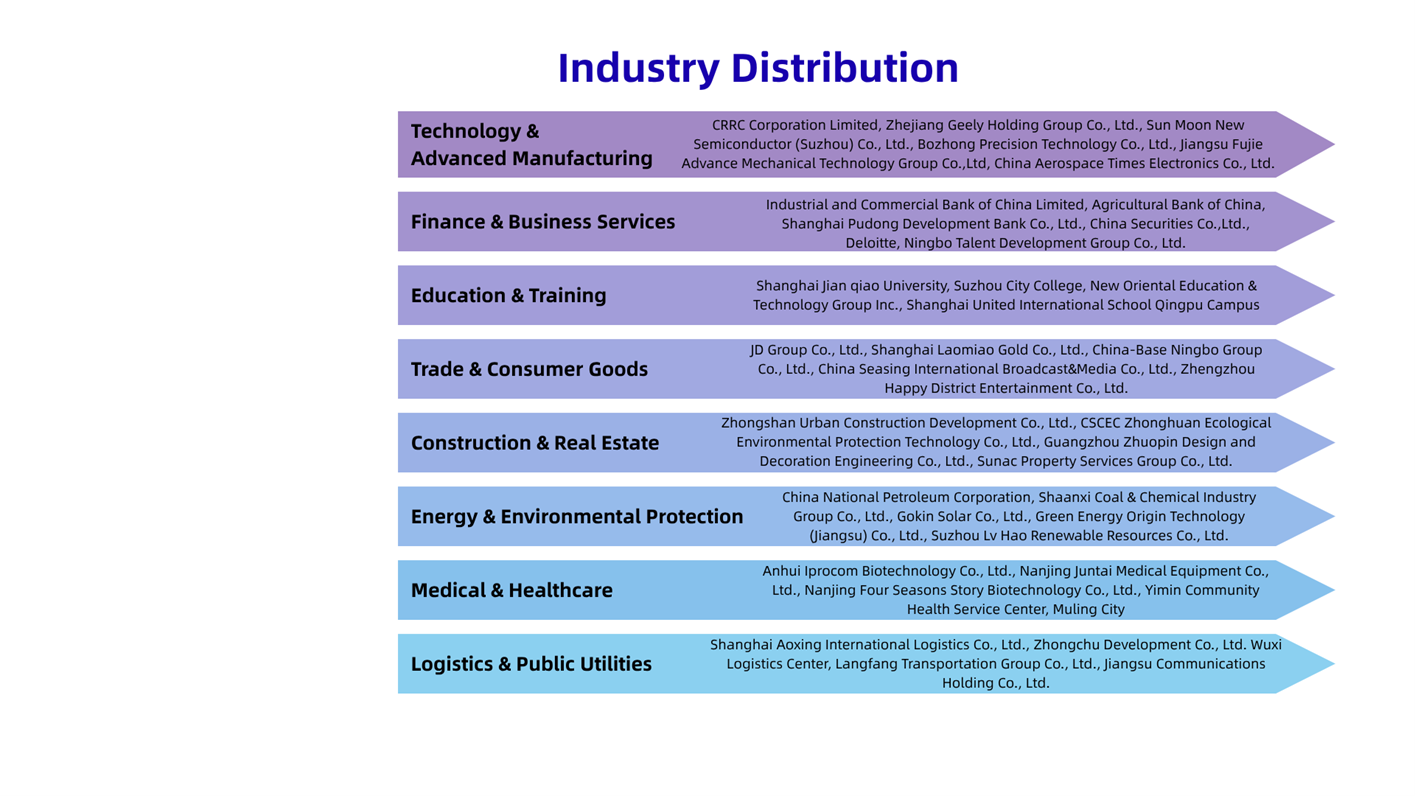
The MSc Entrepreneurship and Innovation programme of XJTLU Entrepreneur College (Taicang) offers multiple pathways covering business, technology, management and other fields, so as to adapt to the ever-changing social needs. Each pathway represents the development trends of different future fields and is closely aligned with industry demands, providing students with up-to-date knowledge and skills. The teaching model emphasises the integration of practice and theory, fostering students’ innovative thinking and problem-solving abilities, enabling them to quickly adapt to the evolving market environment in their careers. Upon graduation, they will become leading talents in various industries, driving the sustainable development of society and the economy.

Overview
Against the backdrop of the accelerating evolution of artificial intelligence and Industry 4.0, technological disruption has become the norm in industry competition. New business models continue to emerge, and enterprises that fail to rapidly upgrade themselves or expand their business boundaries may be overtaken by competitors. In this context, there is an increasingly urgent demand across all sectors for innovative and interdisciplinary talents who can help enterprises meet the challenges of technological transformation. Innovation capability and entrepreneurial thinking have become the core driving forces behind social change. To respond to this era’s demand, the Entrepreneurship and Enterprise Hub (EEH) of XJTLU Entrepreneur College (Taicang), in collaboration with multiple faculties of Xi’an Jiaotong-Liverpool University, has jointly developed the MSc in Entrepreneurship and Innovation programme.
Unlike traditional business school programmes, this master’s programme focuses on exploring future-oriented business and technological solutions, delving into cutting-edge areas such as new technologies, new models, new products, new services, new experiences, new organisations, new markets, and new values. It aims to enable students to enjoy the pleasure of creating value, and to change the world and achieve self-actualisation through business and technology.
Program Features
1. Full English Immersive Teaching, Unlocking Global Career Opportunities
The MSc Entrepreneurship and Innovation programme takes full English teaching as its core highlight, supported by an international faculty team and an advanced curriculum system. This setup enables students to align with global educational resources and refine their cross-cultural collaboration skills in an immersive English environment. Upon graduation, students will be awarded a degree from the University of Liverpool (UK), which is recognized by the Ministry of Education of the People’s Republic of China—this academic qualification holds dual recognition both domestically and internationally, laying a high-value foundation for their career development. Leveraging this high-quality international educational background, graduates, equipped with a global perspective and professional competence, are consistently favored by multinational corporations and international organizations, smoothly unlocking the door to global career opportunities.
2. In-depth Integration of Disciplinary and Entrepreneurial Education, Systematically Mastering Entrepreneurial Methods and Innovative Thinking
Adopting a project-based teaching model of “pathway-driven disciplinary courses + entrepreneurial courses”, it cultivates interdisciplinary talents with entrepreneurial thinking and innovative capabilities. In the first year of the programme, there are 4 shared modules on entrepreneurship and innovation and 4 technical modules in industry pathways, breaking the boundaries of traditional business schools —— discuss the essence of user experience with art scholars in design thinking courses, disassemble the implementation paths of AI and blockchain with engineers in the technology commercialisation module, and jointly explore sustainable solutions with public policy scholars in social innovation projects. Interdisciplinary integration is not just the accumulation of knowledge but also teaches students to discover cross-border opportunities from a “prism” perspective.
3. Learning Oriented by Syntegrative Education Projects, Exploring Future-oriented Business and Technological Solutions
In the second year of the programme, students can choose intrapreneur projects or entrepreneur projects to carry out on-the-job practical learning. Entrepreneur projects mean that through studying this option, students will be committed to leading and designing brand-new business projects, and the school aims to incubate independent legal entities with market competitiveness. Intrapreneur projects mean that through studying this option, students will help industry partner enterprises carry out internal entrepreneurship, find new markets and new businesses for existing enterprises, and promote intra-organisational innovation. Different from traditional case analysis and model replication, students participate in the entire process from 0 to 1 through real entrepreneurial project incubation and hands-on practice in the innovation factory, mastering the core ability to “solve unknown problems”.
4.10 Emerging Industry Pathways with Great Future Potential, Empowering Interest Exploration and Career Matching
Focusing on future trends, it offers courses in 10 emerging industry pathways including Business and AI Innovation, Sustainable Solutions and Inclusive Technology, Creative Technology, Smart Cities, Enterprise Governance, Innovation and Succession, Venture Investment, Technology Transfer Management, Intelligent Robotics, Strategic Human Resource Management, and Smart Ageing and Health Management. Students can explore multiple industry opportunities according to their personal interests, and the curriculum system accurately aligns with the career development needs of future society, helping to achieve a deep integration of interests and careers.
5. World-class Faculty Team, with Equal Emphasis on Academic and Industry Experience
Leveraging the advantages of XJTLU Entrepreneur College (Taicang), the teaching team consists of globally recruited scholars, researchers, entrepreneurs, venture capitalists, and high-tech industry experts, with doctoral degrees from top international universities and rich experience in academia, entrepreneurship, and enterprise management. Through Syntegrative Education, it guides students to connect theory with practice and empowers breakthroughs in innovation and entrepreneurship.
6. Comprehensive Entrepreneurial Ecosystem, Resource Support and World-class Campus Facilities
Relying on XJTLU Innovation Factory and X3 Co-venture, it builds a “co-creation ecosystem” connecting entrepreneurs, investors, and scientists. Students can turn their innovative ideas into reality, obtain full-process support for experiments, research, and incubation, and at the same time accumulate cross-domain “innovation partner” resources to enhance project value and entrepreneurial success rates. It is equipped with more than 120 professional laboratories, including Haier CosmoPlat Industry 4.0 intelligent production lines, iFlytek Laboratories, Industrial Internet Comprehensive Laboratories, etc., all equipped with cutting-edge industry equipment. In addition, the campus has an international standard swimming pool and first-class gymnasium facilities, helping students maintain physical and mental health while studying.