







19 May 2026


A study of Chinese listed firms reveals that when a company’s largest overseas customer faces rising geopolitical risk, the supplier firm increases R&D investment, challenging the conventional wisdom that conflict and uncertainty suppress innovation.
-
Geopolitical risk, whether in the form of military conflict, trade embargoes, or political instability, has long been viewed as a threat to business. For companies whose largest clients operate in conflict-affected regions, investing in innovation amid high geopolitical uncertainty is highly risky. A new study, however, discovered that geopolitical risk actually has a positive effect on corporate innovation.
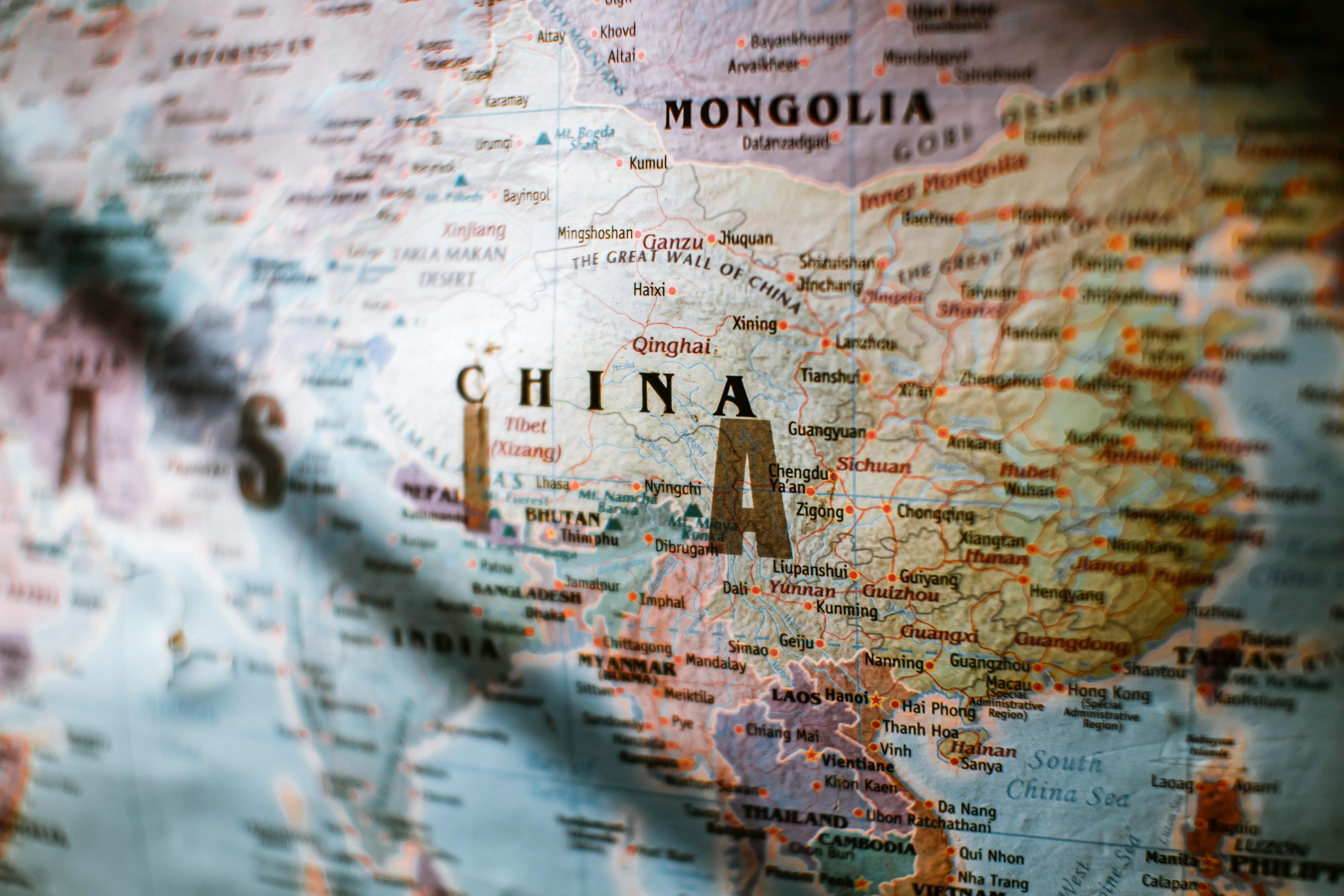
New study shows how geopolitical tensions leads to higher innovation in companies
A new peer-reviewed study from Xi’an Jiaotong-Liverpool University’s (XJTLU) School of Intelligent Finance and Business, along with East China University of Political Science and Law, contributes to the debate with a unique finding: when geopolitical risks affect a company’s clients, the supplying firm tends to innovate more, not less.
“Among other forms of risks, I think that geopolitical risks are more uncertain and more violent,” says Professor Junsong Chen. He pointed out that existing research has focused predominantly on the risks faced by manufacturers in their own operating area, overlooking the reality that a supply chain connects many actors across many borders. “But in a supply chain, risks at a certain point can be transmitted to the entire chain,” he added.
With clients spread across the world, Chinese companies find themselves exposed to as many geopolitical disputes as the countries they do business with. “For example, in April 2023, five Chinese companies were barred from trading with any US firms, impeding their trade flow and supply chain,” says lead author Ziyin Huang, who completed the research as part of her graduation thesis at XJTLU. “As this research discovered, prior geopolitical risk and innovation research all used country-level measures, assigning the same risk to every firm in a nation. But in reality, each company’s customer base is unique; that is, a supplier to Germany faces different exposure than one to Russia.”
The study tracked 958 companies across 2011 to 2022, a period that spans escalating US-China friction, the Covid-19 pandemic, and conflict in Ukraine. The research team found that a higher rate of geopolitical risk in the clients’ area is associated with a corresponding increase in the supplier’s R&D intensity. This is shown mainly through the rising relative average R&D spending in the sample companies.
For the Chinese firms in the research sample, the largest customers come from the United States, Hong Kong, and Germany – all economies that at various times have been associated with significant trade policy uncertainty or geopolitical disruption from the perspective of Chinese exporters.
The results are both surprising and definitive. Geopolitical risk affecting a company’s clients consistently drives up its spending on R&D, a finding that persists across multiple measures. The reason, the research found, is not panic but pragmatism: future uncertainties make companies more determined to preserve future growth options and those with enough liquidity to invest do exactly that.

Geopolitical risk affecting a company’s clients consistently drives up its spending on R&D
This correlation is especially pronounced in high-tech industries and non-state-owned enterprises, where competitive pressure is higher, and the drive to innovate is stronger. Conversely, the increase in innovation only emerged when the affected client made up a large enough share of the supplier’s business – roughly 20% or more of total revenue. It is this dependency that ultimately turns the geopolitical risk into an innovation imperative.
“In our study, we find that politically connected firms may have other ways to absorb geopolitical shocks, such as access to government support or bank loans. Because of that, they may feel less pressure to respond through innovation,” says corresponding author Dr Jin Huang of XJTLU. “In contrast, firms without strong political connections cannot rely on these resources so easily, so they have to innovate for survival reasons.”
As long as companies operate across borders, geopolitical risk will always remain an unavoidable part of doing business. This research is not only the first to empirically show how that same geopolitical risk is transmitted through the supply chain, but also that, instead of being conservative, supplying firms tend to lean more towards increasing innovation as an active response.
This research was conducted during Ziyin Huang’s final year project under the supervision of Dr Jin Huang and Professor Junsong Chen from the School of Intelligent Finance and Business at XJTLU Entrepreneur College (Taicang).
The paper, “Sharing weal and woe: Do geopolitical risks affect corporate innovation? A global supply chain perspective”, was published in International Review of Financial Analysis and won the Jiangsu Province Outstanding Thesis Award.
By Vionna Theja
Edited by Patricia Pieterse
19 May 2026
RELATED NEWS

Lithium ion ‘fast track’ could increase battery safety, lifespan
Recently, Professor Li Yang and her team from Xi’an Jiaotong-Liverpool University, together with researchers from the University of Liverpool, published a st...
Learn more
Nanoparticles enable large-scale production of advanced cell therapies
A new method that uses nanoparticles could help overcome a major manufacturing challenge that has slowed the development of advanced cell-based treatments. ...
Learn more