





Research-Led Project-Based Learning Module
All

Learning Model Overview
Modules and programmes delivered by Learning Institute for Future Excellence in collaboration with schools and departments typically include the following phases:
| Phase | Core Content |
| Introduction and Team Building | Understand learning objectives and approaches, form project teams, and initially explore areas of interest. |
| Problem Identification and Project Planning | Identify research-worthy questions around real-world issues and develop an initial project plan. |
| Research Implementation and Analysis | Conduct data collection, fieldwork, data analysis, or case studies to develop an understanding of the problem. |
| Outcome Development and Presentation | Synthesise the research process and findings, deliver a presentation that clearly articulates the problem, process, and practical value. |
| Reflection and Extended Practice | Review the learning process, reflect on personal growth and teamwork, and further refine outcomes or develop follow-up applications. |
Highlights
- Real-world Problem Driven: Go beyond textbooks — explore disciplinary topics of interest and tackle real-world challenges.
- Team Project: Experience the complete project journey from start to finish, gaining valuable teamwork experience.
- AI-Enhanced Learning: Receive guidance and support in using generative AI tools appropriately for preliminary exploration, data analysis, and idea generation, while learning how to use AI responsibly.
Learning Institute for Future Excellence (LIFE) is committed to promoting and implementing the educational philosophies of Research-led Learning and Project-based Learning at Xi’an Jiaotong-Liverpool University. Through close collaboration with various schools and departments, we co-design, support, and deliver learning projects that integrate real-world problems and interdisciplinary collaboration, helping students transition from high school to university learning through practice, while cultivating lifelong learning capabilities.
Through this learning model, students will actively explore real-world issues in a supportive, student-centred environment, developing critical thinking, self-directed learning, interdisciplinary collaboration, and complex problem-solving skills, while building a solid foundation for subsequent disciplinary study and research.
Core Concepts
Research-led Learning: Guides students to think like researchers — to proactively ask questions, seek resources, and construct their own knowledge systems, rather than passively receiving information.
Project-based Learning: Driven by real-world problems, students work in teams to complete the full project cycle from problem identification to outcome delivery, gaining hands-on experience.
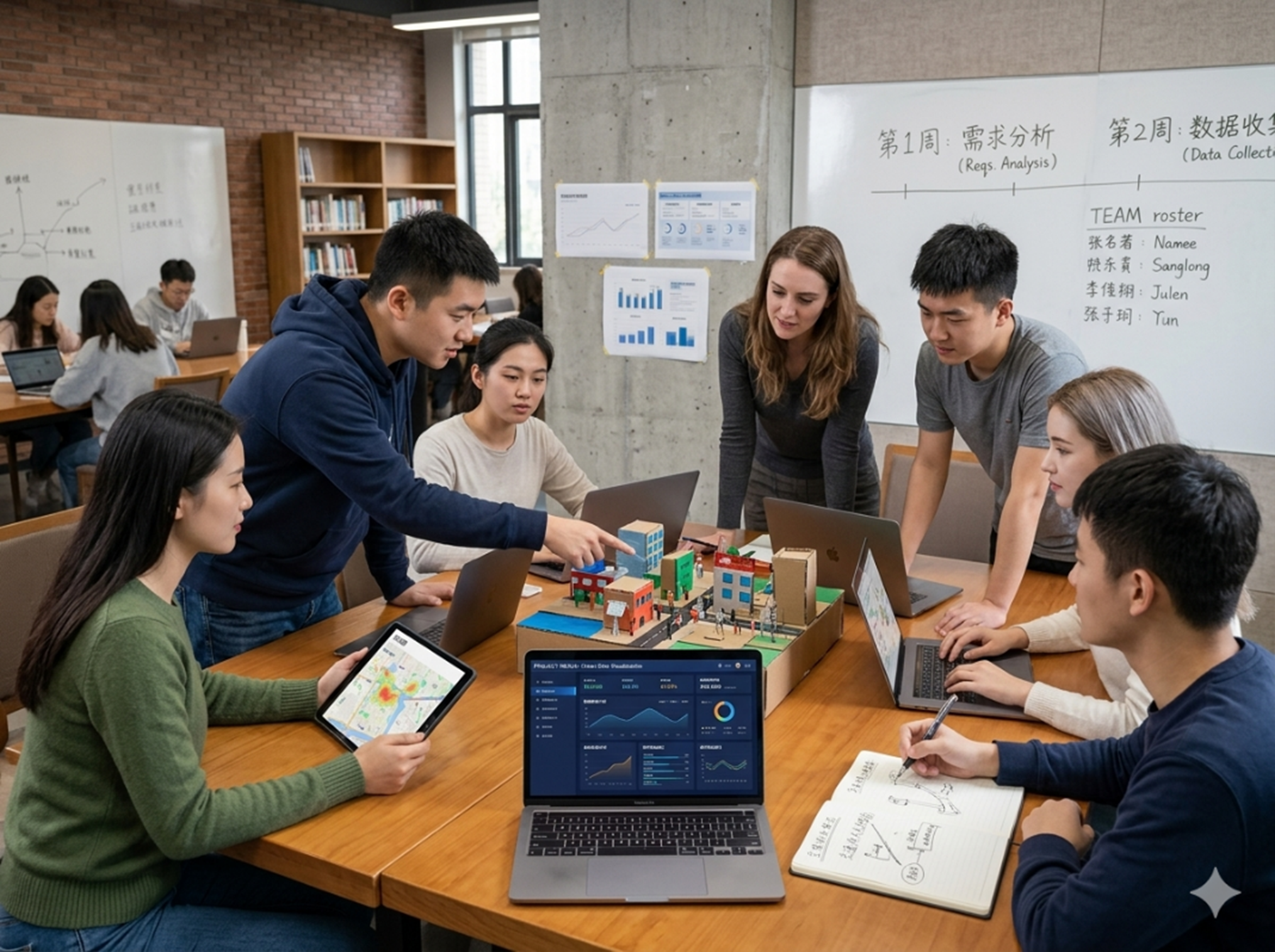
Learning Institute for Future Excellence will guide year-one students to work in teams on a project aimed at solving real-world problems, progressing through problem identification, project planning, data collection and analysis, and the development of solutions or products. Students will also present and reflect on their learning process and outcomes, gaining a multi-dimensional understanding of their own strengths and areas for development.
In addition to traditional classroom learning, Learning Institute for Future Excellence supports students in gradually transforming their learning approaches through diverse learning scenarios — such as lectures, tutorials, workshops, lab experiences, and AI-enhanced learning support — helping them develop self-directed learning, teamwork, and problem-solving skills in preparation for their subsequent university studies.